The PEAK journal
Outdoor Sauna with Red Light Therapy: Science-Backed Benefits for Cardiovascular Health and Recovery
Verdict: The Evidence on Infrared Sauna + Red Light Combination
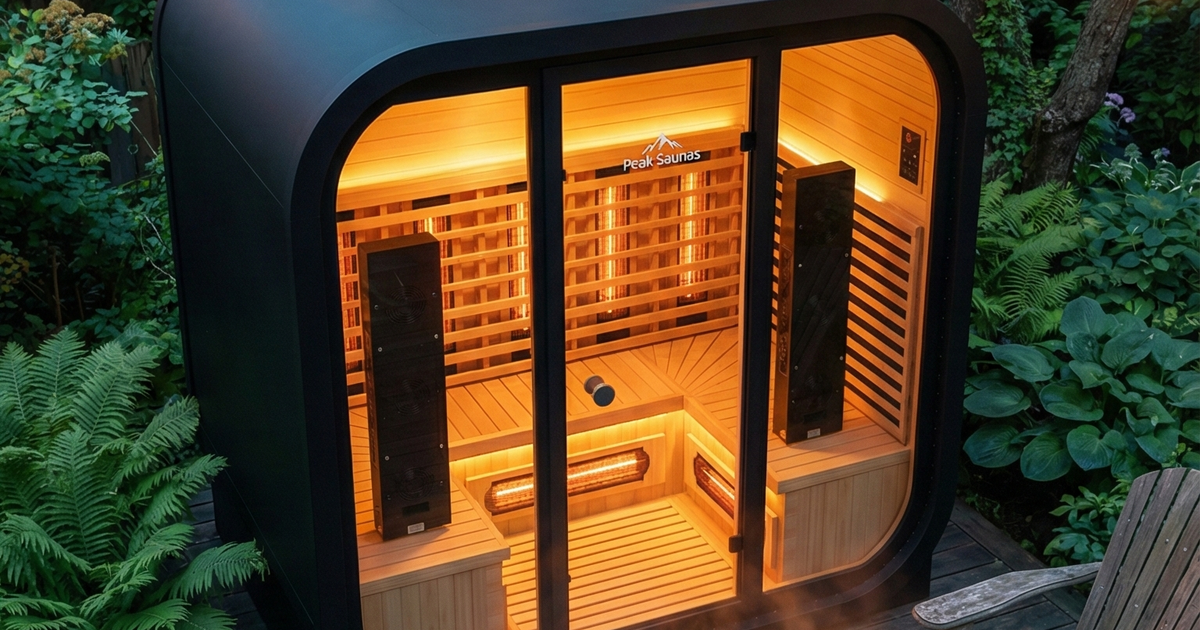
An outdoor infrared sauna equipped with red light therapy (8 wavelengths, 630–1060nm) combines two distinct physiological pathways: far-infrared heat promotes cardiovascular infrared sauna cardiovascular health guide adaptation, endothelial function, and metabolic recovery via whole-body hyperthermia, while red light wavelengths penetrate tissue to stimulate mitochondrial function and reduce inflammation infrared sauna for inflammation and pain at the cellular level. Though most clinical evidence for sauna health benefits comes from traditional Finnish sauna cohort studies—particularly the Finnish KIHD population followed over 15–25 years—infrared-specific trials increasingly support acute improvements in muscle infrared sauna for muscle recovery recovery, cardiovascular hemodynamics in heart-failure patients, and mood-related outcomes when used regularly. Red light therapy evidence, studied separately in wound healing and muscle recovery, is complementary but not yet extensively validated in the sauna context as a combined modality, making an outdoor infrared sauna with integrated red light a synergistic rather than proven dual-benefit device.
Why Choose an Outdoor Infrared Sauna with Red Light?
An outdoor infrared sauna with red light therapy represents a strategic investment in year-round thermal wellness. Unlike traditional Finnish saunas, which rely on convective heating of air, infrared saunas use far-infrared wavelengths to penetrate skin and tissue directly, raising core body temperature more efficiently and at lower ambient temperatures (typically 140–160°F vs. 160–200°F for Finnish designs). The addition of red light therapy extends the recovery toolkit: red wavelengths (630–700nm) are absorbed by cytochrome c oxidase in mitochondria, supporting ATP production and potentially accelerating adaptation to thermal stress.
Outdoor placement offers practical advantages—no sauna room construction, flexible seasonal use, and the psychological benefit of nature exposure during recovery. For those targeting cardiovascular resilience, muscle repair after training, or chronic-condition management, the combination addresses both acute thermogenic stress and cellular-level regeneration.
Cardiovascular Benefits: What the Research Shows
Infrared Heat and Endothelial Function
The strongest evidence for infrared sauna comes from studies of flow-mediated dilation (FMD)—a marker of endothelial health. In a landmark study of coronary-risk patients, two weeks of daily 140°F sauna therapy (a far-infrared Waon protocol) increased FMD from 4.0±1.7% to 5.8±1.3%, while nitroglycerin-induced dilation remained unchanged, indicating improved endothelium-dependent vasodilation specifically (Imamura et al., 2001). This finding suggests that infrared heat stimulates the endothelium's own capacity to produce nitric oxide—a critical vasodilator.
In heart-failure patients (NYHA Class II–III), two weeks of daily 140°F sauna therapy raised FMD, lowered B-type natriuretic peptide (BNP—a marker of cardiac stress), and improved symptoms in 17 of 20 patients, with the improvement in FMD correlating with BNP reduction (Kihara et al., 2002). A larger multicenter study of 188 heart-failure patients found that two weeks of this protocol lowered BNP from 542 to 394 pg/mL and raised ejection fraction from 31.6% to 34.6%, with no improvement in untreated controls (Miyata et al., 2008). Across a five-year follow-up, cardiac events or death occurred in only 31.3% of the treated group versus 68.7% of controls (Kihara et al., 2009).
Though this evidence comes from far-infrared therapy, the mechanism—sustained nitric oxide production and reduced cardiac afterload—is relevant to outdoor infrared sauna use. For more on cardiovascular wellness, explore Peak's guide to sauna for heart health.
Hypertension and Long-Term Outcomes
Observational data from the Finnish KIHD cohort, which tracked 2,315 middle-aged men over a median 21 years, showed that 4–7 sauna sessions per week was associated with a 47% lower risk of incident hypertension versus one session per week (Zaccardi et al., 2017). Separately, in 1,688 participants followed a median 15 years (51.4% women), cardiovascular disease mortality was 2.7 events per 1,000 person-years for frequent users (4–7 sessions/week) versus 10.1 for infrequent users, with a dose-response relationship (Laukkanen et al., 2018). Though these landmark studies used traditional Finnish sauna, the thermoregulatory stress and adaptations are mechanistically similar to infrared sauna.
A more recent randomized controlled trial, however, offers a note of caution: in 41 adults with stable coronary artery disease, eight weeks of Finnish sauna (four sessions per week at 174°F for 20–30 minutes) showed no significant improvement in flow-mediated dilation or carotid-femoral pulse wave velocity versus control, though resting core temperature did decrease slightly (Debray et al., 2023). This suggests that acute thermogenic response does not automatically translate to vascular benefit in all populations.
Red Light Therapy: Cellular Mechanisms and Sauna Integration
Red light wavelengths (8 wavelengths, 630–1060nm in clinical devices) work through a distinct mechanism: penetrating photons are absorbed by cytochrome c oxidase in the mitochondrial electron transport chain, enhancing electron transfer and ATP synthesis. This process—called photobiomodulation—may reduce reactive oxygen species production, lower cellular inflammation, and support tissue repair.
In the sauna context, red light could theoretically amplify recovery by:
-
Supporting mitochondrial adaptation to heat stress, potentially enhancing heat-shock protein expression
-
Reducing exercise-induced inflammation when applied post-workout, complementing the anti-inflammatory effects of sauna itself
-
Accelerating muscle protein synthesis after thermal stress and concurrent resistance training
A single-session infrared sauna study in 16 male basketball players showed that 20 minutes of post-exercise infrared sauna (109°F) improved countermovement jump recovery and reduced muscle soreness versus passive rest alone (Ahokas et al., 2023). Though red light was not explicitly added in this trial, the infrared modality's benefit to neuromuscular recovery suggests that integrated red light could extend or amplify such effects—though dedicated combination trials remain sparse.
For a deeper dive into recovery modalities, see Peak's sauna and athletic recovery guide.
Mental Health and Neurological Protection
Depression and Mood
A randomized sham-controlled trial of whole-body infrared hyperthermia in 29 adults with major depression found that a single infrared heating session (achieving 101.3°F core temperature) reduced Hamilton Depression scores by 6.5 points versus sham at week 1 (P<.001), with an effect still present at week 6 (4.3-point difference, P=.02) (Janssen et al., 2016). While this study used specialized infrared coils rather than a consumer sauna, it demonstrates that infrared hyperthermia activates thermoregulatory and monoaminergic pathways relevant to mood regulation.
Smaller pilot studies of far-infrared sauna therapy in chronically depressed inpatients showed improvements in somatic complaints (P<.001), appetite (P<.0001), and relaxation (P<.0001), alongside increases in plasma ghrelin and caloric intake (Masuda et al., 2005). Red light therapy independently promotes circadian alignment and may modulate serotonin signaling, making the combination potentially synergistic for seasonal affective or chronic depression—though this specific combination remains clinically understudied.
Cognitive Health and Dementia
Among 2,315 Finnish men followed a mean 20.7 years, those using sauna 4–7 times per week showed a 66% lower risk of dementia and a 65% lower risk of Alzheimer's disease versus once-weekly users (Laukkanen et al., 2017). The proposed mechanism involves improved cerebral blood flow, reduced blood pressure, and heat-induced heat-shock protein expression—all neuroprotective. Outdoor infrared sauna use, particularly if incorporated into a consistent weekly routine, may contribute to long-term cognitive reserve through similar pathways.
Muscle Recovery, Performance, and Endurance
Post-Exercise Recovery
In a crossover trial of 10 healthy physically active men, countermovement jump height after maximal endurance training was 0.34 ± 0.09 m higher following 30 minutes of far-infrared sauna than following passive recovery without sauna (Mero et al., 2015). This supports sauna's role in acute neuromuscular recovery—a benefit that red light therapy, through mitochondrial ATP production and anti-inflammatory signaling, may potentiate by accelerating protein synthesis and reducing exercise-induced oxidative stress.
The mechanism is not detoxification or "flushing," but rather systemic adaptation: regular thermal stress upregulates heat-shock proteins, improves mitochondrial biogenesis, and enhances metabolic flexibility—all hallmarks of endurance adaptation (Iguchi et al., 2012).
Plasma Volume and Heat Acclimation
In a study of six male distance runners, three weeks of post-exercise sauna (lasting ~31 minutes at ~194°F) increased run time to exhaustion by 32% and improved running time-trial performance by 1.9%, accompanied by a 7.1% increase in plasma volume and 3.5% rise in red-cell volume (Scoon et al., 2007). However, this study used a traditional humid sauna and measured endurance athletes specifically; the infrared + red light modality has not been tested in this context, making it important to avoid overgeneralizing these gains.
Chronic Conditions: Fibromyalgia, Fatigue, and Inflammatory Arthritis
Fibromyalgia
In a study of 13 female fibromyalgia patients, a single far-infrared sauna session at 140°F reduced pain by roughly 50%, with the effect stable over approximately 14 months of continued use (Matsushita et al., 2008). The mechanism likely involves reduced muscle tension, improved microcirculation, and centrally mediated pain gating via thermal comfort. Red light therapy, known to reduce neuroinflammation and support nerve function, may offer complementary benefits in this pain-dominant condition.
Rheumatoid and Ankylosing Spondylitis
In 17 RA and 17 AS patients, eight infrared sauna sessions over four weeks significantly reduced pain and stiffness within each session (RA P<0.05, AS P<0.001), with no adverse effects; however, the four-week trend was not statistically significant (Oosterveld et al., 2009). This suggests infrared sauna provides acute symptomatic relief—valuable for mobility and function—though long-term remission requires integrated care.
Chronic Fatigue Syndrome
Ten inpatients with chronic fatigue syndrome treated five days per week for four weeks with far-infrared sauna at 140°F showed a reduction in perceived fatigue from 6.7 to 4.8 on a 10-point scale, with concurrent improvements in anxiety, depression, and performance status (Soejima et al., 2015). Red light therapy's role in mitochondrial ATP production and autonomic nervous system regulation could plausibly amplify these gains in a fatigue-dominant population, though evidence remains preliminary.
Respiratory and Metabolic Health
Chronic Respiratory Disease
In 1,935 Finnish men followed a median 25.6 years, sauna use 2–3 times per week reduced respiratory disease risk by 27% (HR ~0.73) and use ≥4 times per week by 41% (HR ~0.59) versus infrequent use (Kunutsor et al., 2017). The benefits are thought to arise from improved airway clearance, reduced airway inflammation, and enhanced cardiopulmonary capacity. An outdoor infrared sauna accessible year-round could support consistent use frequency—a key driver of these long-term benefits.
Type 2 Diabetes and Glycemic Control
A small pilot study found that 20-minute far-infrared sauna sessions three times per week over three months improved self-reported physical function and quality-of-life metrics in type II diabetes patients and reduced perceived stress and fatigue, though no glycemic endpoints (HbA1c) were measured (Beever, 2010). Importantly, a more recent infrared-sauna-specific crossover trial in 12 adults with type 2 diabetes found that a single 40-minute infrared sauna session at 140°F actually increased postprandial glucose (measured by oral glucose tolerance test) compared to thermoneutral control, suggesting that acute heat stress does not acutely improve glucose handling and may transiently worsen it (Schenaarts et al., 2024). This underscores the need for caution in marketing sauna for acute diabetes management, though chronic use might differ.
Mental Health Benefits: Depression and Anxiety
Beyond the acute depression trial cited earlier, pilot-scale studies of far-infrared sauna in depressed inpatients receiving multidisciplinary care found that those receiving thermal therapy alongside cognitive-behavioral therapy had significantly lower anger scores at 24 months, and 77% returned to work versus 50% in the care-alone group (Masuda et al., 2005 — Psychotherapy and Psychosomatics). More recent work on whole-body infrared hyperthermia combined with CBT showed that 56.5% of participants achieved depression remission (HRSD score ≤7), though this cannot be isolated to heat alone (Mason et al., 2025).
Red light therapy independently shows promise for seasonal affective disorder and mood regulation through circadian and monoaminergic pathways. Combining red light with infrared sauna in an outdoor setting—especially during winter months


