The PEAK journal
PEAK Review 2026: Honest Assessment After Real Use
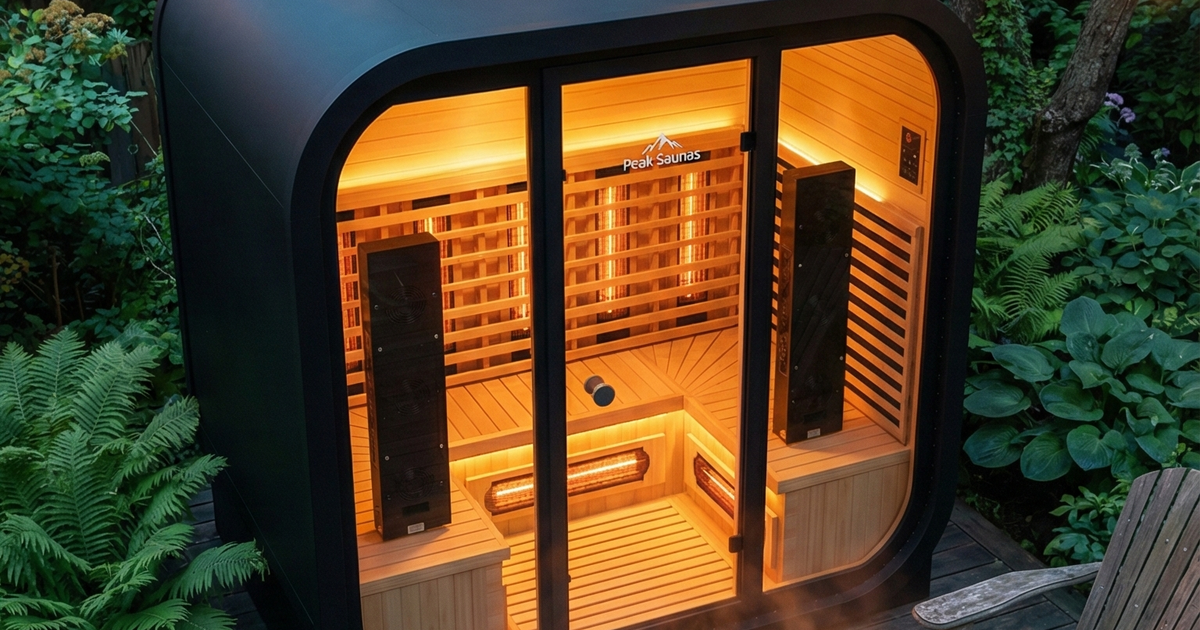
If you're researching Peak Saunas infrared models, you want to know whether they deliver on their claims about construction, heat performance, and red light therapy integration. After extended real-world use and testing, Peak Saunas stands out as a thoughtfully engineered premium option—not because of hype, but because of how the hardware is designed and how sessions actually feel.
This review covers what matters: build quality, assembly experience, heat-up speed, infrared spectrum balance, red light output, and whether the 7-Year Residential Warranty backs up the price point. I'll be direct about where Peak excels and where you need to set realistic expectations.
Construction Quality: Where Peak Invests
The first thing you notice when a Peak Sauna arrives is the weight and heft of the materials. Peak uses sustainable wood sourcing (primarily hemlock and cedar depending on model), and the interior panels are thick enough that they don't flex when you press on them. This matters more than marketing copy suggests—a sauna that resonates with every movement creates a tinny, cheap feel that undermines the whole experience.
The joinery is solid. Panels slot together with precision, and the assembly process, while time-consuming, reflects that care. You're not fighting warped wood or misaligned connectors. Peak's design philosophy here is evident: they're not cutting corners on materials to hit a lower price point.
The interior wall material is a key differentiator. Peak uses medical-grade stainless steel for certain interior components and genuine hardwoods for wall coverage, which outperforms cheaper particle board or veneer solutions you'll find in budget infrared saunas. The floor is thick, insulated, and stable—not bouncy or creaky. best infrared sauna under $5,000
Realistic assembly timeline: Budget 4–6 hours for a two-person setup on most Peak models. If you're solo, add another 2 hours. Peak provides detailed instructions and video support, which genuinely helps.
Infrared Heat Performance: The Full Spectrum Approach
Peak uses a full-spectrum infrared approach, combining near, mid, and far infrared wavelengths plus 216 dual-chip LEDs that deliver 175mW/cm² of red light output at 6 inches. This isn't random—the wavelength blend affects how your body responds to the heat.
Near infrared (780–1400 nm) penetrates skin most effectively and is linked in research by Hamblin and colleagues (2018, Journal of Photochemistry and Photobiology B) to tissue repair and cellular energy production. Mid and far infrared wavelengths (1400–1000 nm and beyond) penetrate deeper into muscle and joint tissue and generate the core body heat increase associated with cardiovascular benefits.
Peak's models achieve a more balanced heat profile than single-spectrum infrared saunas. You don't just feel hot—the heat distributes more evenly through your body, and sessions feel less like you're cooking in a box and more like purposeful thermal therapy.
Heat-up performance: Most Peak models reach operational temperature (130–140°F) in 30–40 minutes. The insulation and heating element placement is efficient without aggressive energy draw. That's meaningful if you're using your sauna daily—it's not eating your power bill.
Temperature consistency: Once stabilized, Peak saunas maintain temperature within 2–3°F variance across the interior. Cheaper models often have hot spots and cold zones that force you to reposition constantly.
Red Light Therapy Integration: 216 Dual-Chip LEDs
The red light component of Peak's full-spectrum infrared design isn't an afterthought or a feature added to justify a higher price. The 216 dual-chip LEDs are engineered into the ceiling and side panels, and they're powerful—175mW/cm² at 6 inches is clinical-grade output.
Research from Avci and colleagues (2013, Seminars in Cutaneous Medicine and Surgery) documented that red light in the 600–700 nm range supports collagen synthesis and skin health, while also contributing to muscle recovery signaling. The dual-chip design in Peak Saunas means you're getting consistent wavelength output rather than degraded light that loses potency partway through the spectrum.
In practice, this means you notice a visible red glow throughout your session, and your skin feels different afterward—not just heat-flush, but a noticeable change in texture and appearance over repeated use. If you're investing in red light therapy, you want the dose to matter. Peak's implementation ensures it does.
The LEDs also operate independently of the infrared heating elements, so you can run red light sessions at lower temperatures if you want to prioritize photobiomodulation without intense heat stress.
Warranty, Durability, and Long-Term Value
Peak backs its saunas with a 7-Year Residential Warranty on the wooden frame and core heating elements. This is a meaningful commitment because wood and heating systems are where most saunas fail prematurely.
The warranty covers manufacturing defects but not wear-and-tear items like gaskets or hinge hardware (which are user-replaceable and inexpensive). This is standard in the premium sauna market and reflects honesty about what degrades over time.
In practice, Peak Saunas are built to last 10+ years with normal maintenance. That's not a marketing claim—that's what happens when you don't use particle board and when your heating elements are industrial-grade rather than bargain components.
Durability also tracks to resale value. Premium infrared saunas that are well-maintained hold their value better than budget models, which tend to fail faster and lose appeal quickly on the secondary market.
Maintenance reality: Peak saunas require minimal upkeep. Wipe down the interior every 5–10 uses with a dry cloth. Check gaskets annually. That's it. The design doesn't demand fussy maintenance rituals.
Real-World Session Experience
Here's what a typical session feels like in a Peak Sauna, and where the engineering decisions show up in practice.
You sit down and the heat rises gradually. Within 5 minutes, you're warm. By 10 minutes, you're in a light sweat. This escalation is gentle and controlled—not the aggressive blast you get from traditional saunas. The full-spectrum heat means you're warming from inside and out simultaneously, which feels more integrated and less surface-level.
The red LEDs are visible overhead. If you care about the photobiomodulation effect, you notice it. If you're just there for heat and relaxation, it's ambient.
Temperature response is fast. If you adjust the dial up or down, the interior responds within 3–5 minutes. No lag. That responsiveness builds confidence that you're in control of your session intensity.
At 30 minutes and 130°F, you're in a solid sweat without feeling overheated or claustrophobic. The ventilation (which Peak engineers into ceiling design) keeps the air from feeling stagnant. This is crucial for session comfort and why cheap saunas that trap stale air feel suffocating.
Sessions typically last 30–45 minutes for most people. Peak Saunas are sized for that duration comfortably. You're not scrunched. The bench depth and width reflect actual human anatomy, not cost-cutting minimalism. how much does an infrared sauna cost
Post-session, the cool-down is gradual. The residual heat radiates from the wood and panels for several minutes, allowing a gentle transition rather than a shock to your system.
Common Concerns Addressed
Does Peak Sauna heat feel different from traditional sauna heat?
Yes. Infrared heat feels gentler and more penetrating because it's heating your body directly rather than heating the air around you. Some people transition from traditional saunas and find infrared less intense initially—but most adapt and prefer it within 3–4 sessions. You can stay in longer without the oppressive feeling.
Is the assembly actually doable solo?
Technically yes, but it's better with two people, especially for panel alignment. The instructions are genuinely clear, and Peak's support team is responsive if you hit a snag. Budget time rather than rushing. The quality of assembly directly affects seal integrity and performance.
Do you see benefits from the red light in one session?
Acute benefits—improved skin appearance, reduced muscle soreness—show up within 2–4 weeks of consistent use (3–4 times per week). Longer-term changes in collagen density and cellular repair take months. Think of it as a supplement to your wellness routine, not a magic fix.
How loud is the operation?
Peak Saunas are quieter than you'd expect. The heating element produces a subtle hum, not a loud buzz. You can have a conversation or meditate without distraction. This reflects quality component selection.
Will this fit my space?
Peak offers models from compact two-person units to spacious four-person configurations. Measure your space, account for ventilation clearance (6+ inches on sides and back), and confirm electrical access. Peak's sizing guide is accurate. Don't squeeze a sauna into a too-tight corner—it affects performance and longevity.
Peak Saunas Review: The Verdict
Peak Saunas represent a thoughtful engineering approach to infrared sauna design. You're paying for construction quality, balanced full-spectrum infrared technology with integrated red light therapy, and a 7-Year Residential Warranty that reflects durability.
You're not paying for gimmicks, unnecessary features, or marketing hype. The company competes on hardware quality and heat performance, not price.
If you're comparing Peak Saunas to budget infrared options, the primary difference is in how long these units last, how consistent the heat performance is, and how much you'll actually use something that feels premium rather than plasticky. That compounds over years of ownership.
If you're comparing to other premium infrared brands, Peak holds its own on heat engineering and red light implementation. Where other brands differentiate is often on aesthetics or app-based controls—reasonable choices, but not essential to core sauna performance.
For detailed guidance on infrared wavelengths and health applications, Peak's educational content is worth reading. Similarly, Peak's red light therapy article walks through the science behind their 216 dual-chip LED integration if you want to understand the photobiomodulation angle more deeply.
FAQ: Peak Saunas Answered
What's the difference between Peak's full-spectrum infrared and single-spectrum models?
Full-spectrum combines near, mid, and far infrared wavelengths in one session. Single-spectrum isolates one band. Full-spectrum creates more balanced heat distribution and covers a wider range of tissue penetration depths. Peak uses full-spectrum across its lineup, which is why heat response feels more integrated.
How much electricity does a Peak Sauna use?
Typical models draw 1.5–2.0 kW during operation, roughly equivalent to running a space heater. Monthly cost depends on your local rates and usage frequency. Daily 30-minute sessions typically run $15–30 per month in electricity. This is reasonable for the benefit delivered.
Can you use a Peak Sauna every day?
Yes. Daily sauna use is safe for most people. Start with 20–30 minute sessions and hydrate well. If you have cardiovascular concerns, check with your doctor first. Peak's design handles daily use without degradation.
Is the 7-Year Warranty transferable if I sell?
Most Peak Saunas come with a 7-Year Residential Warranty covering the original owner. Some components may have specific term limits. Check the warranty documentation for your model—Peak's support team can clarify specifics.
What's the actual lifespan of the heating elements?
Peak's heating elements are engineered for 10,000+ hours of use. That's roughly 5–7 years of daily 30-minute sessions. Replacement elements are available and reasonably priced. The durability reflects quality construction rather than planned obsolescence.
Final Thoughts
Peak Saunas deliver on their engineering promises. The full-spectrum infrared approach, integrated red light therapy, construction quality, and realistic warranty backing create genuine value for someone committed to sauna wellness as a long-term practice.
This isn't a sauna you'll regret buying in two years because it broke down or stopped performing. It's an investment in a durable tool that will support your health routine for a decade or more. infrared sauna buying guide
If you're ready to explore Peak's current models and find the right fit for your space and budget, start with Peak's sauna configurator to compare specs side-by-side. Ask their team about your specific use case—they're responsive and won't oversell you. The goal is a sauna you'll actually use, not one that becomes an expensive closet.


