The PEAK journal
Affordable Outdoor Sauna: How to Get the Most Without Overspending
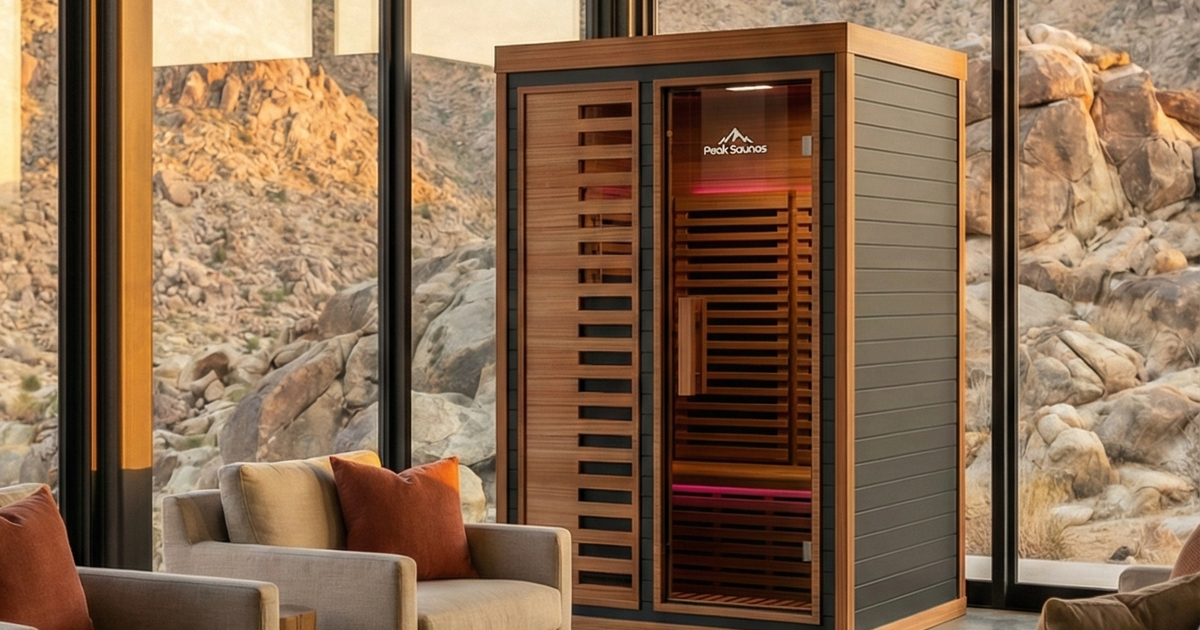
"Affordable" and "outdoor sauna" are two words that don't always get along — but they can. The outdoor sauna market has matured significantly in the past few years, and genuine quality at reasonable prices is no longer a unicorn. The trick is knowing what to prioritize, what to skip, and where cheap equals false economy.
This guide cuts through the noise and gives you a clear picture of what an affordable outdoor infrared sauna actually looks like, what it costs to own long-term, and how to pick one you won't regret.
What Makes an Outdoor Sauna Different from Indoor?
Outdoor saunas face environmental challenges that indoor units simply don't:
-
UV exposure degrades wood stains and finishes over time
-
Rain and moisture penetration can warp panels, rot joints, and compromise heaters
-
Temperature swings (freezing winters, hot summers) stress wood joinery
-
Wind affects heat retention and can create drafts if the unit isn't well-sealed
A unit built for indoors that gets placed outdoors will fail prematurely. True outdoor saunas use weather-treated wood, marine-grade hardware, reinforced roofing, and weatherstripped door seals. Don't try to cheap out by buying an indoor unit and "making it work" outside — you'll spend more on repairs and replacement.
Infrared vs. Traditional for Outdoor Use
Traditional wood-burning or electric saunas are the classic outdoor choice — the Finnish-style barrel or cabin sauna is iconic for a reason. But for most homeowners in 2026, outdoor infrared saunas make more practical sense:
Why infrared wins outdoors for most buyers:
-
No need to manage fire or steam (great if kids or pets are around)
-
Lower operating temperatures mean less heat loss through walls in cold weather
-
Plugs into a standard outdoor-rated electrical outlet (most models) infrared sauna electricity cost
-
Faster heat-up — 10–15 minutes vs. 30–60 minutes for traditional
-
Lower ongoing fuel/electricity cost
The trade-off: infrared saunas don't have the same "authentic" aesthetic as a wood-burning barrel sauna, and they can't reach the 200°F+ temperatures that traditional sauna purists love. If you're after Löyly (the Finnish steam ritual), you need a traditional unit. For daily health use, infrared is the smarter pick.
The Real Cost of an Outdoor Sauna
"Affordable" is relative. Here's an honest breakdown of what you're actually spending:
Purchase Price
Entry-level outdoor infrared saunas start around $2,000–$3,000 for a 1–2 person unit from a direct-to-consumer brand. Mid-range quality units (the sweet spot for durability + performance) typically run $3,000–$6,000. Traditional barrel saunas in the same size range often cost $4,000–$10,000+ once you add an electric or wood-burning heater.
Installation
Infrared saunas are largely plug-and-play — most 1–2 person units run on 120V; larger ones may need a 240V line (budget $300–$800 for an electrician if needed). You'll also need a level base: a concrete pad, compacted gravel base, or existing deck. DIY runs $100–$500 in materials; professional concrete work is $1,500–$3,000 depending on size.
Annual Operating Costs
A 1-2 person infrared sauna running 4 sessions/week at 45 minutes costs roughly $3–$8/month in electricity at average US rates. That's $36–$96/year. Traditional electric saunas cost 2–3x more to run; wood-burning requires ongoing fuel cost.
Maintenance
Quality outdoor infrared saunas need minimal maintenance: annual wood treatment (exterior only), occasional wipe-down of panels, and checking door seals. Budget $50–$100/year. Traditional saunas with rocks require more attention to heater elements and rock replacement.
What to Look for in an Affordable Outdoor Infrared Sauna
Going affordable doesn't mean going reckless. These are the non-negotiables:
Weather-Rated Construction
The exterior must be built for outdoor exposure. Look for:
-
Solid wood, not composite panels — Composite/MDF swells and delaminates outdoors
-
Pre-treated or naturally rot-resistant species — Canadian Hemlock, Western Red Cedar, or Nordic Spruce are good choices; engineered pine is not
-
Sloped roof with overhang — sheds rain away from the door and walls
-
Marine-grade stainless hardware — hinges, screws, and latches that won't rust out in 18 months
Low-EMF Carbon Panel Heaters
Ceramic rod heaters (common in budget units) emit more EMF and heat unevenly. Carbon fiber panels are the standard in reputable brands and worth insisting on.
Proper Sealing
Ask specifically about door seals and corner joints. Outdoor units that aren't properly sealed lose heat dramatically in winter and can allow moisture infiltration. Quality brands use silicone-sealed corner joints and magnetic or compression door gaskets.
Electrical Safety Rating
Look for ETL, UL, or CE certification. An outdoor electrical appliance that isn't safety-certified is a genuine liability — financially and physically.
Warranty That Covers Outdoor Use
Some brands void their warranty if you use an indoor unit outdoors. Make sure the warranty explicitly covers outdoor installation and includes at least 5 years on the structure and heaters.
Brands and Budget Tiers
Entry tier ($2,000–$3,500): You can find functional 1 person outdoor infrared saunas in this range. Expect basic carbon heaters, limited chromotherapy, minimal accessory package. These work — they're just not built for 10+ years of use.
Mid-range ($3,500–$6,000): This is the sweet spot. Full-spectrum heaters, better wood quality, proper outdoor certification, stronger warranties. Most reputable direct-to-consumer brands live here.
Premium ($6,000+): Luxury finishes, modular construction, advanced app control, higher heater wattage for faster heat-up. Worth it if you're treating the sauna as a permanent outdoor fixture and plan to use it daily for years.
At PEAK, our outdoor-rated infrared units sit in the mid-range sweet spot — built with weather-treated Canadian Hemlock, full-spectrum carbon panels, and outdoor-certified electrical components. Check current pricing at peaksaunas.com.
Site Prep: Don't Skip This Step
The most common mistake with outdoor sauna buyers: skimping on the base.
Your sauna needs a level, stable, moisture-resistant surface. Options:
-
Concrete pad — best for permanent installation; hire a contractor or DIY with bags
-
Compacted gravel base — effective and DIY-friendly; use crushed stone (not pea gravel) for stability
-
Existing deck or patio — works if structurally sound and able to support the weight (most 1–2 person saunas weigh 400–700 lbs fully assembled)
-
Concrete pavers — good middle ground; ensure they're level and tightly fitted
Never install directly on soil or grass — the moisture and uneven surface will destroy the wood base within a season or two.
Frequently Asked Questions
What's a realistic budget for a quality affordable outdoor infrared sauna? For a 1–2 person unit that will hold up outdoors for 5–10 years, budget $3,500–$5,500 for the unit, $100–$500 for base prep (DIY), and potentially $300–$800 for electrical if you need a 240V line. Total: $4,000–$7,000 all-in is realistic for a quality setup.
Can I leave my outdoor sauna out year-round? Yes, if it's built for outdoor use. Quality outdoor infrared saunas are designed to handle temperature extremes. In very cold climates (below -20°F), protect the electrical panel from freezing and don't use the unit until it's above -15°F outside.
Do I need a permit to install an outdoor sauna? It depends on your municipality. A freestanding sauna on a concrete pad often doesn't require a permit. If you're connecting to 240V electrical or building a permanent structure attached to your home, permits are typically required. Check with your local building department.
How long does assembly take? Most outdoor infrared saunas come in pre-built panel sections that assemble in 2–4 hours with two people. Some require additional time for roof installation and electrical hookup.
Is an outdoor infrared sauna worth buying vs. a gym membership? Over 5 years, a home sauna is almost always cheaper than a gym membership that includes sauna access — and infinitely more convenient. Daily access vs. scheduled gym trips is a meaningful quality-of-life upgrade for consistent sauna users.
What wood is best for an outdoor sauna? Western Red Cedar is the gold standard for outdoor use — naturally rot-resistant, beautifully aromatic, and dimensionally stable. Canadian Hemlock is a strong alternative: nearly scent-free, light, and stable. Both are solid choices. Avoid basswood or engineered/composite materials for outdoor installation.
See also: Indoor vs. Outdoor Infrared Sauna — Which Is Right for You? | 1 Person Saunas Guide | How Much Does an Infrared Sauna Cost?


