The PEAK journal
Carbon vs Ceramic Infrared Sauna Heaters: Which Is Better?
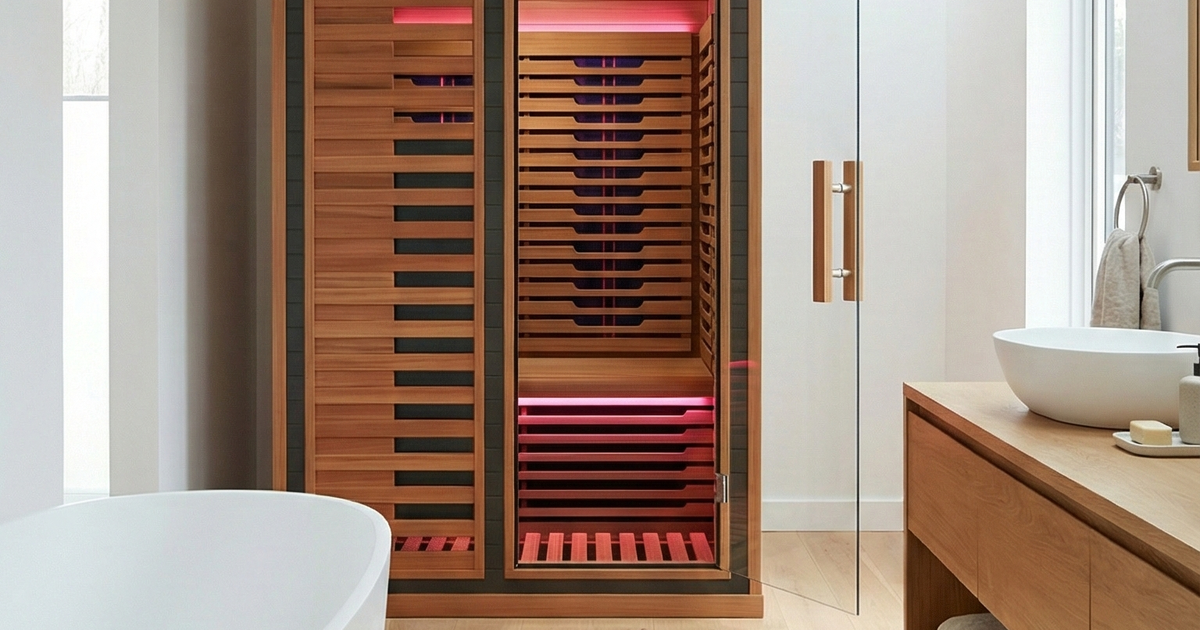
When shopping for an infrared sauna, you'll encounter two main heater technologies: carbon fiber and ceramic. Understanding the difference helps you make a more informed purchase — and explains why full-spectrum heaters represent a third, more comprehensive category entirely.
How Infrared Heaters Work (Quick Background)
Infrared saunas heat your body through radiant energy, not hot air. The heaters emit wavelengths in the infrared spectrum (700nm to 1mm) that penetrate tissue directly. This is fundamentally different from traditional saunas, which heat the air and rely on convection.
The heater material determines the wavelength distribution, surface area, heat-up time, and durability of the unit.
Carbon Fiber Heaters
How They Work
Carbon fiber heaters use thin panels of carbon fiber material that generate infrared radiation when current passes through. The panels are typically large, thin, and distributed across multiple cabin walls.
Advantages
1. Large surface area Carbon panels are usually flat and distributed across wall surfaces — sometimes full-wall panels. This creates a large, even radiating surface that envelops the body from multiple angles rather than targeting from one direction.
2. Even heat distribution The large surface area produces more uniform heat throughout the cabin, avoiding hotspots.
3. Lower surface temperature Carbon panels operate at lower surface temperatures (typically 140–180°F surface) while still producing adequate IR output, which makes them feel gentler.
4. Energy efficiency The lower operating temperature means less electrical energy required to maintain output. infrared sauna electricity cost
5. Longer lifespan Operating at lower temperatures reduces thermal stress on the heater elements, extending lifespan.
6. Faster heat-up Carbon panels warm up quickly — many units reach operating temperature in 10–15 minutes.
Disadvantages
1. Primarily far infrared only Most carbon heaters emit predominantly far infrared wavelengths. They don't produce meaningful near or mid infrared output.
2. Lower intensity per unit area The lower surface temperature means lower peak output per square inch — compensated by surface area, but relevant when comparing to ceramic.
Ceramic Heaters
How They Work
Ceramic heaters use ceramic elements (rods or panels) that heat to higher temperatures, producing a more concentrated, intense infrared output.
Advantages
1. Higher intensity output Ceramic elements reach higher surface temperatures (often 300–400°F) and produce a more intense, penetrating infrared emission.
2. Can produce broader wavelength range Higher-temperature ceramics emit a wider spread of infrared wavelengths — and some ceramic emitters produce meaningful mid-infrared output alongside far infrared.
3. Focused penetration The higher intensity per element can produce deeper tissue penetration for the body areas directly facing the emitter.
Disadvantages
1. Hotspots Ceramic heaters are typically smaller and fewer per cabin. This creates uneven heat distribution — you feel intense heat near the element and less elsewhere.
2. Longer heat-up time Ceramic elements take longer to reach operating temperature — some units require 20–30 minutes.
3. Shorter lifespan Operating at higher temperatures accelerates wear. Ceramic elements typically need replacement sooner than carbon panels.
4. Still primarily far infrared Like carbon, traditional ceramic heaters don't produce the near infrared wavelengths that deliver photobiomodulation benefits.
The Real Question: Why Stop at Far Infrared?
Both carbon and ceramic heaters primarily operate in the far infrared band. This is a useful wavelength for heating tissue, improving circulation, and promoting sweating.
But far infrared is just one-third of the therapeutic infrared spectrum.
Full-spectrum infrared adds:
-
Near infrared (NIR, 700–1400nm): The most scientifically studied wavelength range for photobiomodulation — cellular energy production via cytochrome c oxidase stimulation, collagen synthesis, wound healing, and neural health
-
Mid infrared (MIR, 1.4–3μm): Enhanced cardiovascular benefit, improved circulation, joint penetration for mobility
A far-infrared-only sauna (whether carbon or ceramic) misses these wavelength bands entirely.
How Full-Spectrum Heaters Work
Full-spectrum heaters combine multiple emitter types to cover near, mid, and far infrared simultaneously. This typically involves:
-
Incandescent or LED near-infrared emitters for NIR
-
Specialty elements for mid-infrared
-
Carbon or ceramic panels for far infrared
The result is a cabin that delivers the complete therapeutic spectrum — matching what researchers use in photobiomodulation studies and what's documented across the broadest range of health literature.
Head-to-Head Summary
| Feature | Carbon | Ceramic | Full-Spectrum |
|---|---|---|---|
| Near infrared | ✗ | ✗ | ✓ |
| Mid infrared | ✗ | Limited | ✓ |
| Far infrared | ✓ | ✓ | ✓ |
| Heat evenness | High | Lower | High |
| Heat-up time | Fast | Slower | Fast |
| Energy efficiency | High | Moderate | Moderate |
| Lifespan | Long | Moderate | Long |
| Hotspots | Minimal | Yes | Minimal |
| Best for | Casual use | Intensity | Complete therapy |
What Peak Saunas Uses
Peak Saunas full-spectrum models include all three infrared wavelength bands — near, mid, and far — providing the complete therapeutic spectrum in a single session. Our heater configuration is designed for even heat distribution throughout the cabin, eliminating hotspots while maximizing exposure.
All Peak Saunas come with a 7-Year Residential Warranty and free shipping to the contiguous US.
Explore Peak Saunas Full-Spectrum Models →


