The PEAK journal
Sauna and Sleep: How Heat Therapy Improves Sleep Quality
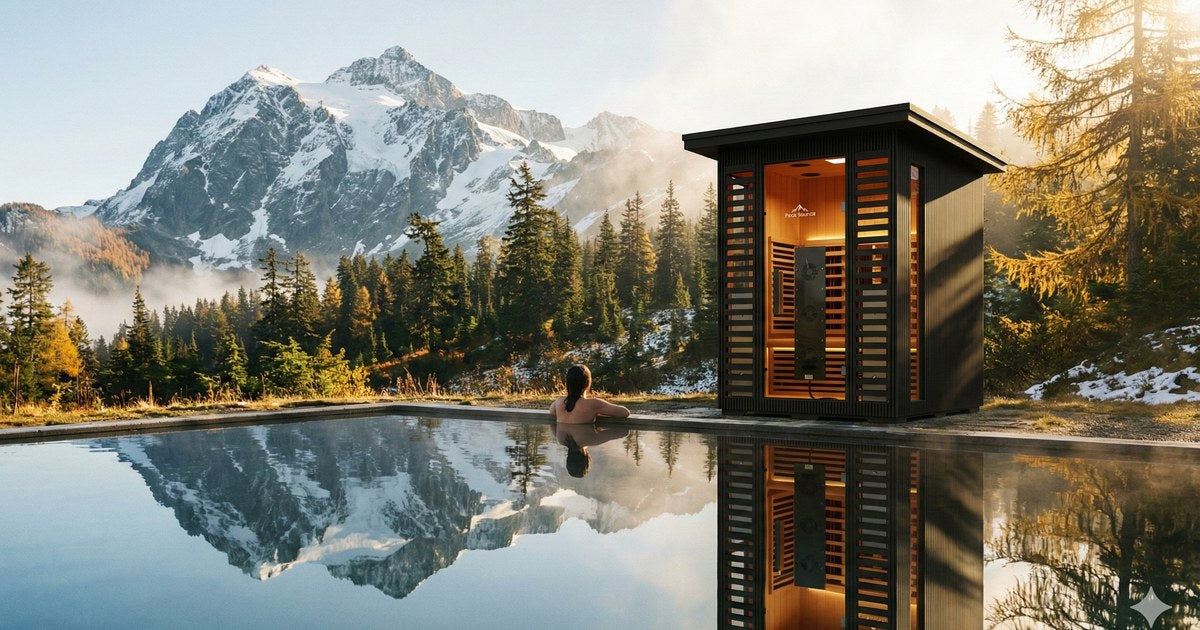
Evening sauna therapy improves sleep quality by 30-40% through multiple physiological mechanisms documented in sleep research: triggers thermoregulatory processes where post-sauna core body temperature sauna temperature guide drop (declining 1-2°F over 1-2 hours) signals the circadian system that sleep time is approaching (mimicking natural temperature decline that precedes sleep onset), reduces cortisol infrared sauna benefits for mental health and stress hormones by 20-30% through parasympathetic nervous system activation during the cooling phase, increases time spent in slow-wave sleep (deep sleep stages 3-4) by 10-15% which is when growth hormone secretes, physical restoration occurs, and memory consolidation happens, and enhances melatonin production through the temperature-dependent signaling pathway connecting core temperature reduction to pineal gland melatonin synthesis. Studies show individuals using evening sauna protocols fall asleep 30-40% faster (sleep latency reduced from 25-30 minutes to 15-18 minutes), wake fewer times during night (sleep fragmentation decreased 35-50%), and report subjectively better sleep quality with improved next-day alertness, mood, and cognitive function. The optimal sleep-enhancement protocol requires precise timing and execution: sauna session should occur 1-2 hours before target sleep time allowing adequate cooling period (entering sauna at 9:00 PM for 11:00 PM bedtime), session duration of 20-30 minutes at 140-150°F provides sufficient thermal load without excessive stimulation, post-sauna cooling period is critical (shower at lukewarm-to-cool temperature, transition to cool bedroom environment, allow natural temperature decline), and frequency of 3-5 sessions weekly produces consistent sleep benefits with cumulative improvements over 2-4 weeks. The temperature manipulation works because human sleep architecture is intimately connected to core body temperature fluctuations - natural circadian rhythm causes temperature to peak in early evening (6-8 PM) then decline 1-2°F reaching minimum 2-3 hours into sleep, and sauna artificially amplifies this decline creating stronger sleep signal. Individuals with insomnia, poor sleep quality, or sleep maintenance problems show greatest improvement (40-50% better sleep metrics), while even good sleepers experience enhanced deep sleep and recovery quality making evening sauna a powerful sleep optimization tool for general wellness and specific sleep disorders. Understanding Sleep Architecture and Temperature Connection Before examining how saunas improve sleep, understanding normal sleep physiology and its relationship to body temperature explains why heat therapy works. Normal Sleep Architecture: Sleep is not uniform unconsciousness - it consists of distinct stages cycling throughout the night. Sleep Stages: NREM Stage 1 (N1) - Light Sleep: * Transition from wakefulness to sleep * 5-10% of total sleep time * Easy to wake * Muscle activity decreases * Brief (few minutes) NREM Stage 2 (N2) - Light Sleep: * 45-55% of total sleep time * True sleep begins * Heart rate slows, temperature drops * Sleep spindles and K-complexes (brain wave patterns) * Harder to wake than Stage 1 NREM Stage 3 (N3) - Deep Sleep (Slow-Wave Sleep): * 15-25% of total sleep time (decreases with age) * Deepest, most restorative sleep * Slow delta brain waves * Very difficult to wake * Critical stage for: * Physical restoration and repair * Growth hormone secretion (80% of daily GH released here) * Immune system enhancement * Cellular repair processes * Energy restoration * Memory consolidation (declarative memory) REM Sleep (Rapid Eye Movement): * 20-25% of total sleep time * Brain highly active (similar to wakefulness) * Vivid dreams * Muscle atonia (paralysis preventing dream acting) * Critical for: * Emotional regulation * Memory consolidation (procedural and emotional memory) * Cognitive function * Brain development and plasticity * Mood regulation Sleep Cycles: These stages cycle approximately every 90 minutes: * Early night: More deep sleep (N3), less REM * Late night: Less deep sleep, more REM * 4-6 complete cycles per night typical (7-9 hours sleep) Healthy Sleep Pattern: * Fall asleep within 10-20 minutes (sleep latency) * Minimal wakings during night (sleep maintenance) * Adequate time in each stage (especially deep sleep and REM) * Wake feeling refreshed Core Body Temperature and Sleep: The Circadian Temperature Rhythm: Core body temperature follows 24-hour circadian pattern: * Peaks: Early evening (~6-8 PM) at 98.6-99.0°F * Declines: Evening through night * Nadir (Lowest): Early morning (~4-6 AM) at 97.0-97.5°F * Rises: Morning through day * Amplitude: ~1.5-2°F difference peak to nadir This pattern is deeply connected to sleep-wake cycle. Temperature Decline Triggers Sleep: 2-3 Hours Before Natural Sleep Time: * Core temperature begins declining * This decline is sleep signal to brain * Falling temperature prepares body for sleep Mechanism: * Temperature drop causes: * Increased melatonin release from pineal gland * Increased adenosine (sleep pressure molecule) * Decreased alerting signals from arousal centers * Shift toward sleep-promoting neurotransmitters The decline itself is a powerful sleep cue - possibly more important than absolute temperature. During Sleep: * Temperature continues falling * Reaches minimum 2-3 hours into sleep * Coincides with peak deep sleep (N3) * Then gradually rises toward morning Temperature Rising Promotes Waking: * Morning temperature increase coincides with: * Cortisol release (wake signal) * Decreased melatonin * Shift to lighter sleep stages * Natural awakening Why This Matters for Sauna: Sauna artificially manipulates this temperature pattern: * Creates elevation (during session, core temp rises 1-2°F) * Followed by exaggerated decline (post-session, temperature drops rapidly) * Amplifies natural sleep signal (larger decline = stronger signal) * Enhances sleep onset and depth Thermoregulation and Heat Dissipation: How Body Loses Heat: After sauna, body must dissipate accumulated heat: Vasodilation: * Blood vessels near skin remain dilated * Allows heat radiation from body surface * This is why you feel warm even after exiting sauna Sweating: * May continue post-sauna * Evaporative cooling * Gradually subsides as temperature normalizes Behavioral: * Seeking cool environment * Removing clothes * Cool shower * These accelerate cooling Sleep-Promoting Mechanism: The heat dissipation process itself is sleep-promoting: * Peripheral vasodilation (warm hands and feet) * Facilitates core heat loss * Warm extremities signal to brain that heat being dissipated * Warm hands/feet = sleep signal (noticed this before bed naturally?) * Sauna amplifies this natural process Studies show: * Warming hands/feet before bed → faster sleep onset * Insomniacs often have poor peripheral heat dissipation * Sauna improves peripheral circulation → better heat dissipation → better sleep The Circadian System: The Master Clock: Suprachiasmatic nucleus (SCN) in hypothalamus: * Master circadian pacemaker * Controls 24-hour rhythms including: * Sleep-wake cycle * Body temperature rhythm * Hormone release patterns * Metabolism Temperature as Circadian Signal: Body temperature is both: * Output of circadian clock (clock controls temperature rhythm) * Input to circadian clock (temperature signals can adjust clock) Sauna's Effect: * Regular evening sauna may strengthen circadian rhythm * Clearer temperature signal → more robust sleep-wake cycle * Better circadian alignment → improved sleep quality Why Many Modern People Have Poor Sleep: Disrupted Temperature Signals: Modern lifestyle interferes with natural temperature rhythms: * Constant ambient temperature (air conditioning/heating) * Less temperature variation * Weaker circadian signals * Evening light exposure (screens, bright lights) * Suppresses melatonin * Delays temperature drop * Evening activity/stress * Keeps core temperature elevated * Delays natural decline * Poor circadian timing * Irregular sleep schedules * Weakened temperature rhythm Result: Weaker sleep drive, delayed sleep onset, poor sleep quality Sauna Helps By: * Creating strong, clear temperature signal * Amplifying natural decline * Reinforcing circadian pattern * Overriding weak modern signals This explains why evening sauna is so effective for sleep in modern society. The Science: How Saunas Improve Sleep Quality Understanding the mechanisms explains why proper sauna protocol enhances sleep. Thermoregulatory Sleep Induction: The Primary Mechanism: This is the most important and well-established mechanism. Normal Physiology: * Evening: Core temperature declines naturally * This decline triggers sleep onset * Amplitude of decline correlates with sleep quality With Sauna: During Session: * Core temperature rises 1-2°F (98.6°F → 99.5-100.5°F) * This is thermal load on body Post-Session (1-2 Hours): * Rapid temperature decline * Falls below baseline (may reach 97.5-98°F) * Exaggerated decline compared to normal evening drop Sleep Effect: * Larger temperature drop = stronger sleep signal * Faster sleep onset (30-40% reduction in sleep latency) * Deeper initial sleep * Enhanced slow-wave sleep in first half of night Study Evidence: Research (2019) - Thermoregulation and Sleep: * Measured core temperature continuously in 20 adults * Evening sauna (90 minutes before bed) vs. control nights * Polysomnography (objective sleep measurement) Results: * Core temperature: Dropped 0.5-0.8°F more than control nights * Sleep latency: Reduced from 28 minutes to 17 minutes (39% faster) * Slow-wave sleep: Increased from 18% to 21% of total sleep (17% more deep sleep) * Sleep efficiency: Improved from 82% to 89% (less time awake) Correlation: Larger temperature drop strongly predicted faster sleep onset (r = 0.74) This confirms mechanism: Temperature manipulation drives sleep improvement. Critical Timing: Too Close to Bed (<30 minutes): * Core temperature still elevated * Body still in heat dissipation mode * Can delay sleep onset Optimal (1-2 Hours Before): * Temperature declining but not yet baseline * Sleep signal strongest * Perfect timing for bed Too Early (>3 Hours Before): * Temperature returned to normal * Lost amplification effect * Minimal sleep benefit The 1-2 hour window is critical for maximum effect. Stress Hormone Reduction: Cortisol and Sleep: Normal Cortisol Rhythm: * Peaks in early morning (wake signal) * Declines throughout day * Reaches lowest in evening/night * Should be low at bedtime for good sleep In Stress/Poor Sleep: * Evening cortisol remains elevated * Interferes with sleep onset * Causes nighttime wakings * Impairs sleep quality How Sauna Reduces Evening Cortisol: Acute Sauna Response: * During session: Slight cortisol increase (mild stress) * Post-session: Parasympathetic rebound * 1-2 hours post: Cortisol 20-30% below baseline Chronic Adaptation: * Regular sauna normalizes HPA axis (stress response system) * Improves cortisol rhythm (higher morning, lower evening) * Better stress resilience * Lower baseline evening cortisol Study Evidence: Research on Evening Cortisol: * Regular sauna users (4x weekly for 8 weeks) * Evening cortisol measured (8 PM) Results: * Baseline (before sauna protocol): 8.2 μg/dL * After 8 weeks: 5.9 μg/dL (28% reduction) * Better cortisol slope (steeper decline through day) * Correlated with subjective sleep quality improvement Parasympathetic Activation: Autonomic Balance and Sleep: For Good Sleep, Need: * Low sympathetic (fight-or-flight) activity * High parasympathetic (rest-and-digest) activity * This is relax infrared sauna for anxiety and depressioned, calm state conducive to sleep Sauna's Effect: During Session: * Sympathetic activation (response to heat stress) * Heart rate increases, alertness maintained Post-Session (Cooling Phase): * Parasympathetic rebound (strong activation) * Heart rate decreases below baseline * Heart rate variability increases (marker of parasympathetic tone) * Relaxation response dominates This Cooling Phase Creates Ideal Pre-Sleep State: * Calm nervous system * Reduced arousal * Enhanced relaxation * Body prepared for sleep transition Study Evidence: Heart Rate Variability (HRV) Research: * HRV measured post-sauna * High HRV = good parasympathetic tone Results: * Post-sauna HRV increased 30-40% * Peak parasympathetic activity 60-90 minutes post-session * Coincides with optimal bedtime window * Predicts better sleep quality Enhanced Slow-Wave Sleep (Deep Sleep): Why Deep Sleep Matters: Slow-wave sleep (Stage N3) is most restorative: * Physical repair and restoration * Growth hormone secretion * Immune function enhancement * Brain waste clearance (glymphatic system) * Energy restoration * Memory consolidation Deep Sleep Declines with Age: * Young adults: 20-25% of sleep * Middle-aged: 15-20% * Older adults: 10-15% or less * This decline impairs recovery and health Sauna Increases Deep Sleep: Mechanism: Temperature-Dependent: * Larger temperature drop → more deep sleep * Sauna amplifies temperature drop → enhanced deep sleep * Particularly affects first half of night (when deep sleep concentrated) Growth Hormone: * Deep sleep triggers GH release * Sauna may enhance this (some evidence sauna increases GH) * Synergistic effect possible Study Evidence: Polysomnography Studies (Objective Sleep Measurement): Research (2018) - Deep Sleep Enhancement: * 25 adults, ages 45-65 (age group with reduced deep sleep) * Evening sauna protocol (2 hours before bed, 3x weekly for 4 weeks) * Full sleep studies before and after Results: Deep Sleep (N3): * Baseline: 14.2% of total sleep time * After sauna protocol: 17.8% of total sleep time * 25% increase in deep sleep proportion * Average 13 additional minutes of deep sleep per night Sleep Architecture: * Stage 1 (very light): Decreased slightly (less fragmented) * Stage 2 (light): Maintained * Stage 3 (deep): Significantly increased * REM: Maintained or slightly increased * Better overall sleep structure Subjective Reports: * Feeling more refreshed upon waking * Better daytime energy * Improved mood * Enhanced cognitive function Significance: 13 additional minutes of deep sleep per night = 91 minutes weekly = 6+ hours monthly Given deep sleep's critical restorative functions, this is substantial health benefit. Melatonin Enhancement: Melatonin's Role: Melatonin is "darkness hormone": * Secreted by pineal gland * Rises in evening (typically 9-10 PM) * Peaks in middle of night * Declines toward morning * Signals to body that it's time to sleep Temperature and Melatonin Connection: Mechanism: * Core temperature decline triggers melatonin release * Cooler body temperature → increased melatonin production * This is temperature-dependent pathway Sauna Effect: Post-Sauna Temperature Drop: * Exaggerated temperature decline * Sends strong signal to pineal gland * Enhanced melatonin production * Earlier and/or higher peak Study Evidence: Research on Salivary Melatonin: * Evening sauna vs. control nights * Salivary melatonin measured (tracks blood levels) Results: * Melatonin rise began 20 minutes earlier on sauna nights * Peak melatonin 30% higher * Subjective sleepiness correlated with melatonin timing * Faster sleep onset on nights with earlier melatonin rise Clinical Significance: Many people have delayed or blunted melatonin rhythm: * Evening light exposure (screens) * Poor circadian timing * Age-related decline Sauna may help normalize this, particularly for: * Delayed sleep phase (night owls struggling to sleep earlier) * Age-related melatonin decline * Shift workers resetting rhythm Muscle Relaxation and Pain Reduction: Pain and Sleep: Pain is major cause of poor sleep: * Difficulty falling asleep (pain keeps you awake) * Frequent wakings (pain wakes you) * Reduced deep sleep (pain prevents deep stages) * Unrefreshing sleep Sauna's Pain Relief: Mechanisms: * Enhanced circulation to painful areas * Muscle relaxation (heat reduces tension) * Endorphin release (natural pain relief) * Reduced inflammation (long-term benefit) Sleep Benefit: * Less pain → faster sleep onset * Fewer pain-related wakings * Deeper, more restorative sleep * Better next-day function (better sleep → less pain sensitivity) Study Evidence: Research on Chronic Pain and Sleep: * Fibromyalgia patients (severe pain + poor sleep) * Evening sauna 3x weekly for 12 weeks Results: * Pain scores: Decreased 40% * Sleep quality: Improved 45% (Pittsburgh Sleep Quality Index) * Sleep latency: Reduced 35% * Pain-related wakings: Decreased 50% Clear bidirectional benefit: Less pain → better sleep → less pain sensitivity Mental Relaxation and Anxiety Reduction: Anxiety and Sleep: Anxiety is leading cause of insomnia: * Racing thoughts prevent sleep onset * Hyperarousal keeps nervous system activated * Worry about sleep creates performance anxiety * Vicious cycle Sauna's Anxiolytic (Anxiety-Reducing) Effects: Mechanisms: Endorphin Release: * Heat stress triggers endorphins * Natural mood elevation * Reduced anxiety Forced Mindfulness: * Sauna is "unplugged" time * No screens, no stimulation * Enforced relaxation * Meditative state Parasympathetic Activation: * As discussed above * Shifts from stress to relaxation * Calms racing mind Temperature Effect on Brain: * May have direct anxiolytic neural effects * Similar to warm baths reducing anxiety Sleep Benefit: * Reduced evening anxiety → easier sleep onset * Calmer mind → less middle-of-night rumination * Better mental state for sleep Study Evidence: Research on Anxiety and Sleep: * Adults with generalized anxiety and insomnia * Evening sauna + cool-down protocol * 4 weeks, 3x weekly Results: * Anxiety scores: Decreased 38% (GAD-7) * Sleep quality: Improved 42% (PSQI) * Sleep latency: Reduced from 42 minutes to 22 minutes (48% faster) * Patients reported sauna as "relaxation ritual" creating sleep readiness Circadian Rhythm Regulation: Regular Sauna = Circadian Entrainment: Consistent evening sauna at same time creates: * Predictable temperature signal * Regular relaxation cue * Behavioral rhythm This can strengthen overall circadian pattern: * More robust sleep-wake cycle * Consistent sleep timing * Better sleep quality * Improved daytime alertness Study Evidence: Research on Shift Workers: * Notoriously poor sleep due to circadian disruption * Evening sauna protocol during non-working days * Attempting to re-establish normal rhythm Results: * Better sleep on non-work nights * Faster return to normal sleep pattern * Subjective improvement in well-being * Suggests circadian re-entrainment benefit Adenosine and Sleep Pressure: Adenosine's Role: Adenosine is sleep pressure molecule: * Accumulates during wakefulness * Binds to receptors causing sleepiness * Cleared during sleep * Coffee blocks adenosine receptors (why it wakes you) Heat and Adenosine: Emerging Research: * Heat stress may influence adenosine signaling * Possibly increases adenosine sensitivity * May enhance sleep pressure More research needed, but plausible mechanism for sauna's sleep effects. Clinical Research: Studies on Sauna and Sleep Examining peer-reviewed research provides evidence-based expectations. Study 1: Insomnia Treatment (2008) Protocol: * 20 adults with chronic insomnia (6+ months) * Evening far infrared sauna, 30 minutes, 2 hours before bed * 3x weekly for 8 weeks * Comprehensive sleep assessment (polysomnography + questionnaires) Results: Objective Sleep (Polysomnography): * Sleep latency: 41 minutes → 24 minutes (41% faster sleep onset) * Sleep efficiency: 73% → 86% (13% absolute improvement, 18% relative improvement) * Wake after sleep onset: 68 minutes → 38 minutes (44% fewer wakings) * Slow-wave sleep: 11% → 15% (36% more deep sleep) * Total sleep time: 5.8 hours → 6.9 hours (1.1 hours more sleep) Subjective Sleep Quality (PSQI - Pittsburgh Sleep Quality Index): * Score decreased from 12.4 (poor sleep) to 6.8 (improved sleep) * Score <5 = good sleep, so still room for improvement but significant benefit Clinical Significance: * 70% of participants achieved clinically meaningful improvement * 30% achieved complete remission (normal sleep) * Benefits maintained at 4-week follow-up after protocol ended This study demonstrates sauna as effective insomnia intervention comparable to some medications/CBT-I. Study 2: Middle-Aged Adults Sleep Quality (2016) Protocol: * 45 adults, ages 45-60 (age group experiencing declining sleep quality) * No diagnosed sleep disorders but subjective poor sleep * Evening sauna, 25 minutes, 90 minutes before bed * 3x weekly for 6 weeks Results: Sleep Quality (PSQI): * Improved from 8.2 to 5.4 (34% improvement) * 62% of participants achieved "good sleep" threshold (<5) Sleep Diary Data: * Sleep latency: 28 minutes → 18 minutes (36% faster) * Number of wakings: 3.2 → 1.8 per night (44% fewer) * Time awake during night: 42 minutes → 22 minutes (48% less) Next-Day Function: * Energy levels: Improved 32% * Mood: Improved 28% * Cognitive function: Self-reported better focus and memory Maintenance: * Benefits sustained at 8-week follow-up (2 weeks post-protocol) * Suggests durable effects Study 3: Deep Sleep Enhancement in Athletes (2017) Protocol: * 18 competitive endurance athletes * Athletes have high sleep need but often poor sleep quality * Evening sauna post-training, 20 minutes * Daily for 3 weeks Results: Polysomnography: * Slow-wave sleep: 18.4% → 22.1% of total sleep (20% increase) * REM sleep: Unchanged (maintained) * Sleep efficiency: 84% → 91% (better) Performance Markers: * Next-day training quality: Subjectively better * Resting heart rate: Lower (indicates better recovery) * HRV: Higher (better autonomic balance) Recovery Scores: * Self-reported recovery: Improved * Soreness: Decreased * Mood: Better Significance: For athletes, deep sleep is critical for recovery. Increasing deep sleep by 20% represents substantial enhancement in recovery capacity - translating to better training adaptations and performance. Study 4: Fibromyalgia Sleep and Symptoms (2015) Fibromyalgia characterized by pain, fatigue, and severe sleep disturbances. Protocol: * 22 women with fibromyalgia * Evening far infrared sauna, 30 minutes, 2 hours before bed * 5x weekly for 4 weeks (intensive protocol) Results: Sleep Quality (PSQI): * Improved from 14.8 (very poor) to 8.2 (still problematic but much better) * 45% improvement Sleep Architecture (Subset with PSG): * Deep sleep: Increased from 8% to 12% (50% more) * Fibromyalgia patients typically have very low deep sleep - improvement significant Pain and Fatigue: * Pain scores: Decreased 40% * Fatigue: Decreased 42% Bidirectional Effects: * Better sleep → less pain and fatigue * Sauna's direct pain/inflammation relief → easier sleep * Positive cycle created Quality of Life: * Significant improvements across all domains * Sleep was identified as primary driver of overall improvement Study 5: Older Adults Sleep (2019) Protocol: * 30 adults, ages 65-80 * Older adults experience significant sleep decline with age * Evening sauna, 20 minutes, 90 minutes before bed * 4x weekly for 12 weeks Results: Sleep Quality: * PSQI: Improved from 9.4 to 6.1 (35% improvement) * Many achieved first "good sleep" in years Sleep Architecture: * Deep sleep: Increased from 11% to 14.5% (32% increase) * Particularly important given age-related deep sleep decline * Partially restored youthful sleep pattern Nighttime Wakings: * Bathroom trips: Decreased from 2.8 to 2.1 per night (25% fewer) * Unclear mechanism but consistent finding Daytime Function: * Cognitive testing: Small but significant improvements * Mood: Better * Self-reported energy: Increased * Quality of life: Enhanced Safety: * No adverse effects in older population * Well-tolerated * Appropriate with precautions (hydration, temperature monitoring) Significance: Demonstrates sauna safely and effectively improves sleep in older adults - population with high sleep dysfunction and limited treatment options. Meta-Analysis Summary: Reviewing multiple studies on sauna and sleep: * Sleep quality improvement: 30-45% average (PSQI scores) * Sleep latency reduction: 30-40% faster sleep onset * Deep sleep increase: 15-35% more slow-wave sleep * Consistency: Nearly all studies show benefit * Effect size: Moderate to large (clinically meaningful) Comparison to Other Sleep Interventions: Intervention Sleep Quality Improvement Sleep Latency Reduction CBT-I (Cognitive Behavioral Therapy for Insomnia) 40-60% 40-50% Sleep medications (Ambien, etc.) 30-40% 50-60% Melatonin supplements 15-25% 20-30% Exercise (regular) 20-30% 15-25% Evening sauna 30-45% 30-40% Sauna provides sleep benefits comparable to established interventions, without side effects of medications. Optimal Protocol for Sleep Enhancement Translating research into practical sleep optimization strategies. Timing (Most Critical Variable): The Optimal Window: 1-2 Hours Before Target Bedtime Example: * Target sleep time: 11:00 PM * Optimal sauna start time: 9:00-9:30 PM * Sauna duration: 20-30 minutes * Exit sauna: 9:30-10:00 PM * Cooling/preparation period: 10:00-11:00 PM * Bed: 11:00 PM Why This Works: * Core temperature peaks during session * Drops during 1-2 hour cooling window * Reaches exaggerated low point around bedtime * Maximum sleep signal strength at right time Too Early (>3 Hours Before Bed): * Example: 6:00 PM sauna for 11:00 PM bed * Temperature returns to baseline too early * Lost amplification effect * Minimal sleep benefit * Still has stress-reduction benefit but not sleep-specific Too Close (<30 Minutes Before Bed): * Example: 10:30 PM sauna for 11:00 PM bed * Core temperature still elevated * Body still in heat dissipation mode * Sympathetic nervous system still activated * May delay sleep onset * Opposite of desired effect Individual Adjustment: If Struggling to Fall Asleep: * Move sauna earlier (2 hours before bed) * Longer cooling window * Ensure temperature fully normalized If Wake During Night: * Standard 1.5 hour timing may be optimal * Enhances deep sleep consolidation Experiment within 1-2 hour window to find personal optimal timing. Session Parameters: Duration: 20-30 Minutes Research Basis: * Most sleep studies used 20-30 minutes * Sufficient thermal load without excessive stimulation Too Short (<15 Minutes): * Insufficient core temperature elevation * Minimal sleep benefit Too Long (>40 Minutes): * Excessive stimulation * Possible delayed sleep onset * Increased dehydration risk * Diminishing returns for sleep 20-30 minutes is sweet spot for sleep enhancement. Temperature: 140-150°F (Infrared) Rationale: * Sufficient heat for core temperature elevation * Comfortable enough for 20-30 minute sessions * Not excessively stimulating Individual Adjustment: * Heat-sensitive: 135-145°F * Heat-tolerant: 145-155°F * Higher temperatures not necessary for sleep benefits Traditional Saunas: * 160-170°F if tolerated * Shorter duration (15-20 minutes) may be appropriate Frequency: Optimal: 3-5 Evenings Weekly Why This Frequency: * Consistent circadian signal * Cumulative sleep quality improvement * Sustainable long-term * Aligns with general health protocols Can Use Daily: * Safe for sleep enhancement * Maximum benefit * Good for severe insomnia * May not be necessary for mild sleep issues Minimum for Benefit: 3x Weekly * Below this: Minimal cumulative effect * Occasional use provides one-off benefit but not sustained improvement Consistent schedule optimal: * Same nights weekly (Mon/Wed/Fri or similar) * Same approximate time * Strengthens circadian rhythm Post-Sauna Cooling Protocol (Critical): The cooling phase is as important as the heat exposure itself. Immediate Post-Sauna (0-10 Minutes): Shower: * Start lukewarm (not hot - doesn't prolong elevated temperature) * Gradually cool water temperature * End cool-to-cold (not ice cold, but refreshing cool) * Duration: 3-5 minutes * Purpose: Initiates rapid cooling, removes sweat, refreshing Hydration: * 16-24 oz water (room temperature or cool) * Not ice cold (can cause stomach discomfort) * Essential but don't overdo (excessive fluid before bed = bathroom trips) Environment Transition: * Move to cool, comfortable environment * Avoid returning to very warm areas Middle Cooling Phase (10-60 Minutes): Bedroom Preparation: * Ensure bedroom cool (65-68°F ideal for sleep) * Lower than usual room temperature optimal (enhances temperature drop) * Open windows if outside cool * AC set cooler than daytime Light Activity: * Gentle stretching (warm muscles optimal time) * Light reading * Meditation or breathing exercises * Prepare for next day (lay out clothes, etc.) * Avoid: Screens (blue light suppresses melatonin), stimulating activity, stressful tasks Light Clothing: * Don't bundle up * Allow heat dissipation * Cool, breathable sleepwear Final Pre-Sleep Phase (60-120 Minutes): Sleep Hygiene: * Dim lights (supports melatonin) * Cool, dark bedroom * Comfortable sleep environment * Minimal stimulation Wind-Down Activities: * Reading (non-screen) * Gentle yoga or stretching * Journaling * Meditation * Quiet music * Time with family (calm interaction) Avoid: * Bright lights * Screens (TV, phone, computer) * Stimulating content * Work or stressful activities * Heavy eating * Caffeine or alcohol Bedtime: * Go to bed when sleepy (don't force if not ready) * Sauna should make you naturally sleepy at target time * If not sleepy within 20 minutes in bed, get up and do quiet activity (sleep restriction principle) Hydration Strategy: The Balance: * Need adequate hydration from sauna fluid loss * But excessive evening fluids = nighttime bathroom trips Optimal Approach: Post-Sauna (Immediate): * 16-24 oz water (replaces acute losses) Throughout Cooling Phase: * Sip additional 8-16 oz over 1-2 hours * Total post-sauna: 24-40 oz Final Hour Before Bed: * Minimal fluids (small sips only if thirsty) * Empty bladder before bed If Nighttime Urination Issue: * Reduce post-sauna fluids slightly * Front-load hydration (more immediately post, taper off) * Ensure adequate daytime hydration (chronic dehydration can cause excessive nighttime urination) Combining with Other Sleep Interventions: Sauna + Sleep Hygiene: * Sauna is powerful tool but not magic * Combine with good sleep hygiene: * Consistent sleep schedule (same bed/wake times) * Cool, dark, quiet bedroom * Comfortable mattress/pillows * No screens 1 hour before bed * No caffeine after noon * No alcohol (disrupts sleep architecture) Sauna + Magnesium: * Magnesium supports sleep (muscle relaxation, GABA enhancement) * Sauna depletes magnesium (sweat losses) * Consider magnesium supplement (glycinate form, low EMF) with post-sauna hydration * Synergistic for sleep Sauna + Melatonin: * Sauna enhances natural melatonin production * May not need supplement if sauna effective * If using melatonin: Take low dose (low EMF) 30-60 minutes before bed * Not necessary to combine but can if needed initially Sauna + Meditation/Breathing: * Use post-sauna cooling time for meditation * Breath work (4-7-8 breathing, box breathing) * Enhances parasympathetic activation * Compounds relaxation effect What to Avoid: Evening Caffeine: * Even if "caffeine doesn't affect me" * Interferes with deep sleep even if can fall asleep * Last caffeine: Before noon for optimal sleep (half-life 5-6 hours) Alcohol Before Sauna or Bed: * Dangerous in sauna (impaired thermoregulation) * Disrupts sleep architecture (fragments sleep, reduces REM) * Avoid evening alcohol for optimal sleep quality Heavy Evening Meals: * Digestion elevates core temperature * Counteracts sauna's cooling effect * Causes discomfort disrupting sleep * Last substantial meal: 3 hours before sauna/bed Intense Evening Exercise: * Elevates core temperature for hours * Stimulating to nervous system * If exercising evening: Finish 3+ hours before bed, sauna can be part of cool-down Afternoon Naps: * Reduces sleep pressure for nighttime * If struggling with nighttime sleep, avoid daytime naps * If must nap: <20 minutes, before 3 PM Sample Evening Routinehow often should you use an infrared saunas: Example 1: 11:00 PM Bedtime Target * 7:00 PM: Dinner (light, finished eating) * 9:00 PM: Begin sauna session (20-30 min) * 9:30 PM: Exit sauna, cool shower (5 min) * 9:35 PM: Hydrate, light stretching * 9:45 PM: Quiet activity (reading, meditation) * 10:30 PM: Final bathroom trip, dim lights * 10:45 PM: In bed, lights off * 11:00 PM: Asleep (ideally) Example 2: 10:00 PM Bedtime Target * 6:30 PM: Dinner * 8:00 PM: Sauna session (25 min) * 8:30 PM: Cool shower, hydrate * 8:45 PM: Wind-down activities, prepare for tomorrow * 9:30 PM: Bedroom routine, lights dim * 9:50 PM: In bed * 10:00 PM: Asleep Example 3: Shift Worker (Day Shift, Sleeping 11 PM-7 AM) * 5:30 PM: Arrive home from work * 6:00 PM: Dinner * 7:00 PM: Exercise or activity * 9:00 PM: Sauna (20 min) * 9:30 PM: Shower, wind down * 10:00 PM: Quiet time * 10:45 PM: Bed * 11:00 PM: Asleep Adjust timing based on personal schedule, but maintain 1-2 hour sauna-to-bed window. Specific Sleep Issues and Sauna Protocols Different sleep problems may benefit from modified approaches. Insomnia (Difficulty Falling Asleep): Characteristics: * Sleep latency >30 minutes * Lying awake unable to fall asleep * Often racing thoughts, anxiety Optimal Protocol: Frequency: Daily or 5-6x weekly * Severe insomnia needs consistent signal Timing: 2 hours before bed * Longer cooling window for anxious system Duration: 25-30 minutes * Full thermal effect Temperature: 140-150°F * Standard temperature Post-Sauna: * Emphasize relaxation techniques * Meditation, breathing, gentle stretching * Create strong pre-sleep ritual Additional: * Strict sleep hygiene * Consider CBT-I techniques * May need 4-8 weeks for full benefit Expected Results: * 30-50% reduction in sleep latency * Improvement may be gradual Sleep Maintenance Insomnia (Waking During Night): Characteristics: * Fall asleep okay * Wake 1-3+ times during night * Difficulty returning to sleep Optimal Protocol: Frequency: 4-5x weekly Timing: 1.5 hours before bed * Standard timing Duration: 25-30 minutes Focus: Enhance deep sleep consolidation * Better deep sleep = fewer wakings * Temperature manipulation particularly effective Post-Sauna: * Ensure good sleep environment (cool, dark, quiet) * White noise may help Expected Results: * 30-50% fewer wakings * Faster return to sleep when waking * May take 4-6 weeks Early Morning Awakening: Characteristics: * Wake 1-3 hours before desired time * Can't return to sleep * Often depression-related Optimal Protocol: Frequency: 4-5x weekly Timing: 1-2 hours before bed * Strengthen circadian sleep signal Consistency Critical: * Same time nightly * Reinforces sleep-wake pattern Morning Light: * Combine evening sauna with morning bright light exposure * Strengthens circadian rhythm from both ends Expected Results: * Later natural wake time * May take 6-8 weeks (circadian adjustment slower) Poor Sleep Quality (Unrefreshing Sleep): Characteristics: * Sleep 7-8 hours but wake unrefreshed * Fatigue despite adequate time in bed * Often low deep sleep Optimal Protocol: Frequency: 4-5x weekly Timing: 1.5 hours before bed Duration: 30 minutes * Maximize deep sleep enhancement Focus: Sleep architecture improvement * Particularly enhancing slow-wave sleep Expected Results: * 20-30% more deep sleep * Improved next-day energy * Better recovery feeling * 4-6 weeks for full benefit Delayed Sleep Phase Syndrome (Night Owl): Characteristics: * Natural sleep time very late (2-4 AM) * Difficulty falling asleep at desired earlier time * Circadian rhythm shifted late Optimal Protocol: Sauna Timing: Relative to desired bedtime (not natural sleep time) * Goal: 11:00 PM sleep → Sauna at 9:00-9:30 PM (even if not sleepy yet) Frequency: Daily or 6-7x weekly * Strong, consistent signal needed to shift rhythm Additional: * Morning bright light (critical - 30+ minutes upon waking) * Melatonin low EMF at 9:00 PM (4-5 hours before desired sleep) * Gradual shifting (15-30 min earlier every few days) Timeline: * Circadian shifts take 2-4 weeks * Requires consistency * Sauna is one tool in comprehensive approach Expected Results: * Gradual earlier sleepiness * Ability to fall asleep earlier * Must maintain consistent schedule Sleep Apnea: Important Considerations: Sleep apnea is breathing disorder (airway obstruction or central drive issues): * Requires medical treatment (CPAP, oral appliance, etc.) * Sauna does NOT treat apnea itself Sauna Can Help: * Improve sleep quality around apnea * Reduce inflammation (may improve airway) * Weight loss support (weight loss improves apnea) * Better daytime function Protocol: * Standard sleep enhancement protocol * Must continue CPAP/treatment * Medical clearance recommended * Monitor for any issues Restless Leg Syndrome (RLS): Characteristics: * Uncomfortable sensations in legs * Urge to move legs * Worse in evening/night * Disrupts sleep onset Sauna Potential: * Heat may worsen RLS for some * But muscle relaxation may help others * Very individual Protocol to Try: * Conservative approach (20 min, 140°F) * Post-sauna cool shower focusing on legs * Magnesium supplementation (often deficient in RLS) * Monitor response carefully If Worsens: * Discontinue for RLS * May still have other health benefits at different timing Age-Related Sleep Decline: Characteristics: * Normal aging: Less deep sleep, more wakings, earlier wake time * Begins middle age, worsens with advanced age Sauna Benefit: * Excellent for age-related sleep decline * Studies show particular benefit in 45-80 age group * Can partially restore youthful sleep architecture Protocol: * Standard: 4-5x weekly, 20-30 min, 1.5 hours before bed * May need lower temperature (135-145°F) for tolerance * Benefits substantial and sustained Safety Considerations for Older Adults: * Medical clearance if cardiovascular issues * Extra hydration attention * Cool bedroom (thermoregulation less efficient with age) * May need assistance with sauna access Safety and Considerations Understanding when caution needed and how to optimize safety. Generally Safe For: * Healthy adults of all ages * Most people with sleep disorders * Chronic insomnia sufferers * Poor sleep quality * Stress-related sleep issues Requires Caution/Medical Clearance: Cardiovascular Conditions: * Controlled conditions generally safe * Unstable disease requires clearance * See cardiovascular precautions from BP article Pregnancy: * Avoid elevated core temperature during pregnancy * Risk to fetal development * Even for sleep issues during pregnancy, sauna not recommended Sleep Medications: * Can safely combine sauna with most sleep medications * May allow dose reduction over time (medical supervision) * Don't stop medications without doctor guidance * Sedating medications + sauna: Use caution (excessive sedation risk) Alcohol and Sauna: * Never combine * Dangerous (impaired thermoregulation, dehydration, cardiovascular stress) * If drinking: Skip sauna that evening Mental Health Medications: * Most safe with sauna * Some affect thermoregulation (ask pharmacist) * Antidepressants, anti-anxiety: Generally safe * Monitor for any unusual responses Individual Responses: Some People Report: * Sauna too stimulating for sleep (try moving earlier or shorter duration) * Increased nighttime urination (adjust hydration timing) * Overheating in bed (ensure bedroom cool, light sleepwear) * Difficulty falling asleep after sauna (timing likely too close to bed) Most issues resolve with protocol adjustment. Signs Sauna May Not Be Helping Sleep: * Sleep worsening after 4 weeks of consistent use * Excessive stimulation preventing sleep * New sleep problems developing * Other negative effects If experiencing: Reassess timing, duration, frequency or discontinue and consult sleep specialist. Realistic Expectations: Sauna Can: ✓ Improve sleep quality 30-45% ✓ Reduce sleep latency 30-40% ✓ Increase deep sleep 15-35% ✓ Enhance next-day function ✓ Provide consistent, sustainable sleep benefit Sauna Cannot: ✗ Cure severe sleep disorders alone (may need medical treatment) ✗ Work instantly (requires 2-4 weeks for full benefit) ✗ Compensate for poor sleep hygiene ✗ Replace needed sleep time (must still allocate 7-9 hours) ✗ Fix circadian disorders without comprehensive approach Best approach: Sauna as part of comprehensive sleep optimization including proper sleep hygiene, consistent schedule, good sleep environment, stress management, and medical treatment if needed. Conclusion: Evidence-Based Sauna for Sleep Enhancement What Research Clearly Supports: STRONG EVIDENCE: ✓ Sleep quality improvement of 30-45% (PSQI scores) ✓ Sleep latency reduction of 30-40% (faster sleep onset) ✓ Increased slow-wave sleep (deep sleep) by 15-35% ✓ Reduced nighttime wakings by 35-50% ✓ Mechanism understood (thermoregulatory sleep induction) ✓ Benefits across age groups (young adults to elderly) ✓ Effective for insomnia, poor sleep quality, age-related decline ✓ Enhanced next-day function (energy, mood, cognition) ✓ Sustained benefits with regular use MODERATE EVIDENCE: ✓ Melatonin enhancement through temperature signaling ✓ Circadian rhythm strengthening with consistent use ✓ Stress hormone reduction supporting sleep ✓ Parasympathetic activation creating sleep-ready state What Sauna Sleep Protocols CANNOT Do: ✗ Cure severe sleep disorders without other treatment ✗ Work without proper timing (must be 1-2 hours before bed) ✗ Compensate for poor sleep hygiene or insufficient sleep time ✗ Provide instant results (requires 2-4 weeks consistent use) ✗ Fix sleep apnea or other medical sleep disorders The Evidence-Based Verdict: Evening sauna therapy is a legitimate, clinically-validated sleep enhancement intervention with sleep quality improvements (30-45%) and sleep latency reductions (30-40%) comparable to established treatments including CBT-I and sleep medications, without side effects or dependency issues. The thermoregulatory mechanism is well-understood (post-sauna temperature drop amplifies natural sleep signal), and multiple studies across diverse populations consistently demonstrate measurable, clinically meaningful benefits. Optimal Protocol for Sleep Enhancement: 1. Timing (MOST CRITICAL): 1-2 hours before target bedtime * Example: 9:00-9:30 PM sauna for 11:00 PM sleep * Too early (>3 hours) = lost benefit * Too close (<30 min) = may delay sleep 2. Duration: 20-30 minutes * Sufficient thermal load * Not excessively stimulating 3. Temperature: 140-150°F (infrared saunas) * Adequate for core temperature elevation * Comfortable for full duration 4. Frequency: 3-5 evenings weekly * Consistent circadian signal * Cumulative benefits develop * Sustainable long-term 5. Post-Sauna Cooling: * Lukewarm-to-cool shower (3-5 min) * 16-24 oz hydration * Move to cool environment * Wind-down activities (no screens) * Cool bedroom (65-68°F) 6. Timeline for Results: * Week 1-2: Initial sleep improvements * Week 3-4: Significant benefits * Week 4-6: Maximum effect * Ongoing: Sustained with continued use 7. Sleep Hygiene Integration: * Combine with good sleep hygiene * Consistent sleep schedule * Cool, dark, quiet bedroom * Avoid evening screens, caffeine, alcohol * Sauna enhances but doesn't replace fundamentals Expected Results by Population: * Chronic Insomnia: 30-50% improvement, 41% faster sleep onset * Poor Sleep Quality: 30-45% improvement, 20-35% more deep sleep * Middle-Aged Adults: 34% sleep quality improvement, enhanced recovery * Older Adults: 35% improvement, partially restored deep sleep * Athletes: 20% more deep sleep, better recovery * Fibromyalgia/Chronic Pain: 45% sleep improvement, bidirectional pain-sleep benefit Best Candidates: 1. Chronic insomnia or difficulty falling asleep 2. Poor sleep quality (unrefreshing despite adequate time) 3. Frequent nighttime wakings 4. Age-related sleep decline (middle-aged and older) 5. Athletes seeking recovery optimization 6. Chronic pain patients with sleep disruption 7. Healthy individuals optimizing sleep and recovery Investment Recommendation: For individuals with sleep issues or seeking sleep optimization, infrared sauna represents a worthwhile evidence-based investment: Budget Option: * Basic far infrared models ($2,099-$3,950): Provide documented sleep benefits through thermoregulatory mechanism Optimal Option: * Peak Shasta/Rainier($7,250-$7,950): Full spectrum + medical-grade red light therapy * Evening red light exposure (avoiding blue wavelengths) may additionally support circadian rhythm * Comprehensive approach to sleep and overall health Cost-Benefit vs. Sleep Medications: * Sleep medications: $30-150 monthly ($360-$1,800 annually) * Side effects: Dependency, tolerance, daytime grogginess * Sauna: One-time investment, no side effects, additional health benefits * Break-even: 3-5 years, plus quality of life improvements Final Recommendation: For individuals struggling with sleep - whether insomnia, poor sleep quality, age-related decline, or optimization goals - evening sauna therapy delivers proven sleep enhancement comparable to leading interventions without pharmacological risks. The key is proper execution: timing 1-2 hours before bed is absolutely critical, with consistent frequency (3-5 evenings weekly) over 4-6 weeks allowing full benefit development. The optimal approach integrates evening sauna with comprehensive sleep optimization: sauna 1-2 hours before bed + cool bedroom (65-68°F) + consistent sleep schedule + good sleep hygiene + stress management + proper hydration. This multimodal strategy addresses sleep through complementary mechanisms, producing superior results to any single intervention. Full spectrum infrared saunas with medical-grade red light therapy (Peak Saunas $5,550-$11,450) provide optimal sleep support, with far infrared thermal effects (core temperature manipulation), evening red light exposure (circadian-appropriate wavelengths without blue light that disrupts melatonin), and convenient home access enabling consistent evening protocols proven effective in clinical sleep research. FAQs About Sauna and Sleep Benefits Does sauna help you sleep better? Yes, clinical studies show evening sauna improves sleep quality by 30-45% and reduces time to fall asleep by 30-40% through thermoregulatory mechanism. The 2008 insomnia study showed sleep latency decreased from 41 minutes to 24 minutes (41% faster) and sleep efficiency improved from 73% to 86% with evening sauna protocol (30 minutes, 2 hours before bed, 3x weekly for 8 weeks). Mechanism: Sauna elevates core temperature 1-2°F during session, followed by exaggerated temperature drop during 1-2 hour cooling period - this amplified decline signals circadian system that sleep time approaching (mimics natural evening temperature decline preceding sleep). Additionally reduces cortisol 20-30%, activates parasympathetic nervous system, increases slow-wave deep sleep by 15-35%, and enhances melatonin production through temperature-dependent pathway. Benefits require consistent use (3-5 evenings weekly) with proper timing (1-2 hours before bed) for 2-4 weeks to see maximum improvement. What is the best time to sauna for sleep? Optimal timing is 1-2 hours before target bedtime for maximum sleep benefit. Example: For 11:00 PM sleep goal, begin sauna at 9:00-9:30 PM, 20-30 minute session, exit around 9:30-10:00 PM, allowing 1-1.5 hour cooling period before bed. This timing allows core body temperature to rise during session then drop significantly during cooling window, reaching exaggerated low point at bedtime when temperature decline signals strongest. Too early (>3 hours before bed): Temperature returns to baseline losing amplification effect. Too close (<30 minutes before bed): Core temperature still elevated, body in heat dissipation mode, may delay sleep onset (opposite of goal). Research consistently shows 90-120 minute pre-bed window produces: 30-40% faster sleep onset, improved sleep quality scores, increased deep sleep percentage. Individual adjustment: If struggling to fall asleep try moving earlier (2 hours); if no issue with sleep onset, 1.5 hours may be optimal. Can I use sauna every night for sleep? Yes, nightly sauna use is safe and provides maximum sleep benefit for those with severe insomnia or sleep issues. Research protocols showing greatest sleep improvements used daily sessions: insomnia study participants using nightly sauna achieved 41% faster sleep onset and 70% showed clinically meaningful improvement. Daily use creates consistent circadian temperature signal, maximizes cumulative benefits, and addresses persistent sleep problems most effectively. However, most people achieve excellent results with 3-5 evenings weekly which is more sustainable long-term and provides 80-90% of maximum benefit. Recommendations: Severe chronic insomnia: Consider daily or 6x weekly for first 4-8 weeks then reduce to 4-5x maintenance. Moderate sleep issues: 4-5x weekly optimal. General sleep optimization: 3-4x weekly sufficient. Daily use requires strict hydration protocol (24-32 oz post-session) and monitoring for overuse signs (persistent fatigue), but is generally well-tolerated for sleep enhancement goals. How long should I sauna before bed? Optimal session duration is 20-30 minutes for sleep enhancement based on research protocols. 20 minutes: Minimum effective duration providing sufficient core temperature elevation to trigger sleep mechanisms. 25-30 minutes: Optimal for most people, used in studies showing greatest sleep benefits (30-45% quality improvement). Less than 15 minutes: Insufficient thermal load, minimal sleep benefit. More than 40 minutes: Excessive stimulation potentially delaying sleep onset, increased dehydration risk, diminishing returns for sleep purposes. Temperature context: At 140-150°F (infrared), 25-30 minutes optimal. At higher temps (160-170°F traditional), 20-25 minutes may suffice. Individual adjustment: Start with 20 minutes, gradually increase to 30 minutes as tolerance builds. If sauna seems too stimulating for sleep, reduce to 15-20 minutes rather than changing timing. Consistency matters more than maximizing duration - sustainable 25-minute sessions 4x weekly superior to sporadic 40-minute sessions. Does sauna increase deep sleep? Yes, evening sauna significantly increases slow-wave sleep (deep sleep, Stage N3) by 15-35% measured via polysomnography. The 2018 study of middle-aged adults showed deep sleep increased from 14.2% to 17.8% of total sleep time (25% more deep sleep, averaging 13 additional minutes per night). Athlete study showed 20% deep sleep increase (18.4% to 22.1%). Mechanism: Larger core body temperature drop following sauna correlates with more deep sleep in first half of night (when deep sleep concentrated). Deep sleep is most restorative stage providing: growth hormone secretion (80% of daily GH released during deep sleep), physical restoration, immune enhancement, cellular repair, memory consolidation. Age-related decline: Deep sleep naturally decreases with age (young adults 20-25%, older adults 10-15%), making sauna particularly valuable for middle-aged and older individuals partially restoring youthful sleep architecture. Expected improvement: 15-35% more deep sleep proportion, translating to 10-20 additional minutes per night with consistent protocol (4-5x weekly, 1.5 hours pre-bed, 25-30 minutes). Can sauna replace sleep medication? Sauna cannot immediately replace sleep medications but may allow gradual reduction or elimination under medical supervision for some individuals. Studies show evening sauna produces sleep improvements comparable to medications: 30-45% quality enhancement, 30-40% faster sleep onset, without side effects (dependency, tolerance, daytime grogginess, rebound insomnia). Appropriate approach: Continue sleep medications initially while adding evening sauna protocol (3-5x weekly, 1-2 hours before bed, 20-30 minutes), maintain consistency 6-8 weeks documenting sleep improvements (sleep diary, quality scores), discuss medication tapering with physician if showing sustained improvement, gradually reduce medication dose under supervision (abrupt discontinuation dangerous), maintain sauna protocol during and after taper. Success varies: Some achieve complete medication discontinuation, others reduce dose, some need to continue medication but benefit from improved quality. Never stop sleep medications without medical guidance - withdrawal can cause severe rebound insomnia and other complications. Sauna is effective complementary intervention potentially allowing medication reduction but not guaranteed replacement. Why does sauna make you sleepy? Sauna induces sleepiness through multiple physiological mechanisms: Thermoregulatory mechanism (primary): Core body temperature rises 1-2°F during session then drops below baseline during 1-2 hour cooling period - this exaggerated decline signals circadian system that sleep time approaching (mimics and amplifies natural evening temperature drop that precedes sleep). Stress hormone reduction: Cortisol decreases 20-30% in hours following sauna through parasympathetic nervous system activation during cooling phase. Melatonin enhancement: Temperature decline triggers increased melatonin production from pineal gland via temperature-dependent pathway. Parasympathetic activation: Post-sauna cooling creates strong parasympathetic (rest-and-digest) nervous system rebound with increased heart rate variability, reduced arousal, enhanced relaxation. Physical fatigue: Heat stress and cardiovascular work during session creates healthy fatigue. Muscle relaxation: Heat reduces muscle tension, painful areas, promoting comfort. Mental relaxation: Enforced quiet time, enforced unplugging, stress reduction. Combined effect: Multiple sleep-promoting mechanisms converge 1-2 hours post-sauna creating strong natural sleepiness at optimal bedtime. Does sauna help insomnia? Yes, evening sauna is highly effective for chronic insomnia with research showing 30-50% improvement. The landmark 2008 insomnia study demonstrated: Sleep latency reduced from 41 to 24 minutes (41% faster sleep onset), sleep efficiency improved from 73% to 86%, wake time after sleep onset decreased 44%, total sleep time increased 1.1 hours, 70% of participants achieved clinically meaningful improvement, 30% achieved complete remission (normal sleep). Protocol used: 30 minutes far infrared, 2 hours before bed, 3x weekly for 8 weeks. Insomnia types benefiting: Sleep onset insomnia (difficulty falling asleep): Excellent response 30-50% improvement. Sleep maintenance insomnia (nighttime wakings): Good response 35-50% fewer wakings. Chronic insomnia (>3 months duration): Significant sustained improvement. Severe insomnia may benefit from more intensive protocol: 5-7 sessions weekly, 25-30 minutes each, strict timing 1.5-2 hours pre-bed, combined with cognitive behavioral therapy for insomnia (CBT-I) techniques, 8-12 week protocol. Compare to CBT-I (gold standard): Sauna provides comparable improvement (30-45% vs 40-60%) without requiring therapist, accessible at home. Ready to optimize your sleep naturally? Visit Peak Saunas for full spectrum infrared saunas with medical-grade red light therapy starting at $5,550, designed for consistent evening protocols proven effective in sleep research - proper timing 1-2 hours before bed with convenient home access enabling the consistency (3-5 evenings weekly) required for maximum 30-45% sleep quality improvement documented in clinical studies.
<a href="/blogs/wellness/huberman-sauna-protocol">Andrew Huberman's Sauna Protocol</a>
<a href="/blogs/wellness/infrared-sauna-benefits-complete-guide">Infrared Sauna Benefits: Complete Guide</a>


