The PEAK journal
Infrared vs Steam Sauna: Complete Comparison Guide
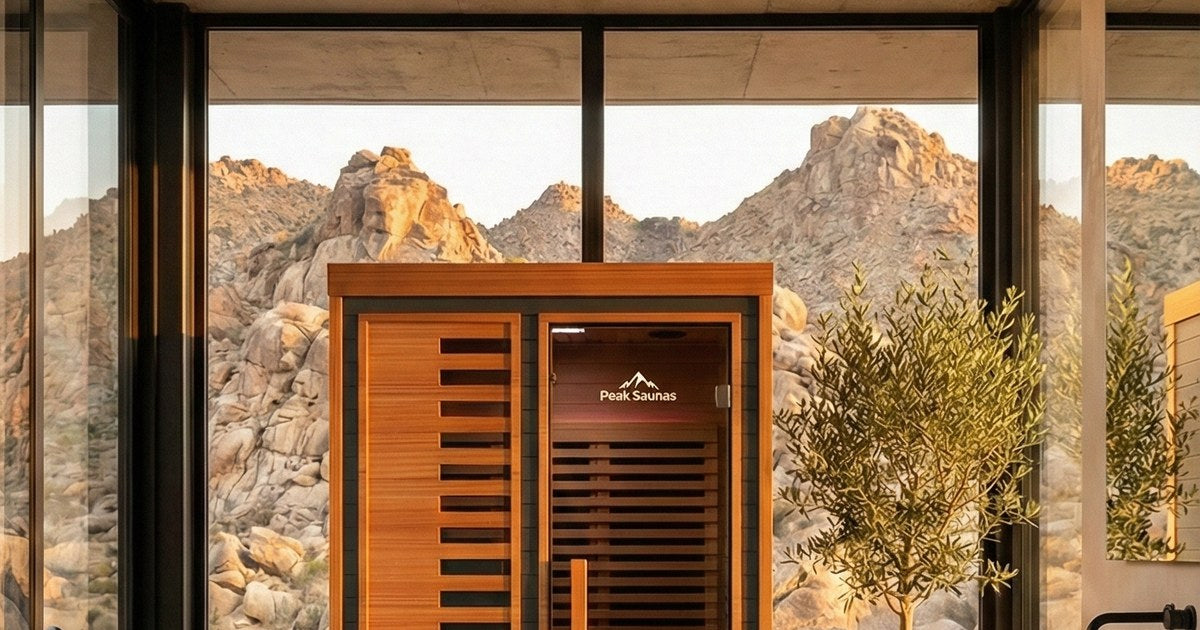
The choice between infrared and steam saunas comes down to how you want to experience heat therapy. Infrared saunas heat your body directly using light wavelengths, while steam saunas heat the air around you. This fundamental difference affects everything from operating temperature to health benefits to installation requirements.
After helping thousands of customers find their perfect home sauna, we've learned that understanding these differences is crucial to making a decision you'll be happy with for years to come.
How Each Sauna Type Works
Key takeaway: Traditional steam saunas heat the air to 180–200°F, while full-spectrum infrared saunas like those made by Peak Saunas operate at 120–150°F by emitting near, mid, and far infrared wavelengths that directly heat body tissue rather than the surrounding air. This lower ambient temperature allows longer, more comfortable sessions while achieving a comparable or greater core temperature increase. Peak Saunas models include free shipping and are backed by a 7-Year Residential Warranty.
Infrared Sauna Technology
Infrared saunas use infrared light panels to emit radiant heat that penetrates directly into your body—up to 1.5 inches beneath the skin surface. This is the same type of warming you feel from sunlight, minus the harmful UV rays.
The infrared spectrum includes three wavelengths:
- Near-infrared (NIR): 700-1200nm — Skin rejuvenation and wound healing
- Mid-infrared (MIR): 1200-3000nm — Improved circulation and pain relief
- Far-infrared (FIR): 3000nm-1mm — Deep tissue heating and detoxification
Full spectrum infrared saunas, like those we offer at Peak Saunas, combine all three wavelengths for comprehensive benefits.
Steam Sauna Technology
Traditional steam saunas (also called Finnish saunas) use an electric or wood-burning heater to warm rocks. Water poured over these heated rocks creates steam, raising the humidity to 10-20% while air temperatures reach 150-195°F (65-90°C).
The extreme ambient heat causes your body temperature to rise, triggering sweating and cardiovascular responses similar to moderate exercise.
Head-to-Head Comparison
| Feature | Infrared Sauna | Steam Sauna |
|---|---|---|
| Heat Source | Infrared light panels | Heated rocks + steam |
| Operating Temperature | 120-150°F (49-66°C) | 150-195°F (65-90°C) |
| Humidity Level | 10-20% | 10-20% (up to 100% in steam rooms) |
| Heat-Up Time | 10-15 minutes | 30-45 minutes |
| Session Length | 30-45 minutes | 15-20 minutes |
| Heat Penetration | Deep (1.5 inches) | Surface level |
| Energy Cost | ~$0.10-0.25/session | ~$0.50-1.00/session |
| Installation | Standard 120V outlet (most models) | May require 220V, ventilation |
| Maintenance | Minimal — wipe panels | Regular — heater, rocks, mold prevention |
| Average Price (Home) | $2,000-8,000 | $3,000-12,000 |
Health Benefits Compared
Both sauna types offer significant health benefits, but they achieve them through different mechanisms.
Cardiovascular Benefits
Research published in JAMA Internal Medicine followed 2,315 Finnish men over 20 years and found that frequent sauna use (4-7 sessions weekly) was associated with a 50% reduction in cardiovascular mortality compared to once-weekly use (Laukkanen et al., 2015).
While this landmark study focused on traditional saunas, infrared saunas produce similar cardiovascular responses. A review in Canadian Family Physician found that far-infrared sauna therapy improved exercise tolerance in chronic heart failure patients and reduced blood pressure in hypertensive patients (Beever, 2009).
The takeaway: Both sauna types benefit your heart. Infrared saunas may be better suited for those who can't tolerate extreme heat.
Detoxification
Your skin is your largest organ, and sweating is one of the body's primary detoxification pathways.
Infrared saunas may have an edge here. Because infrared heat penetrates deeper into tissue, studies suggest infrared sauna users excrete a higher percentage of toxins (including heavy metals like cadmium, lead, and mercury) compared to traditional sauna users, whose sweat contains more water.
Pain Relief and Recovery
Both sauna types help with muscle soreness and joint pain by increasing blood flow and reducing inflammation. However, the deep-penetrating heat of infrared saunas is often preferred by those with:
- Chronic pain conditions
- Arthritis
- Fibromyalgia
- Post-workout muscle recovery
The lower operating temperature also means you can comfortably stay longer, maximizing therapeutic exposure.
Weight and Metabolism
A single sauna session can burn 200-600 calories as your body works to cool itself. While this shouldn't replace exercise, it's a meaningful addition to a healthy lifestyle.
Both types elevate heart rate to levels comparable with moderate cardio. The difference is duration—infrared's lower temperature allows for longer sessions.
Who Should Choose Infrared?
Infrared saunas are ideal if you:
- Prefer lower temperatures — The gentler heat is easier to tolerate, especially for heat-sensitive individuals
- Want deeper tissue penetration — For chronic pain, muscle recovery, or targeted therapy
- Have limited space — Many infrared saunas are compact and portable
- Need easy installation — Most plug into standard outlets
- Value energy efficiency — Lower operating costs over time
- Have respiratory sensitivity — Dry heat is easier on the lungs than humid environments
Who Should Choose Steam?
Steam saunas are ideal if you:
- Love intense heat — Nothing matches the enveloping warmth of a traditional sauna
- Value the ritual — The experience of pouring water on hot rocks is meditative
- Have sinus or respiratory issues — Steam can help open airways (though some prefer dry heat)
- Want the "authentic" experience — Steam saunas have centuries of cultural tradition
- Don't mind installation complexity — You have the space and electrical setup
Installation and Space Requirements
Infrared Sauna Installation
Most infrared saunas are remarkably simple to install:
- Electrical: Standard 120V outlet for 1-2 person models; larger units may need 220V
- Space: 4×4 feet minimum for a 1-person; 5×6 feet for 2-person
- Location: Indoor (bedroom, basement, garage) or outdoor (with weather protection)
- Ventilation: Minimal required—some airflow is helpful but no special ducting needed
- Assembly: Most models are pre-fabricated; 2 people can assemble in 1-2 hours
Peak Saunas offers free assembly guidance and our cabins are designed for tool-free setup.
Steam Sauna Installation
Traditional saunas require more planning:
- Electrical: 220V dedicated circuit for most electric heaters
- Space: Minimum 5×5 feet; traditional design assumes built-in benches
- Ventilation: Required to manage humidity and prevent mold
- Flooring: Must be water-resistant (tile, concrete, treated wood)
- Assembly: Often requires professional installation or significant DIY skill
Long-Term Costs
Beyond the purchase price, consider operating costs:
Infrared Sauna (1,500W typical):
- Electricity: ~$0.15 per 45-minute session
- Annual cost (4x/week): ~$30
- Maintenance: Occasional panel cleaning
Steam Sauna (6,000W typical):
- Electricity: ~$0.75 per 30-minute session
- Annual cost (4x/week): ~$150
- Maintenance: Heater inspection, rock replacement, mold prevention
Over 10 years, an infrared sauna can save $1,000+ in operating costs compared to a comparable steam setup.
Why Peak Saunas Chooses Infrared
We specialize in premium infrared saunas because we believe they offer the best combination of health benefits, accessibility, and value for home use.
Our full spectrum infrared saunas deliver:
- All three infrared wavelengths for comprehensive therapy
- Low-EMF carbon panels for safe, even heat distribution
- Premium Canadian hemlock or cedar construction for durability and aesthetics
- Easy plug-and-play installation with no special wiring
- Industry-leading warranties because we stand behind our products
Explore our infrared sauna collection to find the perfect fit for your space and wellness goals.
Making Your Decision
If you're still undecided, ask yourself:
- How do you handle heat? If extreme temperatures make you uncomfortable, infrared is your answer.
- What's your primary goal? Deep tissue therapy and detox favor infrared. Intense, ritualistic heat experience favors steam.
- Where will it go? Limited space or standard electrical? Infrared wins on practicality.
- What's your budget? Initial and long-term costs typically favor infrared.
For most home users seeking consistent, accessible heat therapy with proven health benefits, infrared saunas offer the best overall value.
FAQ
Is infrared sauna as effective as steam sauna?
Yes, and for many purposes, more effective. While both produce cardiovascular benefits, infrared's deeper heat penetration may provide superior results for pain relief, detoxification, and muscle recovery. The ability to use infrared saunas longer (due to lower temperatures) also allows for extended therapeutic exposure.
Can you get the same benefits from a steam sauna?
Both sauna types offer significant overlapping benefits including improved circulation, stress relief, better sleep, and cardiovascular health. The main differences are in how you experience the heat and some specific therapeutic applications where infrared's deep-penetrating warmth has advantages.
Is infrared sauna safer than steam sauna?
Infrared saunas operate at lower temperatures (120-150°F vs 150-195°F), which many find easier to tolerate and potentially safer for those with heat sensitivity. Both are generally safe for healthy adults when used as directed. Those with cardiovascular conditions should consult a physician before using either type.
Do infrared saunas use less electricity than steam saunas?
Yes, significantly less. A typical infrared sauna uses 1,500-1,800 watts compared to 4,500-6,000 watts for a traditional electric sauna heater. This translates to roughly 1/4 the energy cost per session, adding up to substantial savings over time.
Which sauna type is better for weight loss?
Both can support weight loss efforts by burning calories (200-600 per session) and supporting metabolic health. Infrared saunas allow longer sessions at comfortable temperatures, potentially burning more calories per use. However, sauna use should complement—not replace—regular exercise and healthy nutrition.
References:
-
Laukkanen, T., Khan, H., Zaccardi, F., & Laukkanen, J. A. (2015). Association Between Sauna Bathing and Fatal Cardiovascular and All-Cause Mortality Events. JAMA Internal Medicine, 175(4), 542-548.
-
Beever, R. (2009). Far-infrared saunas for treatment of cardiovascular risk factors: Summary of published evidence. Canadian Family Physician, 55(7), 691-696.
-
Within the infrared category, there's another key choice to make—read our full spectrum vs far infrared sauna guide to understand the differences.
Hussain, J., & Cohen, M. (2018). Clinical Effects of Regular Dry Sauna Bathing: A Systematic Review. Evidence-Based Complementary and Alternative Medicine, 2018.
Low EMF Infrared Sauna: What It Actually Means (No
Infrared Sauna and Blood Pressure: What the Resear
Infrared Sauna for Arthritis: Research-Backed Reli
Infrared Sauna for Detox: Separating Fact from Fic
Corner Infrared Saunas: Space-Saving Options
Infrared Sauna for Fibromyalgia: Pain Relief Evide


