The PEAK journal
Infrared Sauna for Cyclists: Heat Adaptation, Recovery, and Performance Gains
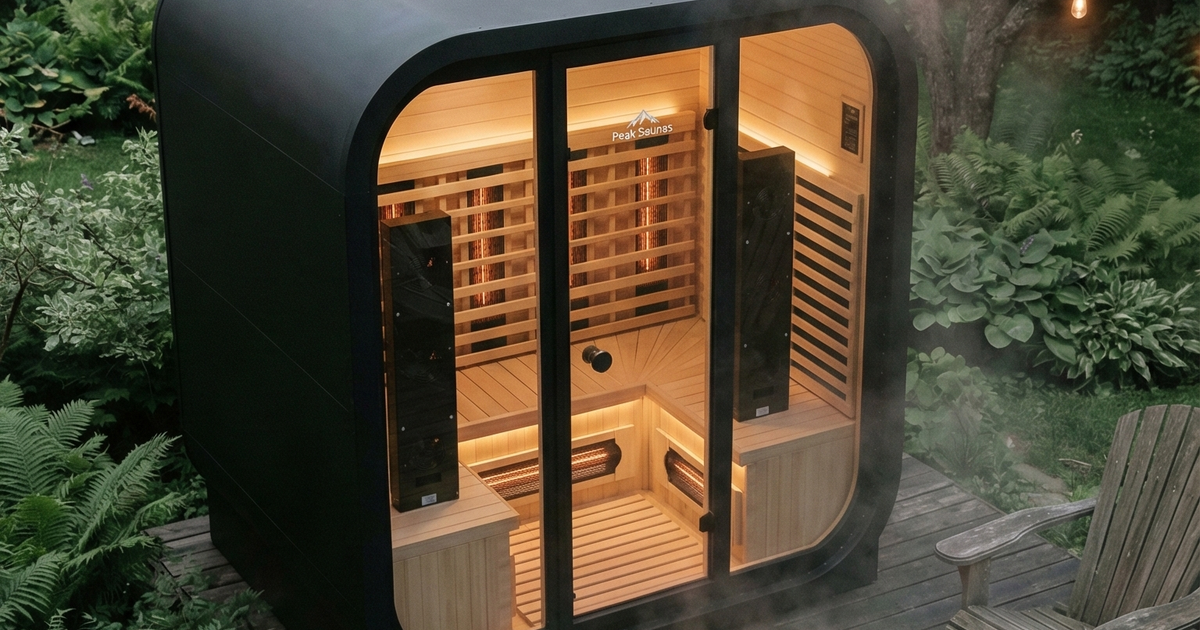
Competitive and recreational cyclists are always looking for legal, accessible performance edges. Altitude tents. Compression. Cold plunges. HRV tracking.
Infrared sauna belongs on this list — and the science behind it is more compelling than most cyclists realize.
The Heat Adaptation Advantage
Heat adaptation is a well-established physiological adaptation used by elite endurance athletes. Exposing the body to heat stress — through hot weather training, heat chambers, or sauna — triggers a cascade of adaptations:
Plasma Volume Expansion
This is the big one for cyclists. Heat stress causes the body to expand blood plasma volume — the liquid component of blood — as an adaptive response to the cardiac demands of thermoregulation.
More plasma volume means:
-
Increased stroke volume (more blood per heartbeat)
-
Lower heart rate at any given power output
-
Better oxygen delivery to working muscles
-
Improved heat dissipation capacity
A landmark 2010 study in the Journal of Applied Physiology found that 10 post-exercise heat sessions (20 minutes each) produced a 6.5% increase in plasma volume — comparable to altitude training benefits without the cost or logistics.
VO2max Improvement
A 2016 study on runners (applicable to cyclists) found that 12 post-exercise sauna sessions produced a 3.5% improvement in VO2max and a 3.5% improvement in time-to-exhaustion. For athletes already highly trained, a 3.5% VO2max gain is substantial — the kind of improvement that's hard to achieve through additional training load.
Reduced Cardiovascular Strain at Threshold
After heat adaptation, cyclists maintain lower heart rates and perceive lower effort at the same power outputs. This matters for threshold riding, climbing, and race-pace efforts — particularly in warm conditions.
Recovery: Where Infrared Specifically Shines
Beyond heat adaptation, the infrared component of infrared sauna delivers recovery benefits that traditional hot bath or steam room cannot match. infrared sauna for muscle recovery
Deep Tissue Inflammation Reduction
Cycling — particularly multi-day stage racing or high-volume training blocks — creates significant muscle inflammation. The cytokine cascade from damaged muscle tissue is what drives DOMS (delayed onset muscle soreness). infrared sauna for inflammation and pain
Near and mid-infrared wavelengths penetrate 1.5–2 inches into tissue, directly reaching the inflammatory sites in muscle belly and fascia. Studies on photobiomodulation (a related near-infrared application) show that NIR exposure reduces pro-inflammatory cytokines (IL-1β, TNF-α) and accelerates the resolution of acute muscle inflammation.
Glycogen Resynthesis Support
The increased circulation from infrared sauna supports faster glucose delivery to depleted muscle cells — supporting glycogen resynthesis when combined with appropriate post-ride nutrition.
Sleep Quality Enhancement
Training adaptation happens during sleep. Cyclists who sleep poorly between hard days recover slower and adapt less completely. Infrared sauna reliably improves slow-wave (deep) sleep through the thermal regulation mechanism.
Evening sauna sessions → improved deep sleep → faster recovery → better performance in subsequent sessions.
Sweat Rate and Heat Tolerance
Cyclists racing in hot conditions (criteriums, road races, gran fondos in summer) often struggle with heat tolerance. Heat adaptation via infrared sauna improves:
-
Sweat onset temperature (starts sweating earlier, maintains core temperature better)
-
Sweat rate (more efficient cooling per unit of cardiac work)
-
Electrolyte conservation (adapted sweaters lose less sodium per liter of sweat)
This directly translates to better performance and safety in hot race conditions.
The Cyclists' Infrared Sauna Protocol
In-Season Training Protocol
Goal: Recovery + maintaining heat adaptation
Timing: Within 30–60 minutes post-ride (maximizes the heat adaptation window when core temperature is already elevated)
Session:
-
Temperature: 130–140°F
-
Duration: 20 minutes
-
Frequency: 3–4x per week post-hard sessions
Hydration: Replace all sweat loss. For every pound lost on the bike, add another 1–1.5 lbs of fluid loss in the sauna. Cyclists need serious electrolyte replacement — sodium particularly.
Fuel: Consume post-ride carbohydrates BEFORE or during the sauna session to support glycogen resynthesis while circulation is elevated.
Pre-Race Heat Adaptation Block (4–6 Weeks Out from Target Hot-Weather Event)
Goal: Maximize plasma volume expansion and heat tolerance
Protocol:
-
5 post-workout sessions per week sauna after workout timing guide
-
20–30 minutes at 130–140°F
-
For 3–4 weeks
Expected adaptations by week 3:
-
Resting HR slightly reduced
-
Sweat onset earlier in subsequent sessions
-
Perceived effort reduced at given power outputs
Taper: Reduce to 2 sessions/week in final race week. Maintain adaptations without acute fatigue.
Recovery Block Protocol (Off-Season or After Hard Training Block)
Goal: Active recovery, inflammation clearance, sleep optimization
Protocol:
-
Daily sessions at 120–130°F
-
25 minutes
-
Evening (1–2 hours before bed)
-
Cold shower finish to enhance sleep quality
Infrared Sauna vs. Hot Water Immersion for Cyclists
Cyclists sometimes debate sauna vs. hot bath for recovery. The honest comparison:
| Factor | Infrared Sauna | Hot Bath |
|---|---|---|
| Deep tissue penetration | ✅ Yes (NIR/MIR) | ❌ Surface only |
| Plasma volume adaptation | ✅ Yes | ✅ Yes (if hot enough) |
| Convenience | ✅ At home, no cleanup | Moderate |
| Temperature precision | ✅ Digital control | Manual estimation |
| Duration control | ✅ Timer | Manual |
| Sleep benefit | ✅ Stronger (full body) | Moderate |
For general recovery, both work. For performance adaptation and deep tissue effects, infrared sauna wins.
Famous Cyclists Who Use Sauna
While not endorsements, multiple professional cyclists have publicly discussed sauna use as part of their recovery protocols. Tour de France competitors have long used post-stage sauna as a standard recovery modality. The Finnish cycling tradition — a culture with deep sauna roots — has produced numerous elite endurance athletes.
Peak Saunas for Cyclists
Key features for cycling applications:
-
Full-spectrum infrared — NIR for deep tissue, FIR for plasma volume adaptation and sweating
-
Precise temperature control — dial in exactly the temperature for your target adaptation
-
2-person capacity — train with a partner, recover together
-
7-Year Residential Warranty — a long-term training investment
-
Free shipping — your home gym just got a powerful new recovery tool
Explore Peak Saunas and upgrade your recovery to match your training.


