The PEAK journal
3-Person Sauna with Red Light Therapy: Full Guide
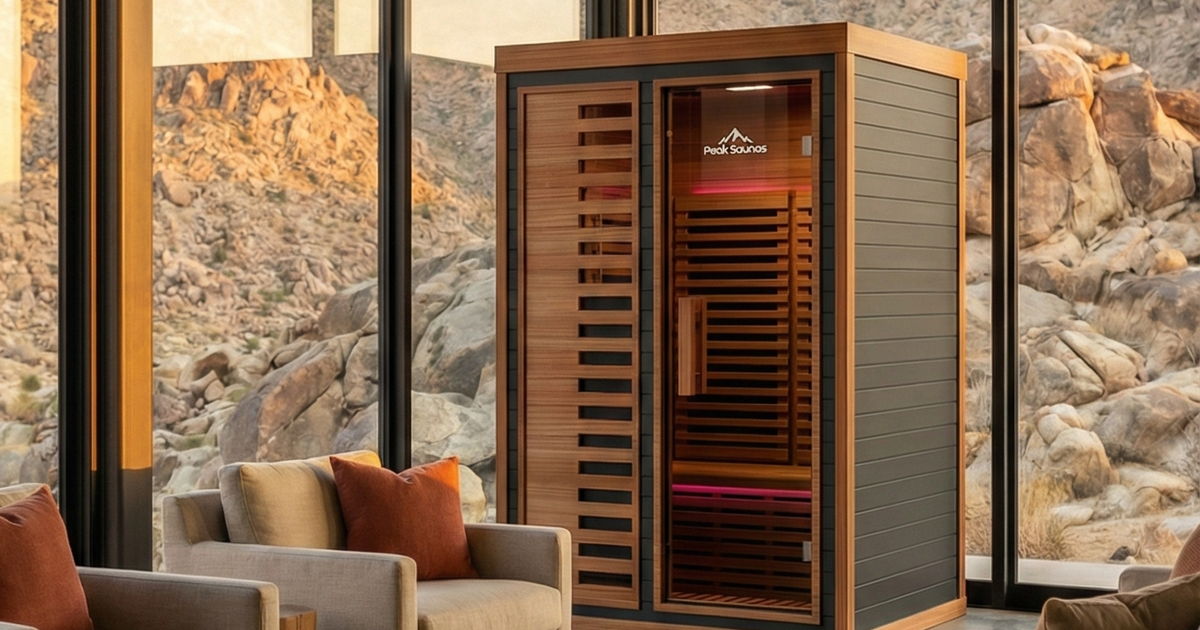
Combining a 3 person sauna with red light therapy isn't a gimmick — it's one of the most research-backed home wellness configurations available. Infrared heat and red/near-infrared light work through related but distinct biological pathways, and when used together, they compound each other's benefits in meaningful ways.
This guide breaks down the science, explains what to look for in a combined unit, and answers every question you'd want answered before investing in this setup.
Why Combine Infrared Sauna and Red Light Therapy?
At first glance, you might wonder: aren't these the same thing? They're not — but they're related.
Infrared sauna primarily uses far-infrared wavelengths (5,000–14,000 nm) to heat body tissue. The heat causes physiological responses: increased heart rate, vasodilation, sweating, heat shock protein production, and deep muscle penetration. The goal is systemic heat stress and its downstream benefits. infrared sauna for muscle recovery
Red light therapy (photobiomodulation) uses red (630–700 nm) and near-infrared (700–1,100 nm) wavelengths — much shorter than sauna far-infrared. These wavelengths don't heat tissue significantly; instead, they're absorbed by chromophores in mitochondria (specifically cytochrome c oxidase), which boosts cellular ATP production and triggers cascading repair and regeneration responses.
So you're getting: 1. Systemic heat therapy → cardiovascular conditioning, HSP activation, detox sweating, muscle recovery 2. Cellular photobiomodulation → mitochondrial energy, collagen synthesis, reduced inflammation at the cellular level, neurological support infrared sauna cardiovascular health guide infrared sauna for inflammation and pain
The two modalities are genuinely additive for many outcomes. Several researchers have noted that the pre-conditioning effect of red light before heat stress may enhance heat shock protein activation. Others have found that combining red light with infrared heat improves skin collagen remodeling beyond either modality alone.
The Evidence for Each Modality
Infrared Sauna Research
Cardiovascular health: Laukkanen et al. (2018, Mayo Clinic Proceedings) found regular sauna use (4–7x/week) associated with 50%+ reduction in cardiovascular mortality risk over a 20-year follow-up. The mechanisms include improved cardiac output, reduced arterial stiffness, and favorable changes in lipid profiles.
Muscle recovery: A 2015 Springerplus study demonstrated that far-infrared sauna use post-resistance training significantly reduced DOMS markers and improved recovery speed versus passive rest.
Mental health: Research published in Complementary Therapies in Clinical Practice (2018) found significant reductions in anxiety and fatigue after 8 weeks of infrared sauna use, with improvements comparable to some pharmacological interventions.
Red Light Therapy Research
Cellular energy and mitochondrial function: A landmark series of studies by Hamblin et al. (Harvard Medical School) established that red and near-infrared light stimulate cytochrome c oxidase, the key enzyme in mitochondrial ATP synthesis, increasing cellular energy output by up to 200% in compromised cells.
Skin health and collagen: Multiple RCTs have demonstrated that red light (630–660 nm) increases dermal collagen density, reduces wrinkle depth, and improves skin texture. A 2014 study in Photomedicine and Laser Surgery found measurable improvements in skin complexion after 30 sessions.
Inflammation and pain: A 2010 Cochrane Review confirmed the benefit of low-level laser/light therapy for chronic pain, and subsequent research has extended these findings to home-use red light devices.
Neurological and mood effects: Preliminary research on transcranial photobiomodulation (shining near-infrared light on the skull) suggests cognitive and mood benefits. While this is an emerging area, it's mechanistically plausible given the depth of NIR penetration.
What to Look for in a 3 Person Sauna with Red Light Therapy
Not all combined units are created equal. Some "red light therapy" in budget saunas is little more than red-tinted LEDs with insufficient power density to do anything meaningful. Here's how to evaluate:
Red Light Power Density (Irradiance)
The critical spec is power density (irradiance) at the surface — measured in mW/cm². Effective red light therapy requires:
-
≥20 mW/cm² at 6 inches for basic surface benefits
-
≥50 mW/cm² at 12 inches for deeper tissue penetration
If a manufacturer won't share irradiance specs, assume the red light is decorative.
Wavelengths Used
Look for explicitly stated wavelengths in the 630–660 nm (red) and 810–850 nm (near-infrared) ranges. These are the wavelengths with the strongest clinical evidence. Broad "LED panel" without specific wavelengths is a red flag.
Panel Placement
In a 3 person sauna, the red light panels should be positioned on the wall facing the occupants when seated — typically the back wall or integrated into the front wall/door. Some units mount panels above the bench. What matters is that all three occupants can receive consistent exposure to the emitting panels.
Full-Spectrum Infrared Heaters
A sauna with genuine red light therapy deserves full-spectrum infrared heaters (near, mid, and far IR), not just far-infrared. Near-infrared from the sauna heaters complements the photobiomodulation effect and enhances skin benefits.
Separate Controls
Red light and infrared heat should have independent controls — you may want to use red light before the session (to pre-treat skin), during (for dual stimulation), or after. Quality units allow this.
How to Use a 3 Person Sauna + Red Light Combo
Optimal protocol for combined use:
- Pre-heat the sauna to your target temperature (130–145°F for most users)
- Red light first (optional but effective): Sit in front of the red light panels for 5–10 minutes before the sauna heats fully. Skin benefits from red light are enhanced at normal or slightly warm skin temperature.
- Full session (20–35 minutes): Run both the infrared heaters and red light simultaneously. The heat drives sweating and cardiovascular response; the red light continues its cellular work.
- Cool-down: Cold shower or 5 minutes outside; rehydrate.
For skin-focused sessions: Lead with 10 minutes of red light at normal temperature, then add heat for 20 minutes. The red light pre-treatment may enhance the sauna's skin-rejuvenating effects.
For recovery sessions: Heat-forward. Use infrared at full intensity with red light as a secondary modality. Focus on the systemic recovery benefits of heat.
3 Person Setup Considerations
In a 3 person unit, the social dynamic of combined red/infrared therapy is worth thinking about:
-
Bench arrangement: You want all three users facing the red light panels. A straight bench across from the panel wall is ideal.
-
Chromotherapy vs. therapeutic red light: These are different. Chromotherapy LEDs are ambient mood lighting — pleasant but not therapeutic. Make sure you're buying actual photobiomodulation capability, not just colored mood lighting.
-
Session coordination: In a group setting, establish a shared protocol so everyone starts at the same time and temperature. This isn't just etiquette — it affects the outcome for all users.
PEAK 3 Person Units with Red Light
At PEAK, our 3 person saunas with integrated red light therapy feature medical-grade LED panels at clinically relevant wavelengths (630 nm red + 850 nm NIR), full-spectrum carbon panel heaters with low EMF, and Canadian Hemlock or Cedar construction. Each unit includes independent controls for heat and red light, so you can customize your protocol. Check current pricing at peaksaunas.com.
Frequently Asked Questions
Is red light therapy in a sauna as effective as a standalone red light panel? For most users, yes — if the integrated panels meet minimum irradiance specs (≥20 mW/cm² at treatment distance). Purpose-built red light therapy panels may offer higher irradiance for intensive protocols, but for daily maintenance use, combined sauna units are highly effective and more convenient.
Can you use red light therapy and infrared sauna every day? Most researchers support daily red light therapy sessions. Daily infrared sauna use is also safe for most healthy adults. Combined daily use is reasonable — start with 3–4x/week and assess how your body responds before going daily.
Does red light therapy in a sauna help with weight loss? The evidence for red light therapy in fat reduction (lipocyte photobiomodulation) is mixed and the effect sizes are small. Infrared sauna use does transiently increase caloric burn (approximately 10–20 extra calories per 30-minute session vs. rest). Neither modality is a weight-loss tool on its own — they're best framed as recovery and health optimization tools.
How far should you sit from the red light panels? Most integrated sauna red light panels are designed for use at 12–24 inches distance (which is where most people naturally sit in a cabin). Check your manufacturer's specs for the effective treatment distance for their specific panels.
Does the heat affect the red light LEDs? Quality LED panels are designed to operate in the temperature ranges present inside infrared saunas (up to 150°F). Cheap panels may degrade faster in heat. This is another reason to buy from established brands — they've engineered their panels for sauna temperatures.
Is a 3 person sauna with red light therapy worth the price premium over a basic unit? If you'll use the red light regularly (which is easy when it's already built in), yes. The combined unit eliminates the need for a separate red light panel ($300–$1,200) and makes daily use effortless. The convenience factor alone often makes it worth it.
See also: Infrared Sauna + Red Light Therapy: Deep Dive | 3 Person Sauna Therapy Guide | 4 Person Sauna with Red Light Therapy


