The PEAK journal
Infrared Sauna Skin Benefits: What the Science Actually Says
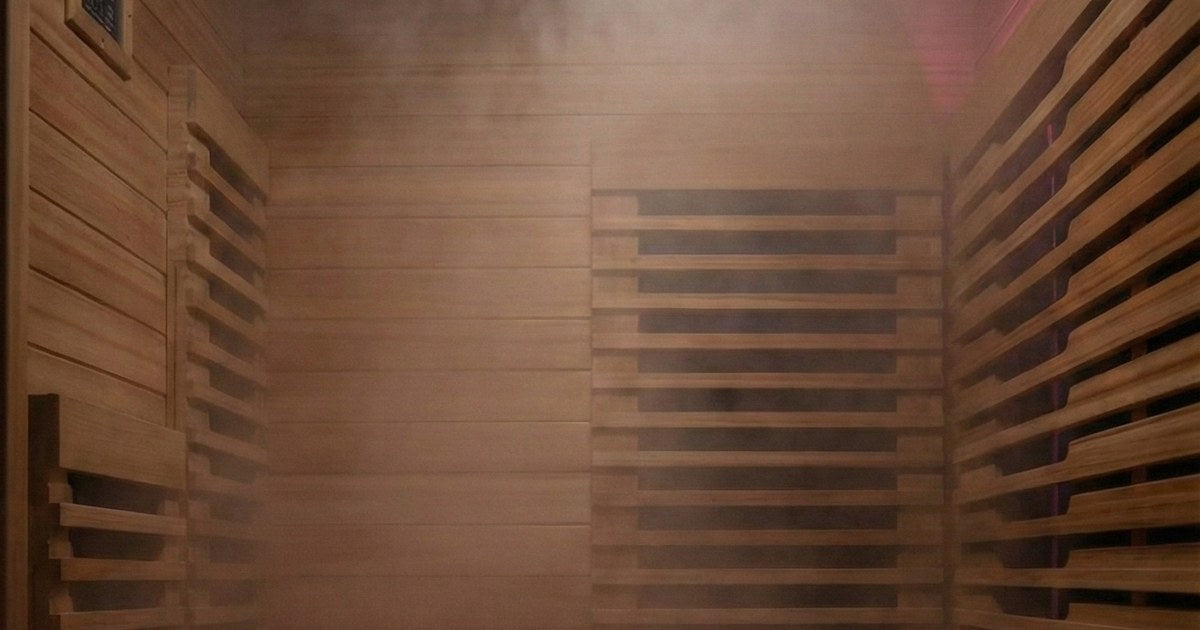
Infrared sauna therapy improves skin health through deep tissue heating, increased circulation, and sweat-based purging — with peer-reviewed research backing benefits for collagen production, acne, eczema, psoriasis, and overall skin tone. Here's exactly what the evidence shows.
How Infrared Heat Affects Your Skin
Unlike a traditional sauna that heats the air around you, infrared panels emit wavelengths that penetrate 1–3 centimeters into skin tissue. This direct heating triggers a cascade of biological responses that surface-level skincare products simply cannot reach.
The core mechanisms:
- Increased circulation — Blood vessels dilate, flooding skin cells with oxygen and nutrients
- Deep sweating — Core body temperature elevation triggers eccrine gland activation; you sweat at lower air temperatures (120–140°F vs. 185°F traditional)
- Cellular stress response — Mild heat stress activates heat shock proteins (HSPs), which repair damaged proteins and support cellular renewal
- Collagen stimulation — Near-infrared wavelengths directly activate fibroblasts, the cells that manufacture collagen
These aren't theoretical. They're measurable physiological responses documented in multiple clinical studies.
Collagen Production and Anti-Aging Effects
This is where infrared sauna pulls ahead of most anti-aging interventions.
A 2006 study published in Photodermatology, Photoimmunology & Photomedicinefound that near-infrared (NIR) light therapy — the same wavelength range infull-spectrum infrared saunas — significantly increased collagen density in human skin. Participants showed measurable improvements in skin elasticity and a reduction in fine lines after consistent exposure.
How it works: NIR wavelengths (700–1400 nm) are absorbed by mitochondria in fibroblast cells, stimulating ATP production. More energy in fibroblasts means more collagen synthesis. The result is structurally denser skin with better tensile strength.
The sweating component contributes too. Deep sweating flushes out dead skin cells and unclogs pores, removing the debris that makes skin look dull and aged. Regular users consistently report improved skin tone and texture within 4–6 weeks.
PEAK full-spectrum panels include near, mid, and far infrared wavelengths specifically to deliver this collagen-stimulating range. It's not a feature every infrared sauna includes — many "infrared" saunas only emit far infrared, missing the NIR anti-aging benefit entirely.
Acne: The Sweat-Pore Connection
Acne develops when dead skin cells, sebum, and bacteria clog pores. Infrared sauna addresses all three root causes simultaneously.
Deep sweating opens pores and flushes debris. The eccrine glands (sweat glands distinct from sebaceous/oil glands) force fluid through the skin, carrying cellular waste and trapped particulates with it. This is a mechanical cleansing effect — literally flushing congested pores from the inside.
Improved circulation reduces sebum overproduction. Poor circulation and chronic low-grade inflammation are drivers of excess sebum production. Better blood flow normalizes sebaceous gland activity over time.
Heat kills P. acnes bacteria. The bacterium primarily responsible for inflammatory acne (Cutibacterium acnes, formerly P. acnes) is sensitive to elevated temperatures. Extended heat exposure reduces bacterial load on skin.
Clinical note: A 2011 study in the Journal of Cosmetic and Laser Therapy documented significant acne improvement following repeated far infrared therapy sessions. Participants reported fewer active lesions and reduced post-inflammatory hyperpigmentation over 12 weeks.
Protocol for acne: 3–4 sessions per week, 20–30 minutes at 120–130°F. Always shower immediately after — sweated-out debris needs to be rinsed off, not reabsorbed.
Eczema and Psoriasis Relief
Both conditions involve dysregulated immune response causing skin inflammation. The mechanism by which infrared helps is primarily anti-inflammatory, not curative.
For eczema (atopic dermatitis): Research published in Acta Dermato-Venereologica found that regular far infrared sauna use reduced eczema severity scores in patients with mild-to-moderate atopic dermatitis. The proposed mechanism: heat-induced sweating helps normalize skin barrier function and reduces the IgE-mediated inflammatory response that drives flares.
Improved circulation also means better delivery of endogenous anti-inflammatory compounds to affected skin regions.
For psoriasis: A small but clinically meaningful trial (Sobajima et al., 2000) documented psoriasis improvement following repeated infrared sauna sessions in patients who hadn't responded well to conventional treatments. The researchers attributed the benefit to enhanced microcirculation and immunomodulatory effects.
Important caveats: Start slow. Some eczema and psoriasis patients experience initial flares during the first 1–2 sessions as heat increases skin sensitivity. Begin at lower temperatures (100–110°F), shorter sessions (10–15 min), and increase gradually. If you're on immunosuppressants or biological treatments, consult your dermatologist before starting.
Wound Healing and Scar Reduction
This is an underappreciated benefit with solid mechanistic support.
Near-infrared light therapy is used clinically in wound care settings for its ability to accelerate tissue repair. The photobiomodulation effect — NIR light activating mitochondria — speeds up cellular proliferation and migration during the healing cascade.
A 2009 review in Photomedicine and Laser Surgery confirmed that low-level infrared irradiation accelerates wound closure and reduces scar formation by promoting organized collagen deposition rather than the disorganized cross-linking that creates raised or hardened scars.
For existing scars, repeated infrared exposure has shown modest remodeling effects — particularly for hypertrophic (raised) scars — by promoting collagen turnover over time.
Skin Detoxification: What Sweat Actually Removes
The "detox" conversation around saunas is often oversimplified in both directions — overpromised by wellness influencers, dismissed entirely by skeptics. The actual data is more nuanced.
Sweat does contain measurable concentrations of: - Heavy metals: Lead, mercury, cadmium, arsenic — confirmed by multiple peer-reviewed studies (Sears et al., 2012, published in the Journal of Environmental and Public Health) - BPA and phthalates: Endocrine-disrupting compounds found in plastics - Urea and ammonia: Metabolic waste products - Lactic acid: A contributor to skin dullness and congestion
Is sweat the primary detox route? No — the liver and kidneys do the heavy lifting. But sweat is a confirmed secondary route, and the concentrations of heavy metals found in sauna sweat are clinically significant, particularly for individuals with elevated exposure (urban environments, occupational exposure, certain diets).
For skin specifically, sweat-mediated clearance of lactic acid and urea has a direct brightening and texture-smoothing effect that regular users notice within weeks.
What Skin Types Benefit Most
Infrared sauna is broadly safe for most skin types, but some benefit more than others:
| Skin Concern | Expected Benefit | Timeframe |
|---|---|---|
| Dull/uneven tone | Significant improvement | 3–4 weeks |
| Fine lines/anti-aging | Moderate improvement | 6–8 weeks |
| Acne (non-cystic) | Significant improvement | 4–6 weeks |
| Eczema | Moderate-significant | 6–12 weeks |
| Psoriasis | Moderate | 8–12 weeks |
| Hyperpigmentation | Mild improvement | 8+ weeks |
Caution: If you have rosacea, infrared heat can temporarily worsen flushing during and immediately after sessions. Many rosacea patients tolerate lower temperatures well, but start conservatively.
Protocol: Maximizing Skin Benefits from Infrared Sauna
Frequency: 4–5 sessions per week for therapeutic skin goals; 2–3 sessions for maintenance
Temperature: 120–140°F (lower end for sensitive skin conditions)
Duration: 20–30 minutes per session
Pre-session: - Cleanse skin beforehand — remove makeup, sunscreen, skincare products - Hydrate well (16 oz water before session)
Post-session: - Shower within 5–10 minutes to rinse off sweat - Apply moisturizer or serum while skin is still slightly warm — absorption is enhanced post-sauna - Hydrate again (16–24 oz water)
Timing tip: Evening sessions leverage the post-sauna core temperature drop to improve sleep, which itself is a major driver of skin repair. Growth hormone peaks during deep sleep — the same hormone that drives skin cell turnover.
The Full-Spectrum Advantage for Skin
Not all infrared saunas are equal for skin benefits. The wavelength breakdown matters:
- Near infrared (700–1400 nm): Collagen stimulation, photobiomodulation, wound healing
- Mid infrared (1400–3000 nm): Deep tissue penetration, circulation
- Far infrared (3000+ nm): Core heating, deep sweating, detoxification
Single-spectrum saunas (far infrared only) deliver heat benefits and sweating but miss the NIR collagen and cellular repair benefits entirely. PEAK full-spectrum panels cover all three wavelength ranges — which is why we spec them the way we do.
You can browse our full-spectrum infrared sauna lineup at peaksaunas.com/products and read more about how infrared wavelengths work.
FAQ
How long before I see skin benefits from infrared sauna? Most users notice improved skin tone and reduced dullness within 2–3 weeks of consistent use (3–5 sessions/week). Collagen-related improvements like reduced fine lines take longer — expect 6–8 weeks for measurable change.
Can I use skincare products before infrared sauna? Remove products before your session. Heat and sweating will push topicals deeper into skin unpredictably, and some ingredients (retinoids, acids) are photosensitive or unstable with heat. Apply your routine after your post-session shower.
Is infrared sauna safe for sensitive skin? Generally yes, at lower temperatures (100–115°F) and shorter durations. Those with rosacea, active eczema flares, or sunburned skin should avoid sessions until the skin is stable. Start with 10-minute sessions and build tolerance.
Does sweating in a sauna clog pores? The opposite. Eccrine sweat glands (which activate during sauna) are distinct from sebaceous glands and serve a flushing function. Deep sweating opens and cleanses pores. The key is showering promptly after your session.
Can infrared sauna replace my skincare routine? It's complementary, not a replacement. Think of sauna as enhancing your skincare by improving circulation (better product absorption), clearing congestion, and stimulating collagen — things topical products can't do from the outside.
Research referenced: Barolet et al. (2016), Photobiomodulation and collagen; Sears et al. (2012), Arsenic, cadmium, lead, and mercury in sweat; Sobajima et al. (2000), Psoriasis and far infrared; Menezes et al. (2011), Infrared acne therapy.


