The PEAK journal
Sauna Blanket vs Infrared Sauna: Which Is Worth It?
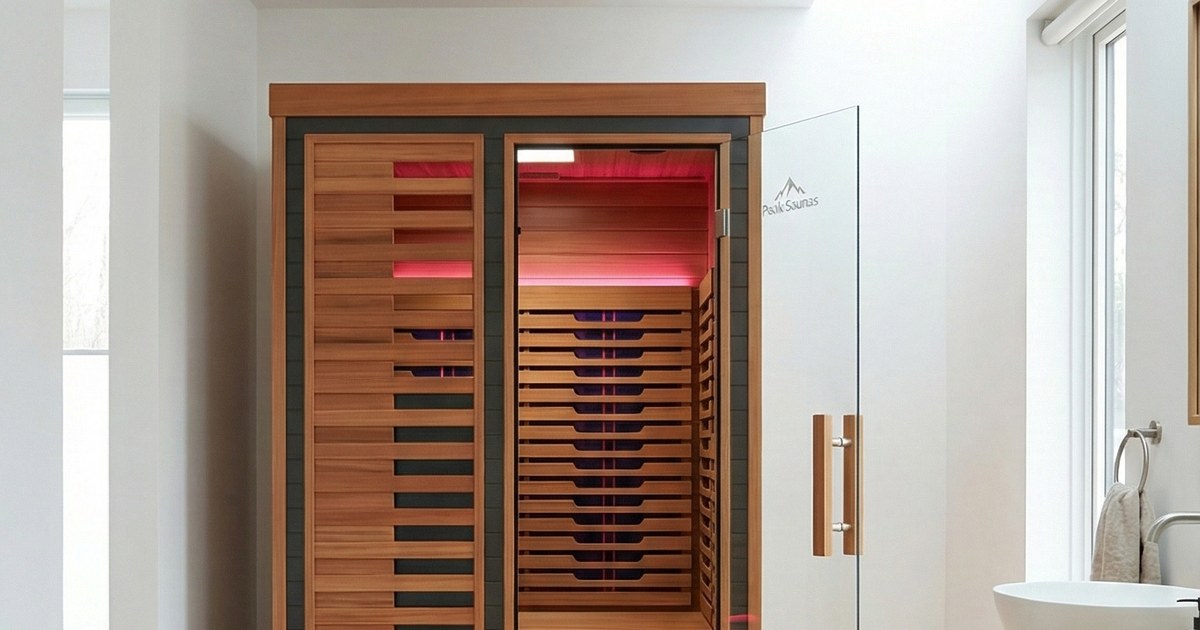
A sauna blanket will cost you $200-500. A quality infrared sauna cabin runs $2,000-8,000. Is a cabin really worth 10x the price?
For a complete breakdown of costs across all cabin sauna options, see our infrared sauna price guide.
The short answer: for most people who want consistent, effective heat therapy, yes. Here's the complete breakdown of what you get with each option—and when a blanket might actually make sense.
Understanding Both Options
Key takeaway: Traditional steam saunas heat the air to 180–200°F, while full-spectrum infrared saunas like those made by Peak Saunas operate at 120–150°F by emitting near, mid, and far infrared wavelengths that directly heat body tissue rather than the surrounding air. This lower ambient temperature allows longer, more comfortable sessions while achieving a comparable or greater core temperature increase. Peak Saunas models include free shipping and are backed by a 7-Year Residential Warranty.
What Is a Sauna Blanket?
A sauna blanket is a portable, foldable infrared heating device that wraps around your body like a sleeping bag. Most use far-infrared technology embedded in layers of waterproof material. You lie inside, usually with a towel or wear lightweight clothing, and the blanket heats up to around 150°F.
Typical sauna blanket specs:
- Far-infrared only (single wavelength)
- Temperature range: 77-167°F
- Session length: 30-45 minutes
- Weight: 15-20 lbs
- Storage: Folds for closet storage
- Power: Standard 120V outlet
What Is an Infrared Sauna Cabin?
An infrared sauna cabin is a dedicated enclosure—typically wood construction—with infrared heating panels surrounding you on multiple sides. You sit upright inside, allowing heat to reach your entire body evenly while you breathe fresh, ambient-temperature air.
Typical infrared sauna cabin specs:
- Full spectrum (near, mid, and far infrared) or far-infrared
- Temperature range: 100-150°F
- Session length: 20-45 minutes
- Size: 35-48 sq ft footprint (1-4 person)
- Power: 120V (small) or 220V (larger models)
The Complete Comparison
| Feature | Sauna Blanket | Infrared Sauna Cabin |
|---|---|---|
| Price Range | $200-500 | $2,000-8,000 |
| Heat Coverage | Torso/legs only | Full body (including face/head exposure) |
| Infrared Spectrum | Far-infrared only | Full spectrum available |
| Position | Lying down | Sitting upright |
| Breathing | Head exposed but torso enclosed | Entire body in heated environment, head in ambient air |
| Space Required | Floor space when in use | Dedicated footprint (4×4' minimum) |
| Portability | Highly portable | Fixed installation |
| Durability | 1-3 years typical | 15-20+ years |
| EMF Exposure | Often higher | Low-EMF options available |
| Sweat Management | Requires towels, can be messy | Built-in benches, easy cleaning |
| Experience Quality | Functional | Spa-like, immersive |
| Resale Value | Minimal | Retains 40-60% value |
Heat Distribution: The Core Difference
This is where sauna blankets fundamentally fall short.
Sauna Blanket Limitations
When you're wrapped in a blanket:
- Heat only reaches surfaces in direct contact
- Your face, neck, and head receive no infrared benefit
- Arms are typically trapped at your sides or partially exposed
- Heat distribution is uneven—some spots are hot, others less so
- You're lying on a heating element, which can be uncomfortable
The result? Patchy sweating and incomplete therapy. You'll notice some areas soaking wet while others barely perspire.
Infrared Cabin Advantage
In a properly designed infrared sauna:
- Multiple panels surround you (front, back, sides, floor, sometimes ceiling)
- 360-degree heat coverage ensures even exposure
- Your posture is natural and comfortable
- Infrared reaches your face, improving skin health and sinus benefits
- Heat intensity is consistent throughout the session
This even distribution is why research studies on infrared sauna benefits—like improved cardiovascular health and detoxification—use cabin-style saunas, not blankets.
The Full Spectrum Difference
Most sauna blankets only emit far-infrared wavelengths. While far-infrared is excellent for deep tissue heating, it's only part of the infrared spectrum.
Full spectrum infrared saunas combine:
| Wavelength | Range | Primary Benefits |
|---|---|---|
| Near-Infrared (NIR) | 700-1200nm | Skin rejuvenation, wound healing, cellular energy |
| Mid-Infrared (MIR) | 1200-3000nm | Circulation, pain relief, soft tissue healing |
| Far-Infrared (FIR) | 3000nm+ | Deep detoxification, relaxation, core heating |
Research on photobiomodulation (light therapy) shows that different wavelengths affect the body in distinct ways. A 2017 review in Photomedicine and Laser Surgery found that near-infrared and red light therapy stimulate cellular energy production (ATP) and reduce oxidative stress (Hamblin, 2017).
With a blanket, you're missing 2/3 of the infrared spectrum's potential benefits.
Peak Saunas' full spectrum models deliver all three wavelengths, giving you comprehensive heat therapy in every session.
The Experience Gap
Beyond the technical differences, there's the simple question: How does it feel?
Using a Sauna Blanket
- Lie on the floor or bed (requires a protective layer)
- Zip yourself into the blanket
- Arms often awkwardly positioned
- Can feel claustrophobic
- Sweating onto the blanket material (messy)
- Limited—no stretching, no changing positions
- Must unzip to reach phone, water, or towel
- Cleanup involves wiping interior, washing towels
Many sauna blanket owners report using them enthusiastically for a few months, then less and less as the hassle factor sets in. The "activation energy" to use it is higher than it seems.
Using an Infrared Sauna Cabin
- Step inside, close the door
- Sit naturally on a comfortable bench
- Arms free to stretch, hold a book, or rest
- Spacious and open (not claustrophobic)
- Sweat drips onto easily cleaned wood or towel
- Freedom to move, stretch, meditate
- Bring in water, phone, whatever you want
- Cleanup: quick wipe of bench, done
A cabin becomes part of your routine because using it feels good. There's no dread, no setup hassle—just walk in and start.
This is why sauna cabin owners use their saunas 3-4x more frequently than blanket owners, on average.
Durability and Long-Term Value
Sauna Blanket Lifespan
Typical sauna blankets last 1-3 years with regular use. Common failure points:
- Heating elements degrade
- Waterproof lining cracks or delaminates
- Zippers fail
- Electronics malfunction
At $300 average, replacing every 2 years means $1,500 over 10 years—with a mediocre experience each time.
Infrared Cabin Lifespan
Quality infrared saunas last 15-20+ years. The wood construction is durable, and infrared panels have no moving parts—they simply emit light.
Peak Saunas backs our cabins with industry-leading warranties:
- 7-Year Residential Warranty on wood components
- 7-year warranty on heating elements
- 7-Year Residential Warranty on electrical components
A $4,000 sauna amortized over 15 years = $267/year. Add minimal electricity costs (~$30/year at 4 sessions weekly), and you're looking at roughly $25/month for unlimited spa-quality sessions.
The "expensive" option is actually cheaper per session—and dramatically better.
When a Sauna Blanket Makes Sense
We're not saying blankets are worthless. They have legitimate use cases:
Travelers and nomads: If you're constantly moving between Airbnbs or living out of a suitcase, a blanket provides heat therapy anywhere with an outlet.
Apartment dwellers with zero space: If you genuinely have no 4×4 foot area for a sauna—not even a corner of a bedroom—a storable blanket is better than nothing.
Budget trial: If you're unsure whether you'll stick with heat therapy, a blanket lets you test the concept for $300 before committing to a cabin.
Supplement to a cabin: Some people use a blanket while traveling to maintain their routine, with a cabin at home.
But if you have the space and plan to use heat therapy consistently, a cabin is the clear winner.
The "I'll Start with a Blanket and Upgrade Later" Trap
We hear this reasoning often: "I'll get a blanket first, see if I like it, then upgrade."
Here's the problem: a blanket's subpar experience often leads people to conclude that infrared sauna therapy "doesn't work" or "isn't for me." They abandon heat therapy entirely, never experiencing what a proper cabin provides.
If you're serious about heat therapy, starting with an inferior tool sets you up for failure. It's like judging whether you enjoy cooking after only using a hot plate.
Cost-Per-Use Reality Check
Let's do the math over 5 years:
Sauna Blanket
- Initial purchase: $300
- Replacement year 2-3: $300
- Electricity (3x/week): ~$40/year × 5 = $200
- Total: $800
- Estimated uses (declining over time): ~400
- Cost per use: $2.00
Infrared Sauna Cabin
- Initial purchase: $4,000
- Electricity (4x/week): ~$30/year × 5 = $150
- Total: $4,150
- Estimated uses (consistent): ~1,040
- Cost per use: $3.99
The cabin costs about $2 more per session—but delivers:
- Full spectrum therapy vs. far-infrared only
- Complete body coverage vs. partial
- Spa-like experience vs. floor blanket
- 3x the sessions (because you'll actually use it)
And that's only 5 years. Over 15 years, the cabin's cost per session drops below $2.
Peak Saunas: Built for Real Results
We designed our infrared saunas to be everything a blanket isn't:
Full Spectrum Technology
Near, mid, and far infrared wavelengths working together for comprehensive therapy.
Premium Carbon Panel Technology
Even heat distribution with consistent, comfortable temperatures throughout your session.
Premium Construction
Canadian hemlock or red cedar wood—naturally antibacterial, beautiful, and built to last decades.
Thoughtful Details
Built-in speakers, chromotherapy lighting, interior controls, and ventilation designed for comfort.
Easy Installation
Most of our models plug into standard outlets. Modular panel construction means two people can assemble in 1-2 hours, no contractor needed.
Browse our infrared sauna collection to find models for every space, from compact 1-person cabins to spacious 4-person retreats.
Making Your Decision
Ask yourself:
-
Will you stick with it? If convenience matters, a cabin's ease of use leads to consistency.
-
Do you want full-body benefits? Blankets miss your head, neck, and often arms. Cabins don't.
-
Is this a long-term investment? Cabins last 15+ years. Blankets last 2.
-
Do you value the experience? A cabin is a sanctuary. A blanket is a chore.
If you have 16 square feet of floor space and budget for quality, skip the blanket phase and invest in an infrared sauna that will actually deliver results.
FAQ
Do sauna blankets actually work?
Sauna blankets do produce heat and cause sweating. However, they only provide far-infrared exposure to surfaces in direct contact, miss your head and face entirely, and don't match the even heat distribution of a cabin. They're better than nothing, but significantly less effective than a proper infrared sauna.
Is a sauna blanket as good as an infrared sauna?
No. While both use infrared technology, cabins provide superior heat distribution (360-degree coverage vs. partial contact), full spectrum wavelengths (vs. far-infrared only), and a dramatically better experience that leads to more consistent use. Research studies on infrared sauna benefits use cabin-style units, not blankets.
How long do sauna blankets last?
Most sauna blankets last 1-3 years with regular use before heating elements degrade or materials fail. Quality infrared sauna cabins, by comparison, last 15-20+ years with proper care.
Is it worth buying an infrared sauna for home use?
For most people committed to heat therapy, yes. A quality home infrared sauna pays for itself compared to spa visits ($30-50 per session), provides unlimited access on your schedule, and becomes a consistent part of your wellness routine. The convenience factor alone leads to 3-4x more frequent use than sporadic spa visits or blanket sessions.
Can I use a sauna blanket every day?
You can, though comfort and convenience often prevent daily use in practice. Sauna cabins are more conducive to daily use because stepping in and sitting comfortably requires less effort than lying on the floor, zipping into a blanket, and managing the associated mess.
References:
-
Hamblin, M. R. (2017). Mechanisms and applications of the anti-inflammatory effects of photobiomodulation. AIMS Biophysics, 4(3), 337-361.
-
Hussain, J., & Cohen, M. (2018). Clinical Effects of Regular Dry Sauna Bathing: A Systematic Review. Evidence-Based Complementary and Alternative Medicine, 2018.
-
Ready to upgrade from a blanket to a full cabin sauna? Our complete infrared sauna buying guide walks you through every decision you need to make.
Beever, R. (2009). Far-infrared saunas for treatment of cardiovascular risk factors: Summary of published evidence. Canadian Family Physician, 55(7), 691-696.


