The PEAK journal
Infrared Sauna and VO2 Max: Can Heat Training Boost Athletic Performance?
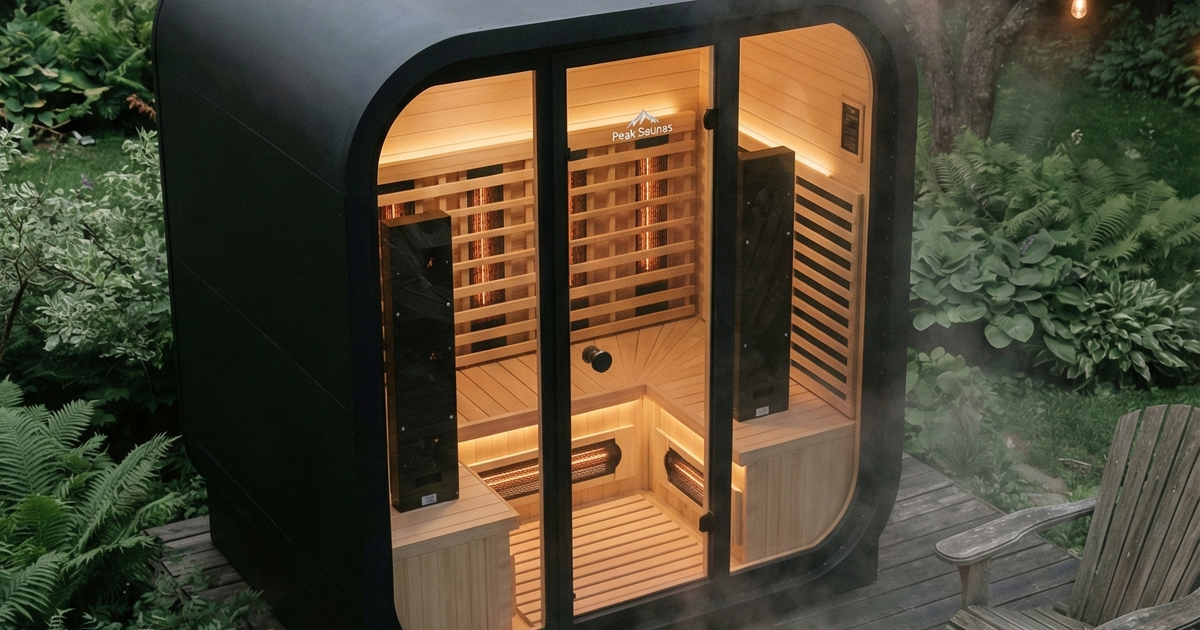
VO2 max — maximal oxygen uptake — is arguably the single best predictor of both athletic performance and long-term health. Peter Attia calls it the most important modifiable determinant of longevity. For elite athletes, VO2 max defines the ceiling of aerobic capacity. For everyone else, it predicts cardiovascular disease risk, cognitive aging, and all-cause mortality with remarkable accuracy. infrared sauna for athletes
The standard way to improve VO2 max is aerobic exercise. But emerging research suggests that infrared sauna, used strategically alongside training, may amplify VO2 max improvements through distinct physiological mechanisms.
Why VO2 Max Matters Beyond Performance
Before getting into the sauna-VO2 connection, it's worth understanding why VO2 max is so important outside of athletic competition.
A 2018 study in JAMA Network Open analyzed 122,000 patients and found that low cardiorespiratory fitness (measured by VO2 max proxy) was the strongest predictor of mortality — stronger than smoking, hypertension, or diabetes. The relationship wasn't just linear: each improvement in fitness category produced a proportional reduction in mortality risk, with no ceiling effect.
For longevity-focused individuals, maintaining and improving VO2 max throughout life is one of the highest-leverage health interventions available. Any tool that helps — including sauna — is worth understanding.
How Sauna Mimics Exercise Physiology
When you sit in an infrared sauna at 140°F, your cardiovascular system responds in ways that are remarkably similar to moderate aerobic exercise:
-
Heart rate elevation: Heart rate typically reaches 100–150 BPM during a 20–30 minute session — comparable to a light jog
-
Cardiac output increase: The heart pumps more blood per minute to manage the heat load and support skin vasodilation
-
Increased oxygen consumption: Metabolic rate rises significantly with the elevated heart rate and temperature management demands
-
Plasma volume expansion: This is a key mechanism discussed below
The cardiovascular "workout" from sauna doesn't fully replicate exercise — muscles aren't being recruited in the same way, and the musculoskeletal adaptations don't occur — but the circulatory training effects are real and measurable. sauna after workout timing guide
The Plasma Volume Mechanism
One of the most well-established ways that sauna (and heat training) improves cardiovascular performance is through plasma volume expansion. Plasma is the liquid component of blood; greater plasma volume means:
-
More efficient delivery of oxygen and nutrients to working muscles
-
Better temperature regulation during exercise
-
Reduced cardiovascular strain at any given workload
-
Improved stroke volume (blood pumped per heartbeat) — a key component of VO2 max
A 2019 study in the Journal of Physiology found that 5 days of post-exercise hot water immersion (a form of heat training) increased plasma volume by approximately 8% — enough to produce meaningful improvements in time trial performance. The sauna studies by Scoon et al. (2007, published in the Journal of Science and Medicine in Sport) showed that post-exercise sauna use over 3 weeks increased plasma volume by 7.1% and reduced a 5K running time by 1.9% in well-trained runners.
The plasma volume effect occurs with infrared sauna in the same fundamental way as with hot water immersion or traditional sauna — the driver is the heat-induced fluid shift and the subsequent expansion of circulating blood volume.
Erythropoietin (EPO) and Red Blood Cell Production
Heat exposure stimulates the release of erythropoietin (EPO) — the same hormone that altitude training exploits, and the same hormone that certain athletes have infamously used as a banned performance drug. EPO signals the bone marrow to produce more red blood cells, increasing blood oxygen-carrying capacity.
A 1986 study by Kauppinen found significant EPO elevation following sauna sessions, with effects that would theoretically support enhanced red blood cell mass over repeated exposures. This is one reason why combining sauna with altitude training or altitude simulation (hypoxic tents) is a topic of active research in elite athletic circles.
The EPO effect from regular sauna is modest compared to altitude training, but it represents a real, legal, and accessible pathway toward improved oxygen delivery — a key component of VO2 max.
What the Scoon Study Actually Found
The Scoon et al. 2007 study deserves a closer look because it's the most directly relevant to athletes using post-workout sauna for performance.
Protocol: 9 well-trained male runners used a traditional sauna (82°C) for 31 minutes after their training sessions, four times per week for three weeks. A control group continued training without sauna.
Results:
-
32% increase in run time to exhaustion
-
1.9% reduction in 5K time
-
7.1% increase in plasma volume
-
Significant increases in red blood cell count and hemoglobin
For context, a 2% improvement in 5K time for a well-trained athlete is significant — this is the kind of improvement that often requires months of additional training to achieve through conventional means alone.
Limitation: This used a traditional high-heat sauna. The far-infrared protocols that would translate this to at-home settings are not as extensively studied — but the physiological mechanisms (plasma volume expansion, EPO stimulation) are heat-dependent rather than sauna-type-dependent.
Practical Protocol for Athletes Using Infrared Sauna
Post-workout placement: Use the sauna after training sessions, not before. Pre-workout sauna elevates heart rate and could compromise the quality of your main training session. Post-workout sauna adds cardiovascular stimulus without affecting training quality.
Temperature and duration: 130–150°F for 20–30 minutes. The Scoon protocol used higher temperatures, but infrared sauna at these temperatures still produces meaningful heat stress and plasma volume response.
Frequency: 4 sessions per week during a deliberate "heat training block." This can be added during base training phases or as a supplementary tool during tapering (when training volume drops, sauna can maintain cardiovascular stimulus).
Hydration: Critical. Sports drink or electrolyte solution after each session is appropriate for athletes, who may also have elevated sodium needs from training sweating.
Block timing: Run a dedicated 3–4 week sauna block and measure your training metrics at the start and end. This allows you to see whether plasma volume expansion is translating to performance improvements for your specific sport and training load.
Combination with cold: Sauna-to-cold (ice bath or cold shower) protocols are popular with athletes, but note that the cold plunge after sauna may blunt some of the cardiovascular adaptation signals. If VO2 max improvement is the priority, consider ending with warmth rather than cold on most sessions.
Beyond VO2 Max: Other Performance Benefits
Recovery: The circulatory improvements from regular sauna use reduce muscle soreness and speed recovery — allowing athletes to train harder more consistently, which independently drives VO2 max improvement. infrared sauna for muscle recovery
Psychological heat tolerance: Competing in heat becomes less stressful when your body is heat-adapted. Triathletes, cyclists, and runners who race in warm conditions particularly benefit from sauna-based heat acclimation.
Growth hormone: Sauna use elevates growth hormone significantly — relevant for recovery, muscle protein synthesis, and body composition changes that support performance.
BDNF and focus: The cognitive effects of sauna (via BDNF and norepinephrine elevation) support the mental side of training — focus, motivation, and pain tolerance.
The Bottom Line for Athletes
Infrared sauna isn't a replacement for aerobic training — nothing is. But the evidence that strategic post-workout sauna use improves plasma volume, supports red blood cell production, and produces measurable improvements in endurance performance is solid. For athletes looking for legal, accessible performance-enhancing tools, it belongs in the toolkit.
PEAK' full-spectrum models reach temperatures that produce the cardiovascular training stimulus athletes need, while the lower ambient air temperature (compared to traditional saunas) makes extended sessions more tolerable and less respiratory stressful.


