The PEAK journal
Infrared Sauna for Families: Age Guidelines and Safety for Children
One of the most common questions from parents who own home infrared saunas: can my kids use it? The short answer is yes, with appropriate precautions — but the guidelines vary by age, and children require different protocols than adults.
This article provides practical, evidence-based guidance for safe family sauna use.
Why Children Need Special Consideration
Children's thermoregulation is meaningfully different from adults:
- Higher surface area to body weight ratio — children heat up faster per unit of body mass
- Less efficient sweating — particularly young children; sweat glands are less developed, reducing their ability to dissipate heat
- Faster dehydrat sauna dehydration preventionion — smaller blood volume means fluid loss becomes dangerous more quickly
- Lower heat recognition — children may not reliably signal when they're too hot; they continue playing or sitting without recognizing warning signs
These differences don't make sauna inappropriate for children — they make adult supervision, shorter sessions, and lower temperatures essential.
Age Guidelines
Under 3 Years Old
Not recommended. Thermoregulatory immaturity and inability to communicate distress make sauna inappropriate for infants and toddlers. Even at low temperatures, the risk-benefit ratio doesn't support it.
Ages 3–6
Highly cautious use only, physician guidance recommended.
-
Maximum 5–10 minutes
-
Temperature: 90–100°F (well below normal adult range)
-
Adult must remain in the sauna with the child at all times
-
Exit immediately at any sign of distress, flushing, or complaints
This age range is still borderline. Many physicians advise waiting until age 6+.
Ages 6–12
Supervised use with modified parameters.
-
Maximum 10–15 minutes
-
Temperature: 100–115°F
-
Adult must be present or immediately available
-
Hydration before and after mandatory
-
Children should be able to articulate if they feel unwell
Ages 12–16
Supervised use with adult parameters approached gradually.
-
15–20 minutes
-
Temperature: 110–130°F (build toward adult range over months of use)
-
Adult should be nearby; independent sessions can begin around 14–15 with a trusted level of maturity
-
Hydration protocols same as adults
Ages 16+
Standard adult protocols with hydration emphasis (teenagers are often chronically underhydrated).
The Benefits for Children and Families
While the research on children specifically is limited, the same physiological mechanisms that benefit adults apply to older children:
-
Immune support: Regular heat exposure strengthens immune response; several studies show reduced cold frequency in regular sauna users
-
Sleep quality: Evening sauna sessions (followed by cooling) help initiate sleep onset through core temperature drop
-
Relaxation and family bonding: Sauna has a strong cultural tradition as family time — a screen-free, warm, quiet space for connection
-
Athletic recovery: Teen athletes dealing with soreness, minor injuries, or performance demands can benefit from the recovery protocols adults use
Setting Up Safe Family Sessions
Environment
-
Ensure sauna controls are accessible and children know how to exit
-
Keep a timer visible inside the sauna
-
Never lock or barricade the door during family sessions
-
Keep a phone accessible for emergencies
Hydration Protocol
-
All family members drink 8–16 oz water before entering
-
Water available inside the sauna
-
Rehydrate with 8–16 oz water after exiting (children: scaled to body weight)
-
Electrolyte drinks for sessions longer than 15 minutes
Warning Signs — Exit Immediately
For children, watch for:
-
Unusually flushed or pale skin
-
Complaints of headache or dizziness
-
Nausea
-
Unusual quietness or drowsiness
-
Rapid breathing
Session Structure for Kids
Make it short, fun, and comfortable:
-
Keep a water bottle in the sauna
-
Let them bring a small towel
-
Talk, tell stories, or play simple games
-
Don't pressure them to stay; exit whenever they want
-
Celebrate that it's family time
Infrared vs Traditional Sauna for Kids
Infrared saunas have a meaningful safety advantage for family use: lower ambient air temperature. Traditional Finnish saunas operate at 180–220°F cabin temperature. Infrared saunas operate at 120–150°F, with heat coming from direct tissue penetration rather than breathing very hot air. sauna safety tips
For children, the cooler air temperature makes infrared significantly more appropriate than traditional saunas.
Pregnancy Caution
Pregnant women should consult their OB/GYN before using any sauna during pregnancy. Elevated core body temperature in the first trimester carries documented risks. Second and third trimester protocols vary by individual health status. infrared sauna while pregnant: safety guide
Medical Conditions in Children
Children with any of the following should have physician clearance before sauna use:
-
Heart conditions
-
Neurological conditions affecting heat sensation
-
Kidney conditions
-
Skin conditions (some may benefit; some may worsen)
-
Fever or active illness
Peak Saunas for Families
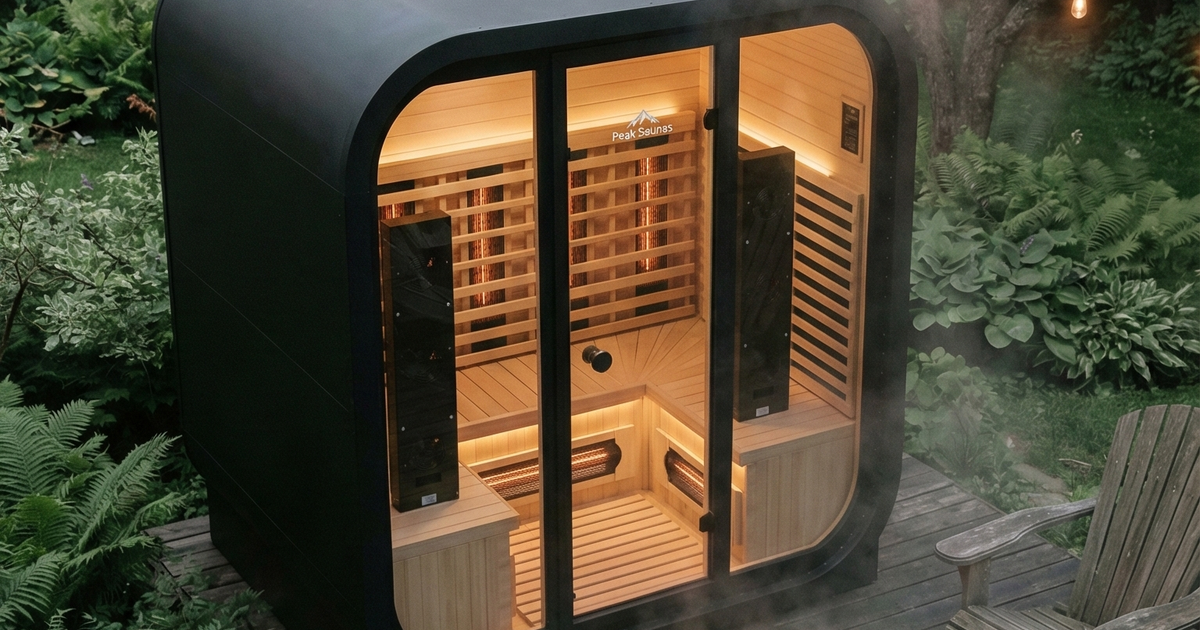
Many Peak Saunas customers are families who use their sauna as a household wellness hub. Our 2-person and 3-person models comfortably fit an adult and one or two children. All units are built with low-toxin Canadian Western Red Cedar and non-toxic interiors.
Every Peak Sauna comes with a 7-Year Residential Warranty and free shipping to the contiguous US.
Explore Family-Size Sauna Models →


