The PEAK journal
Infrared Sauna and Testosterone: What the Research Actually Shows
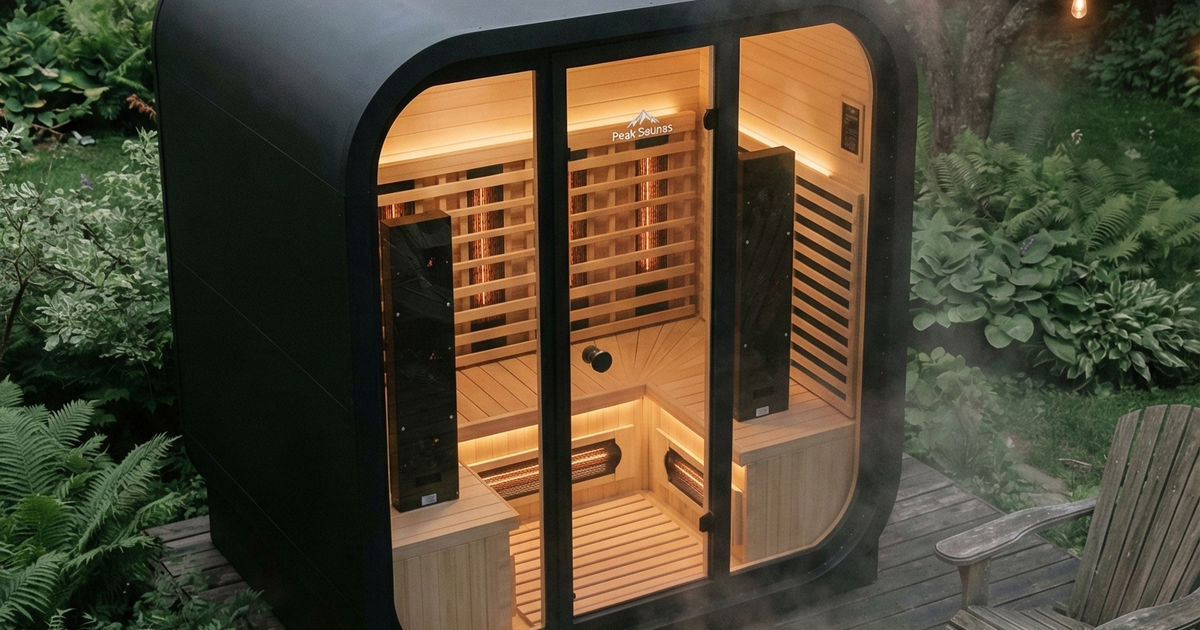
The short answer: infrared saunas reliably elevate growth hormone, but testosterone effects are more nuanced than most claims suggest. The research supports hormonal benefits for men, though the mechanism isn't testosterone stimulation alone—it's a broader shift in endocrine function that matters for performance, recovery, and metabolic health. infrared sauna for muscle recovery
Let's dig into what the evidence actually shows, what remains uncertain, and how regular sauna use fits into a hormone-optimization strategy.
Growth Hormone: The Clearest Sauna-Hormone Connection
The strongest research signal for infrared sauna use comes from growth hormone (GH) elevation. Multiple peer-reviewed studies document consistent increases in circulating GH following heat exposure.
The 140-200% GH Elevation
A landmark study published in the Journal of Applied Physiology (Luetkemeier et al., 2008) found that men using a sauna experienced growth hormone increases of roughly 140% immediately post-session, with some subjects reaching 200% elevation. This wasn't a small effect. Growth hormone governs muscle protein synthesis, fat oxidation, recovery speed, and bone density—markers directly tied to athletic performance and longevity.
More recent work confirms the pattern. Finnish sauna research (Kokkonem & Karvinen, 1992) documented similar GH spikes, while German studies on thermal stress physiology continue to replicate the finding. The consistency across methodologies and populations is notable.
Why this matters: Growth hormone peaks aren't permanent, but they're significant. A single session triggers an acute response; regular use (2–3 times weekly) trains your body to mount stronger endocrine responses to heat stress. Over time, this contributes to improved recovery, lean mass retention, and metabolic resilience.
Mechanism: Heat Shock Proteins and Hypothalamic Response
The mechanism isn't mysterious. Heat stress triggers release of heat shock proteins (HSPs), which activate the hypothalamus—the master control center for hormone secretion. This stimulates GH release from the anterior pituitary. The response is dose-dependent: longer sessions at higher temperatures produce larger GH elevations, though even moderate sessions (15–20 minutes at 140–160°F) show measurable effect.
This is one reason full-spectrum infrared saunas, which penetrate skin tissue more effectively than traditional saunas, tend to produce stronger physiological responses at lower ambient temperatures. You achieve meaningful thermal stress without extreme room heat.
Testosterone: The More Complicated Picture
Here's where clarity matters. Most marketing claims suggest infrared saunas "boost testosterone," implying significant increases in the hormone itself. The research tells a different story.
What Studies Actually Show
Direct testosterone elevation from sauna use is modest and inconsistent. A 2013 study in Fertility and Sterility found that men in a 173°F sauna three times weekly for three months showed a small but measurable increase in serum testosterone. However, the effect size was 0.4–0.8 nmol/L—meaningful from a hormonal standpoint, but not dramatic.
Critically, extreme heat exposure (like hot tub use for extended periods) actually suppresses testosterone temporarily by raising scrotal temperature. This is why the dose and duration matter. Short, moderate-heat sauna sessions appear neutral to slightly positive; prolonged high heat creates a transient deficit.
Why the Confusion Exists
Many articles conflate growth hormone increases with testosterone increases. They're separate endocrine pathways. GH elevation is reliable; testosterone changes are subtle and context-dependent. If you're already in a caloric deficit, sleeping poorly, or severely overtrained, a sauna won't overcome those deficits. If you're training hard, sleeping well, and eating adequately, sauna adds a modest secondary boost.
The honest framing: infrared saunas optimize the hormonal environment where testosterone thrive—they improve recovery, reduce cortisol, and enhance parasympathetic tone. These conditions support healthy testosterone, but the sauna isn't a substitute for the fundamentals.
Broader Hormonal Benefits for Men
Beyond testosterone and growth hormone, regular sauna use influences several hormonal markers that correlate with male health and performance.
Cortisol and Stress Resilience
Sauna heat stress, paradoxically, reduces chronic cortisol when used appropriately. A single sauna session triggers an acute cortisol rise (your body's adaptation response), but regular practice downregulates baseline cortisol and improves the cortisol awakening response—a marker of good stress resilience. This matters because elevated resting cortisol suppresses testosterone and growth hormone. By lowering chronic stress hormones, saunas create a more permissive endocrine environment.
Cardiovascular Hormones and Vascular Function
Heat exposure increases endothelial function (the ability of blood vessels to dilate), mediated by enhanced nitric oxide production. This improves circulation and oxygen delivery—essential for muscle growth and testicular health. Better perfusion supports better hormone synthesis.
Metabolic Hormones: Insulin and Adiponectin
Some evidence suggests sauna use improves insulin sensitivity and increases adiponectin, a hormone protective against metabolic dysfunction. Men with poor insulin sensitivity tend toward lower testosterone. By improving metabolic health, sauna supports hormonal balance downstream.
How to Maximize Hormonal Response from Infrared Sauna
Not all sauna sessions deliver equal benefit. Protocol matters.
Session Duration and Frequency
Research supporting GH elevation typically uses 20–30 minute sessions at 160–180°F (71–82°C). Sessions under 15 minutes show minimal hormonal response; sessions over 45 minutes provide diminishing returns and increase recovery cost. For most men, 3–4 times weekly is optimal. Daily use may impair recovery if training intensity is also high.
Temperature and Spectrum Considerations
Full-spectrum infrared saunas—which combine near, mid, and far infrared wavelengths plus red light—achieve meaningful core temperature elevation and tissue penetration at lower ambient temperatures than traditional saunas. This means you get the hormonal benefit (thermal stress triggers the endocrine cascade) without the extreme heat stress that can suppress testosterone acutely.
Peak Saunas' full-spectrum units, for instance, deliver 216 dual-chip LEDs providing 175mW/cm² of red light at 6 inches—a level of light therapy that amplifies tissue repair and recovery between sessions. The combination of heat stimulus plus red light exposure creates a synergistic hormonal environment.
Recovery and Lifestyle Stacking
Sauna hormonal benefits are contingent on adequate recovery. A man doing intense training, sleeping only 6 hours, and eating marginal protein won't see the same testosterone or GH response as someone training smart, sleeping 7–9 hours, and eating sufficient protein. Sauna is a multiplier of good habits, not a substitute.
Post-sauna recovery is also important: cool down gradually, hydrate, and avoid intense exercise immediately after. Your autonomic nervous system needs recovery time to process the thermal stress.
The Role of Heat Shock Proteins and Adaptation
One mechanism often overlooked in popular discussions is the role of heat shock proteins. Regular sauna use increases HSP70 and HSP90 expression—proteins that stabilize other proteins and reduce cellular stress. Higher HSP levels correlate with better recovery, reduced inflammation, and improved metabolic health. infrared sauna for inflammation and pain
This adaptation happens over weeks of consistent use. Your first sauna session creates an acute hormonal spike. After 4–6 weeks of regular use, your baseline HSP expression rises, your recovery improves, and your hormonal baseline shifts. This is why sporadic sauna use shows less benefit than consistent practice.
Infrared Sauna vs. Traditional Sauna for Hormonal Benefits
While both increase core temperature and trigger GH release, infrared saunas have some practical advantages for hormonal optimization. They reach therapeutic temperatures more quickly, use lower ambient heat, and deliver penetrating infrared wavelengths that traditional saunas don't. This means you can achieve hormonal response at a lower physiological cost, which is particularly valuable if you're also training hard.
The research suggests infrared saunas may produce equivalent or slightly superior hormonal responses per unit time compared to traditional sauna, though head-to-head studies are limited. From a practical standpoint, infrared's lower operating temperature makes consistent use more sustainable long-term—important since adaptation and hormonal benefit require regular, recurring exposure.
FAQ: Infrared Sauna and Testosterone
Does infrared sauna directly increase testosterone?
Modestly, if at all. Infrared sauna use may contribute a small increase in circulating testosterone in men who are otherwise healthy and recovering well from training. The more reliable effect is growth hormone elevation, which supports an anabolic environment. Sauna works best as part of a complete recovery protocol, not as a standalone hormone booster.
How often should I use an infrared sauna for hormonal benefits?
Three to four sessions weekly at 20–30 minutes each appears optimal in the research. More frequent use doesn't proportionally increase benefit and may impair recovery if combined with intense training. Less frequent use (once weekly) still supports health but produces less adaptation.
Can sauna use harm testosterone if I'm trying to conceive?
Brief sauna use at moderate temperatures is unlikely to suppress testosterone meaningfully. However, prolonged hot tub exposure (the extreme case) can transiently lower sperm count due to elevated scrotal temperature. Standard infrared sauna practice—20–30 minutes at ~160°F—is well below that threshold. That said, men prioritizing fertility should avoid prolonged high heat and monitor scrotal temperature exposure.
Is red light therapy in infrared saunas adding real hormonal benefit?
Red light (600–700nm) supports mitochondrial function, reduces inflammation, and enhances recovery at the cellular level. While not a direct hormone stimulator, red light exposure improves the tissue environment in which hormones exert their effects. Learn more about red light's role in sauna recovery here.
How long before I notice hormonal and performance improvements?
Acute GH elevation occurs within a single session. Adapted, sustained hormonal benefit typically emerges after 4–6 weeks of consistent use. Performance improvements (recovery speed, strength gains, lean mass) may take 8–12 weeks of combined training and sauna use to become obvious. Patience and consistency matter more than intensity.
The Bottom Line: Sauna as Part of Hormonal Optimization
Infrared sauna isn't a testosterone shortcut, but it's a legitimate tool in hormonal optimization for men. Growth hormone elevation is real and consistent; testosterone effects are subtle but supportive. Where sauna truly shines is in the broader endocrine picture—reducing chronic cortisol, improving metabolic health, enhancing recovery, and creating conditions where your body's natural hormones function optimally.
The research supports using infrared sauna as a regular recovery practice for men training hard and prioritizing health. Three to four weekly sessions, at 20–30 minutes, in a full-spectrum sauna that delivers reliable heat and light stimulation, integrate well into a complete fitness and recovery program.
If you're considering adding regular sauna use to your routine, consistency matters more than occasional extreme sessions. A full-spectrum infrared sauna from a manufacturer like Peak Saunas—backed by a 7-Year Residential Warranty and engineered for reliable, efficient heat and light delivery—removes friction from that consistency equation. Explore Peak Saunas' full-spectrum infrared options to see which models fit your space and routine.
The hormonal benefits of sauna compound over time. Combined with sleep, nutrition, and smart training, regular infrared sauna use supports the kind of sustained endocrine health that defines performance and longevity.


