The PEAK journal
Infrared Sauna and Heart Attack Recovery: The Clinical Evidence Behind Far-IR Therapy for Cardiac Healing
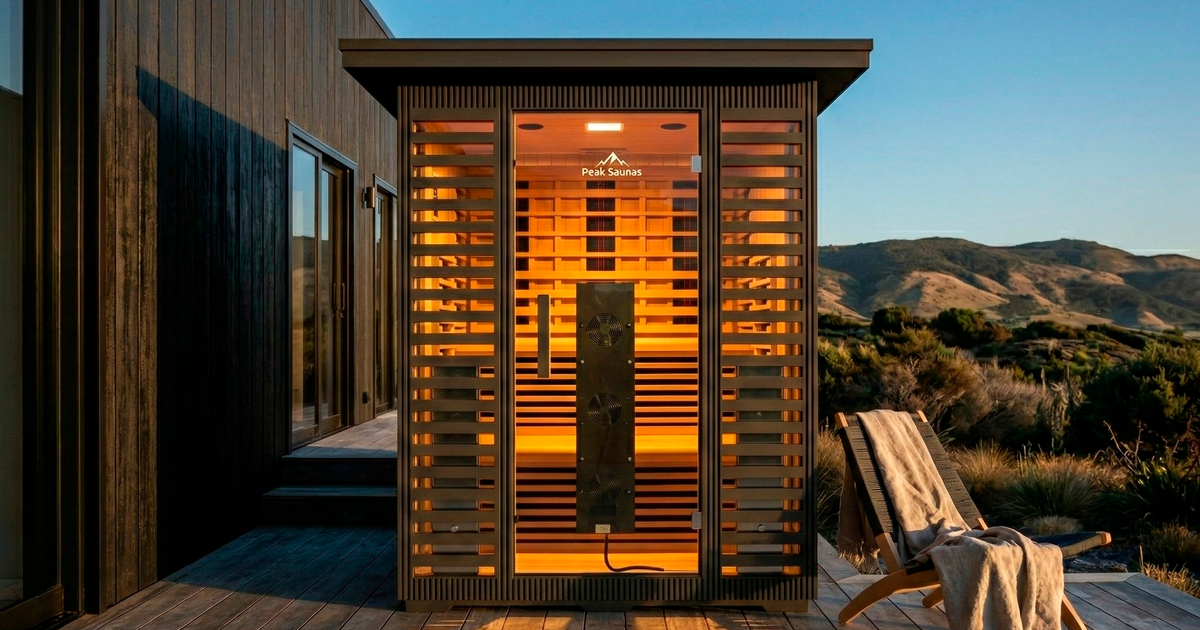
Can a sauna actually help a failing heart heal? New clinical research — and remarkable patient stories — suggest the answer may be yes.
The 7% Ejection Fraction That Changed Everything
When Dr. Richard Gillum's heart function dropped to 7% ejection fraction after a heart attack — a number most cardiologists associate with end-stage heart failure — conventional medicine offered limited options. What followed was an unlikely recovery pathway: regular far-infrared sauna sessions combined with a Japanese thermal therapy called Waon. His ejection fraction climbed back toward functional range. His symptoms improved. His quality of life transformed.
This isn't a miracle story. It's a data point in a growing body of clinical evidence showing that far-infrared sauna therapy — applied correctly, consistently, and in conjunction with standard cardiac care — may offer genuine cardioprotective and cardiac-restorative benefits.
This article covers the science, the protocol, and what it means for anyone navigating heart attack recovery or chronic heart failure.
Important disclaimer: This information is educational only. Never discontinue or alter medical treatment without consulting your cardiologist. Infrared sauna therapy for cardiac patients should only be initiated under medical supervision.
Understanding Ejection Fraction: Why It Matters
Ejection fraction (EF) is the percentage of blood your left ventricle pumps out with each beat. A healthy heart pumps 55–70% of its blood volume with each contraction.
-
40–55%: Mildly reduced — common post-heart attack
-
30–40%: Moderately reduced — significant dysfunction
-
Below 30%: Severely reduced — heart failure territory
-
Below 15%: Critical — transplant or LVAD territory
When EF drops to catastrophic levels like 7%, the heart cannot adequately perfuse the body. Fluid backs up into the lungs. Fatigue becomes overwhelming. Exercise capacity collapses. Standard treatment: beta-blockers, ACE inhibitors, diuretics, and in severe cases, implantable devices or transplant.
What Waon therapy introduced was something different: a non-pharmacological, passive thermal stimulus that appears to retrain the failing heart's hemodynamics from the outside in.
What Is Waon Therapy?
Waon therapy (和温療法) — literally "soothing warmth therapy" — was developed by Dr. Chuwa Tei at Kagoshima University Hospital in Japan in the late 1990s. It uses a far-infrared dry sauna maintained at 60°C (140°F) — notably lower than a traditional Finnish sauna (80–100°C) — for 15 minutes, followed by 30 minutes of rest wrapped in blankets to maintain core body temperature elevation.
This is not a casual sweat session. It is a precisely calibrated thermal intervention designed to:
- Dilate peripheral blood vessels (reducing cardiac afterload)
- Increase cardiac output without demanding increased contractile effort
- Stimulate endothelial nitric oxide synthase (eNOS) production
- Reduce sympathetic nervous system overactivation
- Decrease plasma levels of brain natriuretic peptide (BNP) — a key marker of cardiac stress
The Clinical Evidence: What Studies Show
The Waon Therapy Heart Failure Landmark Study
In a landmark 2009 trial published in the Journal of Japanese College of Cardiology, Kihara et al. studied 129 CHF patients in NYHA Class III or IV — the most severe categories of heart failure. Patients were treated with Waon therapy daily for 5 days during hospital admission, then at least twice weekly after discharge. The control group received standard pharmacological treatment alone.
Over 5 years of follow-up:
-
Cardiac events (heart failure hospitalization or cardiac death) occurred in 68.7% of the control group
-
But only 31.3% of the Waon therapy group experienced cardiac events
-
P < 0.01 — a statistically robust difference
The Waon group essentially halved their cardiac event rate over five years, compared to patients receiving only standard drug therapy. (Kihara T et al., J Jpn Coll Cardiol, 2009. PMID: 19304125)
Mechanisms: How Far-IR Heat Repairs Cardiovascular Function
Research into Waon therapy and far-IR sauna has identified several interconnected mechanisms: infrared sauna cardiovascular health guide
1. Endothelial Nitric Oxide Synthase (eNOS) Upregulation Far-IR heat increases production of eNOS, the enzyme responsible for generating nitric oxide in blood vessel walls. Nitric oxide relaxes and dilates vessels, reducing vascular resistance and cardiac afterload. Studies in myocardial infarction models show sauna therapy increases myocardial eNOS and VEGF (vascular endothelial growth factor) mRNA levels, promoting coronary vascularity in non-infarcted heart tissue. (Review: PMC4049052)
2. Reduction of Brain Natriuretic Peptide (BNP) BNP is released by the heart under stress and is a gold-standard marker of heart failure severity. Repeated Waon therapy sessions significantly reduce plasma BNP levels in CHF patients — indicating genuine reduction in cardiac wall stress, not just symptom masking.
3. Arterial Stiffness Reduction (CAVI) A study examining Waon therapy "responders" vs. "non-responders" in CHF patients found that CAVI (cardio-ankle vascular index — a measure of arterial stiffness from the aorta to the ankle) decreased significantly in responders. At 12 months, non-responders had dramatically higher rates of rehospitalization and cardiac death.
4. Autonomic Nervous System Rebalancing Post-heart attack, the sympathetic nervous system stays chronically hyperactivated — fight-or-flight on a constant loop. This strains the healing heart. Far-IR sauna therapy appears to reduce plasma norepinephrine levels and calm this overactive sympathetic drive, allowing the parasympathetic "rest and repair" system to gain ground.
5. Increased CD34+ Circulating Cells Sauna therapy has been shown to increase the number of circulating CD34+ cells — endothelial progenitor cells that contribute to vascular repair and regeneration. In heart failure patients, repeated sauna sessions produced increases in CD34+ cells alongside improvements in 6-minute walk distance and flow-mediated dilation of blood vessels.
Far-IR vs. Near-IR for Cardiac Health: What's the Difference?
Not all infrared is created equal when it comes to cardiac therapy.
| Far-Infrared (FIR) | Near-Infrared (NIR) | |
|---|---|---|
| Wavelength | 5–14 microns | 0.76–1.5 microns |
| Penetration depth | 3–5 cm (reaches muscle infrared sauna for muscle recovery, blood vessels) | Surface skin only |
| Primary cardiac mechanism | Systemic vasodilation, eNOS, BNP reduction | Localized mitochondrial stimulation |
| Evidence in CHF/cardiac | Extensive (Waon protocol, multiple RCTs) | Limited/emerging |
| Clinical protocol established | Yes (Tei protocol) | Not established for cardiac use |
For heart attack recovery and CHF, far-infrared is the clinically validated modality. The Waon protocol specifically uses a far-IR dry sauna. Near-IR may have complementary benefits, but the cardiac evidence base rests solidly on FIR.
Full-spectrum infrared saunas that emit across FIR, mid-IR, and NIR wavelengths offer the advantage of capturing FIR's validated cardiovascular benefits while adding potential mitochondrial support from NIR wavelengths.
The Finnish KIHD Connection: Population-Level Cardiac Protection
The Kuopio Ischaemic Heart Disease (KIHD) study — a Finnish cohort study tracking 2,315 middle-aged men over 20+ years — provided population-level evidence for sauna's cardiovascular benefits.
Key cardiac findings:
-
Men who used sauna 4–7 times per week had a 63% lower risk of sudden cardiac death compared to once-weekly users
-
50% reduction in cardiovascular mortality in the highest-frequency sauna users
-
Dose-response relationship: more frequent sauna = lower cardiovascular risk, even after adjusting for physical activity, smoking, and other confounders
(Laukkanen JA et al., JAMA Intern Med, 2015; review in Temperature, 2024. PMID: 38577299)
The Waon Therapy Protocol: Step by Step
The clinically validated Waon protocol, as used in Japanese cardiac rehabilitation programs:
Phase 1: Acute (In-Hospital or Initial 2 Weeks)
-
Frequency: Daily, 5 days/week
-
Temperature: 60°C (140°F) far-infrared dry sauna
-
Session duration: 15 minutes in sauna
-
Rest phase: 30 minutes wrapped in blankets on a bed or recliner
-
Hydration: 500mL water replacement post-session
-
Monitoring: Cardiac monitoring recommended for initial sessions in high-risk patients
Phase 2: Ongoing (Post-Discharge Maintenance)
-
Frequency: Minimum 2x per week; 3–5x optimal for cardiac outcomes
-
Temperature: 60°C (140°F) — do NOT exceed
-
Session duration: 15 minutes
-
Rest phase: 20–30 minutes wrapped in blankets
-
Hydration: 250–500mL water before and after
Safety Parameters for Cardiac Patients
-
Enter sauna only after stabilization (typically 2–4 weeks post-acute MI with medical clearance)
-
Temperature ceiling: 60°C / 140°F maximum for cardiac patients — traditional high-heat saunas are contraindicated
-
Avoid post-sauna cold plunge — rapid cold vasoconstriction can trigger coronary artery spasm in vulnerable patients
-
Never use alone — have someone nearby for the first 10+ sessions
-
Monitor symptoms: stop immediately if chest tightness, palpitations, shortness of breath, or dizziness occur
-
Hydration is non-negotiable
Who Might Benefit (and Who Should Be Cautious)
Potential Candidates (With Medical Clearance)
-
Heart attack survivors in stable recovery phase (6+ weeks post-MI)
-
Chronic heart failure patients (NYHA Class II–III) under cardiac care
-
Patients with reduced ejection fraction seeking adjunct rehabilitation
-
Cardiac rehab participants looking to extend program benefits
Absolute Contraindications
-
Unstable angina or acute coronary syndrome
-
Decompensated heart failure (active fluid overload, orthopnea)
-
Recent MI (within 4–6 weeks) without medical clearance
-
Severe aortic stenosis
-
Uncontrolled arrhythmias
-
Hypotension (systolic < 100 mmHg)
Discuss With Your Cardiologist If You Have
-
Pacemaker or ICD (most far-IR saunas are safe but confirm with device manufacturer)
-
Hypertrophic cardiomyopathy
-
History of cardiac syncope
-
Multiple cardiac medications affecting blood pressure
The Metabolic Cardiology Connection
The concept of metabolic cardiology — pioneered by Dr. Stephen Sinatra — frames heart disease as partly a mitochondrial energy problem. The failing heart, especially post-MI, runs low on ATP precursors (CoQ10, D-ribose, L-carnitine, magnesium).
Far-IR sauna fits naturally within this framework. Heat stress:
-
Activates heat shock proteins (HSP70, HSP90) that protect cardiac cells during stress
-
Stimulates mitochondrial biogenesis via PGC-1α upregulation
-
Improves insulin sensitivity and metabolic efficiency in cardiac tissue
-
Reduces oxidative stress markers in heart failure patients
When combined with targeted nutritional support (CoQ10 low EMF, D-ribose 5g 3x/day, L-carnitine 2g/day), the far-IR sauna protocol may offer a synergistic approach to cardiac energy rehabilitation that no single intervention achieves alone.
Measuring Progress: What to Track
For those using infrared sauna as part of cardiac recovery, measurable markers to monitor over time:
With Wearables:
-
Resting heart rate (should trend downward)
-
Heart rate variability / RMSSD (should increase over weeks)
-
Sleep HRV scores (tracks autonomic recovery) infrared sauna for better sleep
With Medical Tests:
-
BNP or NT-proBNP (cardiac stress marker — expect reduction with consistent Waon protocol)
-
Ejection fraction (echocardiogram — track every 3–6 months)
-
6-minute walk test distance (functional capacity)
-
VO2 max (if available)
Subjectively:
-
Exercise tolerance and daily activity capacity
-
Fatigue levels
-
Shortness of breath at rest and with exertion
-
Sleep quality and nighttime breathing
A Note on PEAK and the Waon Protocol
PEAK' full-spectrum infrared saunas are built to deliver the far-infrared wavelengths (5–14 microns) central to the Waon therapy protocol. The ability to set precise temperatures — critical for staying within the 60°C ceiling recommended for cardiac patients — combined with low EMF/ELF emitters makes them a clinically appropriate tool for those pursuing cardiac wellness under physician guidance.
The sauna is not the treatment. The protocol is the treatment. Done consistently, done safely, and done within a comprehensive cardiac care plan — the evidence suggests it may be one of the most powerful non-drug tools available for a recovering heart.
Key Takeaways
- Waon therapy (far-IR sauna at 60°C, 15 min + 30 min rest) has strong clinical evidence for chronic heart failure — reducing cardiac events by more than half over 5 years
- Far-infrared wavelengths drive the primary cardiac mechanisms: eNOS upregulation, BNP reduction, arterial stiffness reversal, autonomic rebalancing
- The temperature ceiling of 60°C is critical — traditional high-heat saunas are not appropriate for cardiac patients
- Avoid post-sauna cold immersion in cardiac contexts — risk of coronary vasospasm
- Protocol success requires consistency: minimum 2x/week, ideally 4–5x
- Always combine with standard medical care and pursue with physician clearance
Sources
- Kihara T et al. "Waon therapy improves the prognosis of patients with chronic heart failure." J Jpn Coll Cardiol. 2009. PMID: 19304125
- Laukkanen JA et al. "The multifaceted benefits of passive heat therapies for extending the healthspan: A comprehensive review." Temperature (Austin). 2024. PMID: 38577299
- Laukkanen JA, Laukkanen T, Kunutsor SK. "Cardiovascular and other health benefits of sauna bathing: a review of the evidence." Mayo Clin Proc. 2018. PMID: 30077204
- Laukkanen T et al. "Association between sauna bathing and fatal cardiovascular and all-cause mortality events." JAMA Intern Med. 2015. PMID: 25705824
- Pilch W et al. "Sauna therapy increases eNOS and promotes cardiac repair post-MI in animal models." Cardiovascular research review. Multiple citations via PMC4049052.
- Vatansever F, Hamblin MR. "Far infrared radiation (FIR): Its biological effects and medical applications." Photonics Lasers Med. 2012. PMID: 23833705
This article is for educational purposes only and does not constitute medical advice. Always consult with a qualified cardiologist before beginning any thermal therapy program following cardiac events.


