The PEAK journal
The Evening Infrared Sauna Ritual: Your Guide to the Perfect Wind-Down
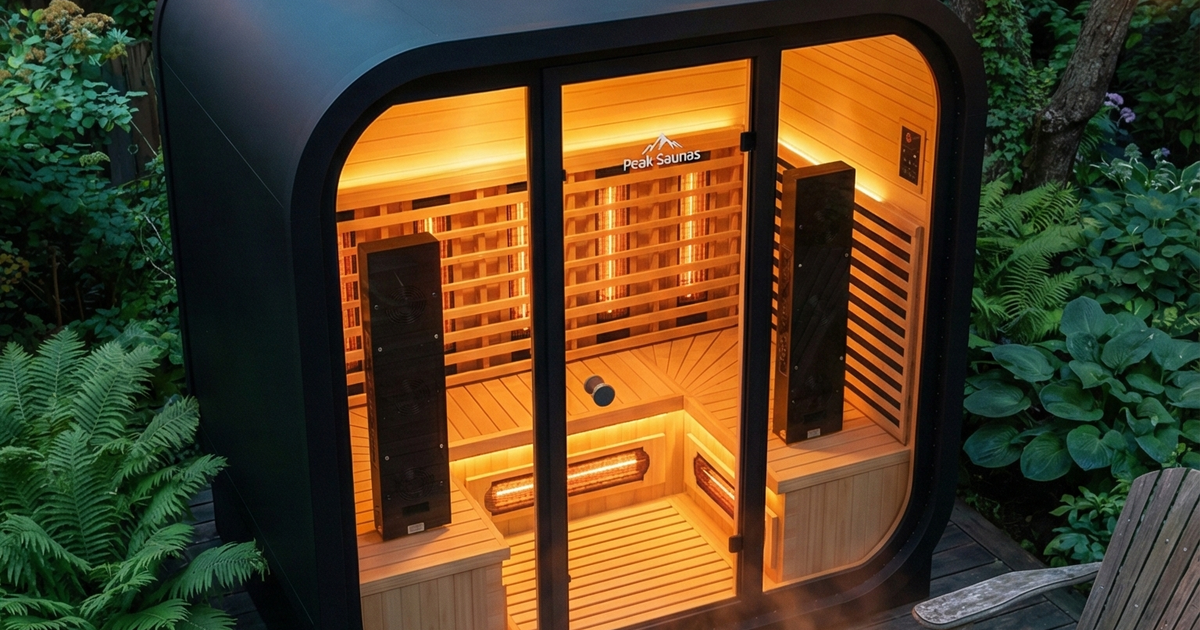
The hour before bed is probably the most high-leverage hour of your day — not because of what you do, but because of what you're preparing for: sleep. Sleep quality drives everything: cognitive performance, emotional regulation, immune function, hormonal health, athletic recovery. If you have an infrared sauna and you're not using it as part of your evening wind-down, you're leaving one of the best sleep tools on the table.
This guide covers the science of why evening infrared sauna works so well for sleep, the exact protocol, what to do before and after, and common mistakes that undermine the benefit.
The Science Behind Heat and Sleep
Your body's core temperature naturally drops by 1–2°C in the 1–2 hours before sleep onset. This cooling is a biological sleep signal — it triggers melatonin release and shifts your brain toward the delta-wave activity that characterizes deep sleep.
When you use an infrared sauna in the evening, you deliberately raise core temperature during the session. When you exit, your body initiates an accelerated cooling response — and this post-sauna thermal drop can be steeper and more dramatic than the natural pre-sleep cooling curve, effectively sending a stronger sleep signal to your brain.
A 2019 meta-analysis in Sleep Medicine Reviews confirmed that passive body heating (hot baths, saunas) performed 1–2 hours before bed consistently improved objective sleep quality — specifically reducing sleep onset latency (how quickly you fall asleep) and increasing slow-wave (deep) sleep. The effect was most pronounced when heating occurred 1–2 hours before sleep, not immediately before bed.
This is the key timing insight that most people get wrong: sauna immediately before bed can backfire because your core temperature is still elevated when you're trying to fall asleep. The sweet spot is finishing your session 60–90 minutes before bed, allowing time for the cooling curve to do its work.
The Optimal Evening Protocol
Timing
-
Finish your session: 90 minutes before your target bedtime
-
Example: If you aim to be asleep by 10:30 PM, end your sauna session by 9 PM
Temperature
-
Target: 130–140°F
-
Why lower than maximum: You don't need extreme heat for the sleep mechanism — you need the cooling response that follows. Lower temperatures are also more comfortable for relaxation-focused practice.
Duration
- 20–25 minutes: Long enough to meaningfully raise core temperature, not so long that you're physically depleted for sleep
Sequence (the full ritual)
30 minutes before the session:
-
Drink 16 oz of water (ideally with a pinch of sea salt or a full electrolyte supplement)
-
Take a warm (not hot) shower to pre-warm your skin and begin relaxing
-
Change into minimal clothing or a sauna towel
During the session (20–25 minutes):
-
Set temperature to 130–140°F and enter when preheated
-
Use this time deliberately — see "In-Session Practices" below
-
No screens. This is the one rule most worth enforcing.
-
Dim the sauna's interior light if possible (bright light is circadian-disruptive)
After the session:
-
Sit in the cooling room for 5 minutes before showering — let heart rate come down naturally
-
Take a lukewarm (not cold) shower. Cold is stimulating; you're winding down, not waking up. Save cold exposure for morning.
-
Apply magnesium lotion or take a magnesium glycinate supplement (400mg) — magnesium supports GABA activity in the brain and complements sauna's relaxation effects
-
Light herbal tea (chamomile, passionflower, valerian) if you enjoy it
-
Move into low-stimulation activity: reading, gentle stretching, journaling
60–90 minutes post-session: sleep
In-Session Practices for Wind-Down
The quality of your in-session mental activity shapes whether you emerge from the sauna mentally calm or still wired. These practices specifically support the parasympathetic (wind-down) state:
4-7-8 Breathing Developed by Dr. Andrew Weil and grounded in pranayama tradition:
-
Inhale for 4 counts
-
Hold for 7 counts
-
Exhale for 8 counts
-
Repeat 4–6 cycles
The extended exhale activates the parasympathetic nervous system more strongly than equal-time breathing patterns. In the warmth of the sauna, this combination can produce a profound relaxation response within minutes.
Body Scan Starting at the top of your head, slowly bring awareness to each body part, consciously releasing tension as you move down. The heat makes this practice unusually effective — you can actually feel muscle groups softening as you bring attention to them.
Gratitude or Reflection The elevated norepinephrine and heat-induced relaxation state can produce an unusually clear perspective. Use 5 minutes to review the day — what went well, what you're grateful for. Ending the day with this cognitive pattern supports positive sleep cognition.
What NOT to do:
-
Check messages or social media
-
Review work emails or to-do lists
-
Listen to stimulating podcasts or high-energy music
-
Problem-solve or plan
These activities keep cortisol and mental arousal elevated, directly undermining the thermal sleep signal you're working with.
Supporting the Protocol: What Else Matters
Dimming the environment: After your sauna session, the rest of your home environment should reflect your sleep intentions. Dim lights to 10–20% of maximum. Use warm-spectrum bulbs (2700K or lower). Screen use should be minimal and ideally through blue-light-blocking glasses if it happens at all.
Room temperature: Sleep researchers recommend bedroom temperatures of 65–68°F (18–20°C) for optimal sleep. After sauna, your body will be working to cool down — a cool bedroom accelerates this and deepens sleep.
Alcohol avoidance: Alcohol within 3 hours of the sauna session (or sleep) significantly disrupts sleep quality, despite feeling like it promotes drowsiness. The disruption to sleep architecture — particularly REM sleep — from even moderate alcohol consumption is well-documented.
Consistent timing: Your circadian rhythm becomes more robust when sleep-related signals (including sauna timing) occur at consistent times. Aim to use your evening sauna at roughly the same time every night you use it.
Tracking Whether It's Working
Objective tracking is valuable here because subjective sleep quality perception can lag behind actual improvements in sleep architecture. Consider using:
-
Oura Ring or WHOOP: Both provide HRV, sleep staging, and recovery data that can directly reflect sauna's impact on sleep quality
-
Sleep diary: A simple log of time-to-sleep, number of nighttime awakenings, and morning energy rating
-
Two-week comparison: Try two weeks with consistent evening sauna and two weeks without (or with morning sauna instead) and compare your sleep data
Most people see measurable improvement in deep sleep percentage and sleep onset speed within 2–3 weeks of consistent evening sauna use.
For Athletes and High Performers
Evening sauna is particularly powerful when you need to maximize recovery from the day's training load. The combination of:
-
Increased blood flow to muscles (reducing lactic acid accumulation)
-
Growth hormone elevation (supporting protein synthesis overnight)
-
Improved sleep architecture (where 80%+ of muscle repair occurs)
...means that athletes who use evening infrared sauna consistently often find they can train harder the next day than those who don't.
If you're using HRV-based training guidance (common in Whoop and Oura users), watch your HRV trend over a month of consistent evening sauna. A rising HRV baseline is one of the most reliable signals that your overall recovery is improving.
The evening sauna ritual isn't complicated — it's 25 minutes of heat, followed by deliberate cooling and calm. But done consistently, it may become one of the highest-impact daily habits in your wellness toolkit.


