The PEAK journal
Affordable Infrared Saunas: Get Health Benefits Without Breaking the Bank
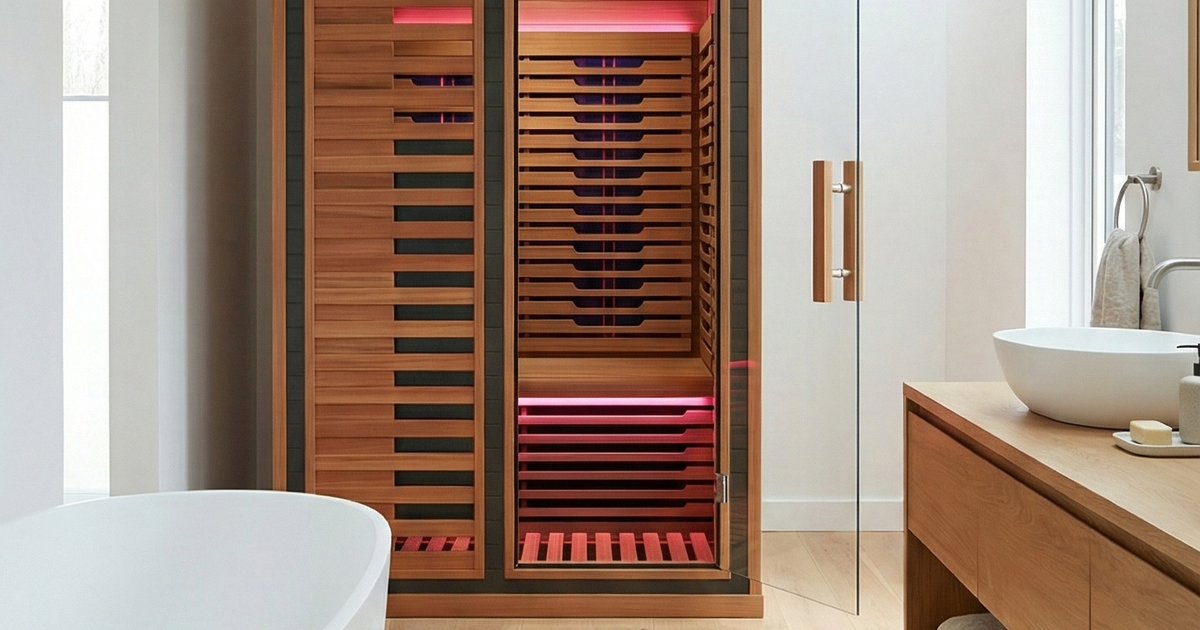
The wellness industry often presents a false choice: premium luxury or nothing at all. But when it comes to infrared saunas, you don't need to spend $10,000+ to experience documented health benefits. The science supporting infrared sauna therapy has grown substantially over the past decade, and quality affordable options now make this technology accessible to most households.
This guide breaks down what makes an infrared sauna genuinely affordable, which features actually matter for health outcomes, and how to avoid false economy when evaluating budget models.
Understanding Infrared Sauna Pricing: What You're Actually Paying For
Before hunting for deals, it helps to understand where sauna costs originate. Unlike traditional Finnish saunas that simply heat air, infrared saunas use specific wavelengths of light to generate heat directly in tissue. This technological difference—not arbitrary branding—drives legitimate price variation.
Core cost components:
-
Emitter quality: Far-infrared (FIR), near-infrared (NIR), and mid-infrared emitters vary significantly in manufacturing standards. Medical-grade carbon panels cost more than basic heating elements but deliver more consistent wavelengths.
-
Construction materials: Wood cabinet quality, insulation, and electrical safety components directly impact longevity and safety.
-
Control systems: Basic mechanical controls cost less than digital systems with customizable programs and safety features.
-
Footprint and capacity: Larger models with space for two people naturally cost more than single-occupant units.
The mistake many people make is comparing a $1,500 infrared sauna to a $5,000 model and assuming the cheaper option is 70% "as good." In reality, price-to-performance follows a more nuanced curve where affordable doesn't mean "barely functional"—it means you've eliminated unnecessary luxury features.
The Science Behind Infrared Sauna Benefits—Why "Affordable" Doesn't Mean Less Effective
This is crucial: the documented health benefits of infrared sauna use depend on consistent use and proper wavelength delivery, not on how much you spent.
Research by Laukkanen et al. (published in American Journal of Epidemiology, 2015) examined 2,315 middle-aged Finnish men over 20+ years. Frequent sauna users (4-7 sessions per week) showed a 50% reduction in sudden cardiac death and 27% reduction in all-cause mortality compared to one-session-per-week users. The key variable was frequency and duration, not equipment cost.
Similarly, studies on infrared therapy for pain management and muscle recovery (Scoon et al., 2007) focused on wavelength delivery and session consistency rather than equipment price point. Athletes experienced improved recovery markers using properly calibrated infrared emitters across multiple price ranges. infrared sauna for muscle recovery
What matters:
-
Correct wavelengths: Far-infrared (7-14 microns) penetrates skin tissue effectively
-
Consistent temperature: Ability to maintain 120-130°F reliably
-
Adequate session duration: 20-40 minutes for measurable benefits
-
Regular scheduling: Weekly consistency outweighs sporadic luxury sessions
An affordable sauna that you'll actually use four times per week beats an expensive model gathering dust in the garage.
What to Look For in Budget-Friendly Infrared Saunas
When evaluating affordable infrared saunas, focus on these non-negotiable features rather than flashy additions.
Emitter Type and Coverage
Verify that the sauna uses carbon or ceramic emitters—not simple resistive heaters. Check specifications for far-infrared wavelength range (ideally 7-14 microns) and emitter coverage area. Some budget models concentrate emitters only in back panels; others distribute them more evenly. More even coverage means better treatment for full-body benefits.
Red flags: If specifications don't mention wavelength range or emitter type, contact the manufacturer. Legitimate budget brands will provide technical documentation.
Wood Quality and Off-Gassing
Cheaper saunas sometimes use lower-grade wood or adhesives that off-gas formaldehyde—potentially harmful when heated repeatedly. Look for:
-
Wood type: Cedar and hemlock are standard for their natural antimicrobial properties
-
Non-toxic finishes: Water-based stains and sealers rather than polyurethane
-
Certifications: Look for FCC, ETL, or similar electrical safety certifications
Requesting a material safety document from smaller brands isn't unreasonable—it indicates their confidence in their product.
Size and Practical Use
Single-occupant models are often more affordable than two-person units, but honestly assess your actual use case. A cramped sauna you dread entering is a poor investment at any price. Most people find 36-42 inches width acceptable for comfortable solo use. Depth should allow you to sit with a straight back.
Temperature Control and Safety Features
Even affordable models should have:
-
Adjustable temperature settings (120-130°F range minimum)
-
Timer functionality
-
Automatic shutoff after 60 minutes
-
Exterior cool-to-touch surfaces
These are baseline safety features, not luxury add-ons.
Realistic Pricing: What "Affordable" Actually Means
For reference, here's what you can reasonably expect:
Budget-conscious ($1,500-$2,500): Single-occupant infrared saunas with carbon emitters, basic digital controls, and solid wood construction. These deliver measurable health benefits and last 5-10 years with proper maintenance.
Mid-range ($2,500-$4,500): Better wood quality, more even emitter distribution, additional features like chromotherapy lighting, better insulation, and improved electrical systems. Still genuinely "affordable" compared to luxury brands.
Luxury ($5,000+): Premium wood finishes, integrated sound systems, smartphone controls, extended warranties, and brand prestige. The health outcomes don't improve proportionally.
The sweet spot for most households is the budget-conscious to mid-range categories, where you get legitimate quality without paying for marketing and luxury features.
Maintenance and True Long-Term Cost
Affordable infrared saunas have lower upfront costs, but ongoing expenses matter for total cost of ownership.
Typical maintenance costs:
-
Electricity: $10-30/month depending on usage frequency and local rates
-
Emitter replacement: $200-500 per set, needed every 5-10 years depending on use
-
Cleaning supplies: Minimal (soft cloth and mild cleaner)
Higher-quality affordable saunas often have:
-
Better insulation (lower electricity bills)
-
More durable emitters (longer replacement intervals)
-
Standard replacement parts (lower repair costs)
A $2,000 sauna that requires $2,000 in repairs after three years is less "affordable" than a $3,000 model that runs reliably for a decade.
Making Your Decision: Affordable Doesn't Mean Compromising Health Benefits
The research supporting infrared sauna health benefits is robust, but it's also equipment-agnostic. A person using a $1,800 infrared sauna four times weekly will see similar cardiovascular and recovery benefits as someone with a $6,000 luxury model—assuming both use consistent wavelengths and proper technique. infrared sauna cardiovascular health guide
The real value of affordable infrared saunas is removing the barrier to entry. Instead of $8,000 preventing you from accessing this wellness modality, you can invest $2,000-3,000 and begin experiencing benefits immediately.
Your health improvement depends on consistency and commitment to the practice, not on which brand name appears on your sauna.
FAQ: Affordable Infrared Saunas
Q: Can I trust infrared saunas under $2,000? A: Yes, if they specify carbon emitters, proper wavelengths (7-14 microns), include safety certifications, and come from established manufacturers with warranty support. Avoid no-name brands without technical specifications or customer reviews.
Q: Will a budget infrared sauna heat properly if it's in a cold garage? A: Most models struggle below 55°F ambient temperature. If your sauna will be in an unheated space, budget for insulation improvements or consider mid-range models with superior insulation (additional $500-1,000).
Q: What's the difference between a $2,000 and $4,000 affordable infrared sauna? A: Generally: wood quality, emitter distribution evenness, control system sophistication, warranty length, and insulation. Health benefits are similar if both deliver proper wavelengths. Decide based on intended lifespan and frequency of use.
Q: Do affordable infrared saunas use the same emitter technology as premium brands? A: Most use comparable carbon emitter technology. The difference is often manufacturing consistency, testing standards, and warranty support—not fundamental technology gaps. Request technical specifications to compare directly.
Q: How long before an affordable infrared sauna pays for itself through health benefits? A: This depends on what you'd otherwise spend on recovery methods (physical therapy, massage, gym memberships). Many users find equivalent benefits within 12-18 months of consistent use, making the sauna cost-neutral versus alternative wellness spending.
Related Wellness Resources
For deeper understanding of infrared sauna benefits and best practices, explore our comprehensive wellness guides:
-
Infrared Sauna vs. Traditional Sauna: What the Research Shows
-
Infrared Sauna Temperature Guide: Finding Your Optimal Range
Your path to accessible infrared sauna wellness starts with understanding what genuinely matters for health outcomes—and that understanding costs nothing. The investment that follows can be genuinely affordable.


